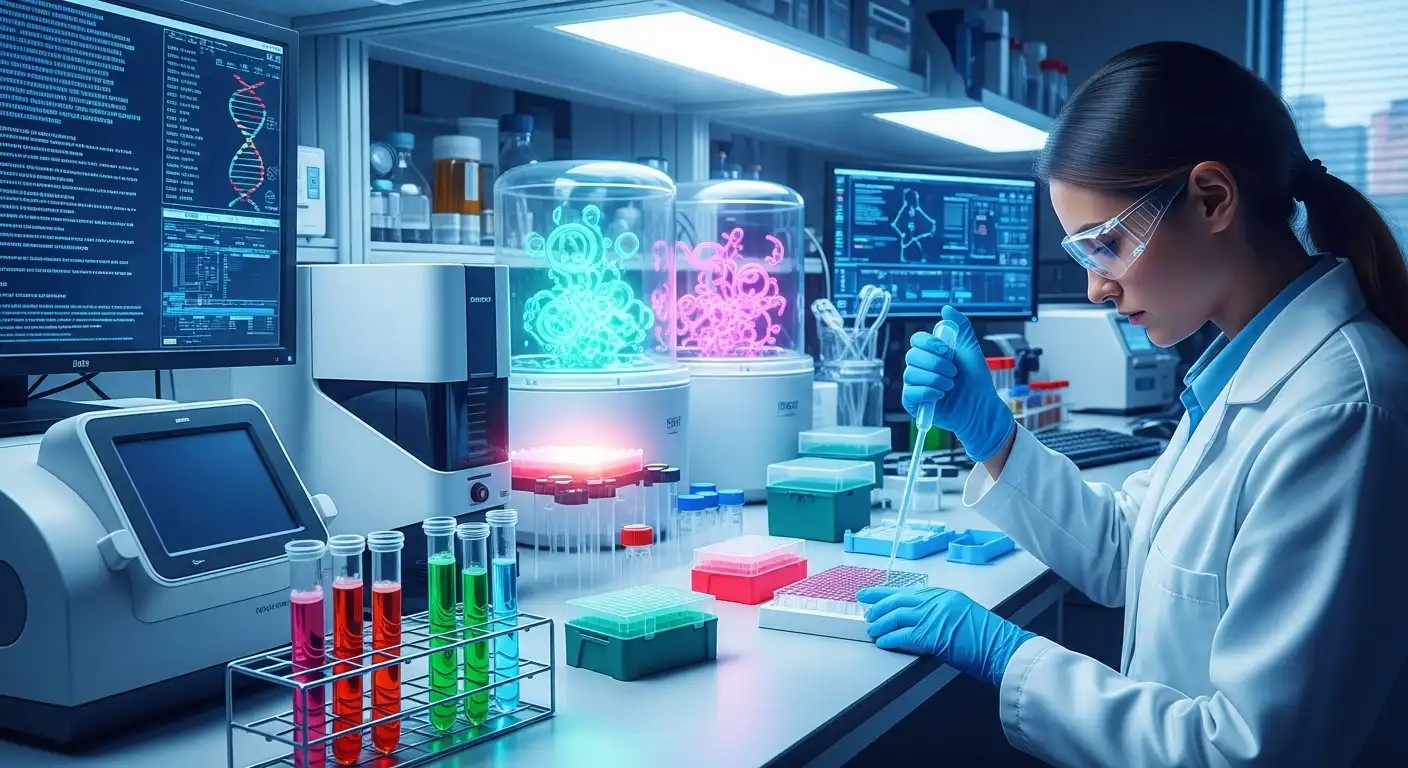
For the entirety of medical history, our approach to healing has been one of discovery. We have been biological explorers, charting the complex, mysterious continents of human physiology, searching for natural compounds, and designing synthetic molecules to intervene in the intricate machinery of disease. This has been a story of brilliant deduction, painstaking research, and often, sheer serendipity. We have learned to read the book of life. But as we stand at the pivotal moment, a profound shift is underway. We are no longer content to read the book merely; we are learning to write it.
This is the dawn of Synthetic Biology (SynBio), a revolutionary discipline at the intersection of biology, engineering, and computer science. It is a field that approaches living systems not as a mystery to be solved, but as a programmable platform to be engineered. It seeks to apply the rigorous principles of engineering—standardization, abstraction, and design-build-test-learn cycles—to the very code of life, DNA itself. SynBio is moving beyond the confines of the research lab and emerging as the single most powerful force shaping the future of human health. From cancer-hunting immune cells and personalized mRNA vaccines to living biosensors that detect disease from within, this is not just a new set of tools; it is a new operating system for medicine. This definitive guide will explore the technologies, the therapeutic breakthroughs, and the profound ethical questions that define this new era of engineered health.
Deconstructing the Past: The Limits of 20th-Century Medicine
To grasp the revolutionary potential of synthetic biology, we must first recognize the inherent limitations of the medical paradigm it is beginning to supersede. The pharmaceutical and medical model of the 20th century, for all its life-saving achievements, was largely defined by a “one-size-fits-all” approach that was reactive and often imprecise in treating disease.
The Era of “Blunt Instruments” and Off-Target Effects
The dominant form of medicine for the last century has been the small-molecule drug. These are chemical compounds designed to interact with a specific target, like a protein, to block or activate its function. While incredibly effective for many conditions, they often act as “blunt instruments.”
These drugs circulate throughout the entire body, leading to a host of off-target effects and side effects. This lack of specificity is a core challenge that synthetic biology is designed to overcome.
- Chemotherapy’s Collateral Damage: The classic example is traditional chemotherapy, which kills rapidly dividing cancer cells but also harms other rapidly dividing healthy cells, like those in the hair follicles, gut lining, and bone marrow, leading to its debilitating side effects.
- A “One-Size-Fits-All” Approach: Drugs were designed for the “average” patient, but human biology is anything but average. A drug that is highly effective for one person may be ineffective or even toxic for another due to subtle genetic differences.
The Slow, Expensive, and Failure-Prone Path to a New Medicine
The process of discovering and developing these drugs was a monumental undertaking, governed by a brutal economic reality known as “Eroom’s Law” (the inverse of Moore’s Law), which saw the cost of developing a new drug double roughly every nine years.
This linear and high-risk model created a massive bottleneck in medical innovation. It was a system that spent billions of dollars and over a decade to bring a single new drug to market, with a failure rate exceeding 90%.
- A Game of Chance: The initial discovery process often relied on screening millions of chemical compounds in a brute-force search for a “hit,” a process more akin to prospecting for gold than to rational design.
- The “Valley of Death”: The vast chasm between a promising discovery in the lab and a successful human clinical trial was where most drug candidates failed, often due to unforeseen toxicity or a lack of efficacy that early animal models did not predict.
What is Synthetic Biology? From Reading Code to Writing It
Synthetic biology represents a fundamental departure from this discovery-centric model. It is the application of engineering principles to biology. It seeks to make the design and construction of new biological parts, devices, and systems more predictable, more scalable, and more sophisticated.
Beyond Genetic Engineering: A New Paradigm of Design
While genetic engineering involves modifying an organism by inserting or deleting a single gene, synthetic biology is about a more holistic, systems-level approach. It’s the difference between changing a single line of code in a computer program and designing an entirely new application with a clear architectural blueprint.
The core of SynBio is the idea that biological components can be treated as standardized parts, like electronic components. These parts can be assembled into “genetic circuits” that can perform novel, logical functions inside a cell.
- Standardization: Creating a library of well-characterized biological “parts” (like promoters, ribosome binding sites, and terminators) with predictable performance, much like a library of resistors and capacitors in electronics.
- Abstraction: Creating layers of complexity so that a designer doesn’t need to understand every molecular detail to build a system, just as a software programmer doesn’t need to understand the physics of transistors.
- Decoupling: Separating the design of a genetic circuit from its physical construction, allowing for rapid, automated synthesis and assembly.
The Foundational Toolkit: The Engines of the Revolution
The convergence of several exponential technologies has driven incredible progress in synthetic biology. This toolkit will have reached a stage of maturity and accessibility that will enable the translation of SynBio concepts from the lab to the clinic.
These are the core technologies that allow scientists to design, build, test, and learn from biological systems at an unprecedented speed and scale. They form a virtuous cycle of innovation that is driving the entire field forward.
DNA Synthesis and Assembly (The “Build” and “Write” Tools)
The ability to write DNA is as fundamental to synthetic biology as the ability to write code is to software engineering. For decades, synthesizing DNA was a slow and expensive process. Today, it has become a fast, cheap, and commoditized service. Companies can now design a DNA sequence on a computer and have the physical DNA delivered by mail in a matter of days. This enables rapid construction of the custom genetic circuits that are the heart of SynBio.
CRISPR-Cas9 and Precision Gene Editing (The “Edit” Tool)
If DNA synthesis is about writing new code, CRISPR is the ultimate “find and replace” tool. This revolutionary technology allows scientists to make precise, targeted changes to the DNA of a living cell with unprecedented ease and accuracy. It is the key that unlocks the ability to correct genetic defects, insert new genetic programs, and systematically study gene function, making it an indispensable tool for both research and therapy.
AI and Machine Learning (The “Design” and “Learn” Tools)
Biology is a science of mind-boggling complexity. The interactions among thousands of genes and proteins create a system that the human mind cannot fully grasp. Artificial intelligence and machine learning are the computational brains that are making sense of this complexity. AI can analyze massive biological datasets to identify new drug targets, predict the behavior of a genetic circuit before it’s built, and learn from experimental results to design better systems in the next iteration of the design-build-test-learn cycle.
Bio-foundries and Automation (The “Scale” Tool)
To keep pace with the speed of AI-driven design, the physical work of biology is being automated. Bio-foundries are fully automated, robotic laboratories that can perform thousands of biological experiments in parallel. They are the “cloud computing” for biology, allowing researchers to design experiments on a computer and have them executed by robots, generating massive, high-quality datasets that fuel the AI models and dramatically accelerate the entire R&D process.
The New Therapeutic Frontier: Programming “Living Medicines”
The most profound impact of synthetic biology on human health is in the creation of a completely new class of therapeutics: “living medicines.” Instead of a static chemical drug, these are engineered living cells that can act as intelligent, dynamic agents inside the body, sensing and responding to their environment to fight disease with a level of precision and sophistication that was previously unimaginable.
Revolutionizing Oncology: The Rise of Smart Cancer Therapies
For decades, the fight against cancer has been a central focus of medical research. Synthetic biology is providing one of the most powerful weapons yet in this fight by turning our own immune cells into precision-guided cancer hunters.
The leading edge of this is CAR-T cell therapy, a treatment that has already shown miraculous results for blood cancers. The technology will have evolved to tackle the much greater challenge of solid tumors.
CAR-T Therapy: Reprogramming the Immune System
Chimeric Antigen Receptor (CAR)-T cell therapy is a prime example of a SynBio therapeutic. The process involves:
- Extraction: A patient’s own T-cells (a type of immune cell) are extracted from their blood.
- Engineering: In the lab, a virus is used to deliver a synthetic gene into the T-cells. This gene programs the T-cells to produce a “chimeric antigen receptor” on their surface. This CAR is designed to recognize and bind to a specific protein (an antigen) found only on the surface of the patient’s cancer cells.
- Expansion: The newly engineered CAR-T cells are multiplied by the millions in the lab.
- Infusion: The army of cancer-hunting cells is infused back into the patient, where they seek out and launch a devastatingly precise attack on the tumor.
The Evolution: Smart CAR-Ts for Solid Tumors
While incredibly successful against leukemias and lymphomas, the first generation of CAR-T therapies struggled against solid tumors (like lung or breast cancer). SynBio will provide the tools to create “smarter” CAR-T cells. This includes engineering genetic circuits that allow the cells to recognize multiple cancer antigens (to prevent the cancer from “escaping” by mutating a single protein), to secrete their own drugs to break down the tumor’s protective environment, and even to include “safety switches” that allow doctors to turn the cells off if they cause too much inflammation.
The mRNA Revolution, Post-Pandemic: A Platform for Personalized Medicine
The rapid development and deployment of mRNA vaccines for COVID-19 was the world’s first and most spectacular demonstration of the power of synthetic biology at a global scale. An mRNA vaccine is a synthetic piece of genetic code that instructs our own cells to produce a viral protein, which then trains our immune system to recognize and fight the real virus.
This success has validated mRNA as a powerful and flexible “platform technology” for a wide range of diseases. The pipeline for mRNA-based therapies is rapidly expanding far beyond infectious diseases.
Personalized Cancer Vaccines
This is one of the most exciting applications. The process involves sequencing a patient’s tumor to identify its unique mutations (neoantigens). An mRNA vaccine is then synthesized, personalized for that patient, and contains the code for their tumor’s unique neoantigens. When injected, the vaccine teaches the patient’s immune system to recognize and destroy only the cancer cells, leaving healthy cells unharmed.
A New Generation of Vaccines
The speed of mRNA vaccine development is being applied to other infectious diseases. Combination vaccines (e.g., a single shot for COVID-19, flu, and RSV) will be in late-stage clinical trials. The technology is also being applied to diseases that have historically been very difficult to vaccinate against, like HIV and malaria.
Correcting the Code: Gene Therapies Come of Age
For millions of people suffering from inherited genetic disorders, the dream has always been to correct the faulty gene at its source. With the advent of CRISPR, this dream is becoming a clinical reality.
The first CRISPR-based therapies are expected to receive regulatory approval, marking a historic milestone in medicine. This is the dawn of an era in which we can offer potential one-time cures for devastating, lifelong diseases.
- Sickle Cell Anemia and Beta-Thalassemia: These are blood disorders caused by a single faulty gene. The first approved CRISPR therapies involve taking a patient’s own blood stem cells, ex vivo (outside the body) editing the faulty gene with CRISPR, and then reinfusing the corrected cells. The corrected cells then produce healthy red blood cells for the rest of the patient’s life.
- The Future: In Vivo Gene Editing: The next frontier is in vivo editing, in which the CRISPR machinery is delivered directly into the body to edit cells in their natural locations. This is more complex, but it is the only way to treat diseases that affect organs like the brain or the liver.
Engineering the Microbiome: Our Inner Ecosystem as a Pharmacy
The trillions of bacteria that live in our gut—the microbiome—play a profound role in our health, influencing everything from our digestion and immunity to our mental health. Synthetic biology is now providing the tools to engineer these gut bacteria to act as our allies.
The vision is to create “engineered probiotics” that can act as living diagnostics and therapeutics from within the gut. This is a powerful and non-invasive way to treat a range of metabolic and inflammatory diseases.
- A Living Diagnostic: Scientists have engineered bacteria that can detect the molecular signs of inflammation or even cancer in the gut. When they detect these signals, a genetic circuit triggers the bacteria to produce a colored pigment, which can then be detected in stool, providing an early warning system for disease.
- A Gut-Based Drug Factory: For metabolic disorders like phenylketonuria (PKU), where the body cannot break down a specific amino acid, bacteria can be engineered to produce the missing enzyme. When taken as a probiotic, these bacteria live in the gut and continuously break down the harmful compound, effectively acting as a living, self-regulating drug factory.
The Diagnostic Revolution: Sensing Disease at the Molecular Level
A key part of shaping human health is not just treating disease, but detecting it earlier, more accurately, and more accessibly. Synthetic biology is creating a new generation of diagnostic tools that are cheap, fast, and deployable anywhere in the world.
Living Biosensors: Cells That Report on Health
The same principles used to create therapeutic cells can be applied to diagnostic cells. Scientists are engineering mammalian cells and bacteria to act as highly sensitive “living biosensors.”
These cells can be programmed to detect a specific disease marker and produce a simple, easy-to-read output. They are like a “check engine light” for the human body.
- How They Work: A synthetic gene circuit is designed in which a “sensor” component (a protein that binds to a disease marker) is linked to a “reporter” component (a gene that encodes a fluorescent protein or a color change). When the sensor detects the disease marker, the circuit is activated, and the cell lights up or changes color.
- Applications: These cell-based sensors can detect cancer cells in a blood sample or screen for environmental toxins.
Cell-Free Systems and Paper-Based Diagnostics: The Lab on a Chip
One of the most powerful innovations for global health is the development of “cell-free” synthetic biology. This involves removing the molecular machinery (the enzymes and ribosomes) from the cell and freeze-drying it onto a piece of paper.
This technology allows for the creation of incredibly cheap, stable, and easy-to-use diagnostic tests that don’t require refrigeration or a laboratory. They are a perfect tool for point-of-care diagnostics in low-resource settings.
- How They Work: The freeze-dried molecular machinery on the paper contains a synthetic gene circuit designed to detect a specific virus (like Zika, Ebola, or SARS-CoV-2). When a sample (like saliva or blood) is added to the paper, it rehydrates the machinery. If the virus is present, its genetic material activates the circuit, producing a colored output within an hour.
Accelerating the Pipeline: SynBio’s Impact on Drug Discovery and Development
Beyond creating entirely new classes of therapies, synthetic biology is also a powerful accelerator of the traditional drug discovery pipeline, helping address the challenges posed by Eroom’s Law.
Engineering Better Preclinical Models: Patients-on-a-Chip
A major reason for drug failure is that animal models are often poor predictors of human response. Synthetic biology is being used to build more human-relevant preclinical models.
- Organoids and Organs-on-a-Chip: By using stem cells and 3D bioprinting, scientists can engineer miniature, simplified versions of human organs (“organoids”) or create “organs-on-a-chip.” These models can be used to test a drug’s efficacy and toxicity in a human-relevant context much earlier in the discovery process.
The New Ecosystem: Bio-foundries, Data, and the “Bio-Economy”
The rise of synthetic biology is not just a scientific revolution; it is also creating a new industrial and economic ecosystem.
The Rise of the Automated Bio-foundry
As mentioned, these robotic labs are the engine of the SynBio revolution, accelerating the design-build-test-learn cycle. They will be an essential piece of infrastructure for any serious player in the field.
Modern Biology as a Data Science
The ability to generate massive amounts of genomic, proteomic, and experimental data means that modern biology has become a data science. The most successful SynBio companies are those with world-class capabilities in both wet-lab biology and computational biology/AI.
Navigating the Labyrinth: The Profound Ethical, Safety, and Regulatory Challenges
The unprecedented power to engineer life comes with profound and complex ethical responsibilities. As we move into this new era, our societal wisdom and regulatory frameworks must evolve in lockstep with our technical capabilities.
The Specter of Unintended Consequences: Safety and Biosecurity
The deliberate modification of living organisms carries inherent risks. A central focus of the field is the development of robust safety and containment mechanisms.
- Off-Target Effects: For gene-editing therapies like CRISPR, there is a risk of unintended edits at other genomic locations, which could have unforeseen health consequences.
- Containment: For engineered microbes, it is critical to ensure they cannot escape the lab or the intended environment (like the gut) and disrupt natural ecosystems. This involves building in “kill switches” or making them dependent on a synthetic nutrient that does not occur naturally.
- Dual-Use Concerns: The same technologies that can be used to create life-saving medicines could also be misused to create more dangerous pathogens. This requires a robust biosecurity framework and a strong culture of responsibility within the scientific community.
The Question of Equity and Access: Who Gets to Live in the Future?
These new, highly personalized “living medicines” are currently astronomically expensive, with some gene therapies costing over a million dollars per patient. This creates a serious risk of a new form of “biological inequality.”
- The Cost Conundrum: A major focus for the industry and policymakers is how to scale the manufacturing of these complex therapies to lower costs.
- New Payment Models: The traditional drug reimbursement model is not well-suited for potential one-time cures. New models, such as “pay-for-performance” or installment-based payments, are being explored.
An Agile Regulatory Future: How Can the FDA Keep Up?
The pace of innovation in synthetic biology is far faster than the traditional regulatory process. Agencies like the U.S. Food and Drug Administration (FDA) are actively working to create new, more agile pathways to review and approve these novel therapies while ensuring their safety and efficacy.
Conclusion
This the the time that represents a critical and exhilarating inflection point in the story of human health. The era of medicine as a purely observational and discovery-based science is giving way to a new age of engineering and design. Synthetic biology has provided us with the toolkit to move from passive readers of the code of life to active, intentional authors.
The implications are staggering. We are witnessing the first generation of true cures for devastating genetic diseases, the dawn of hyper-personalized cancer therapies, and the creation of intelligent, living medicines that can sense and respond to illness from within our own bodies. The journey ahead is not without its perils. We must navigate profound ethical questions, ensure the safety and security of these powerful technologies, and work tirelessly to make these breakthroughs accessible to all of humanity. But the trajectory is clear. Synthetic biology is not just a new tool; it is a new philosophy, a new way of seeing and interacting with the living world. It is the foundation upon which we will build a healthier, more resilient, and more hopeful future.