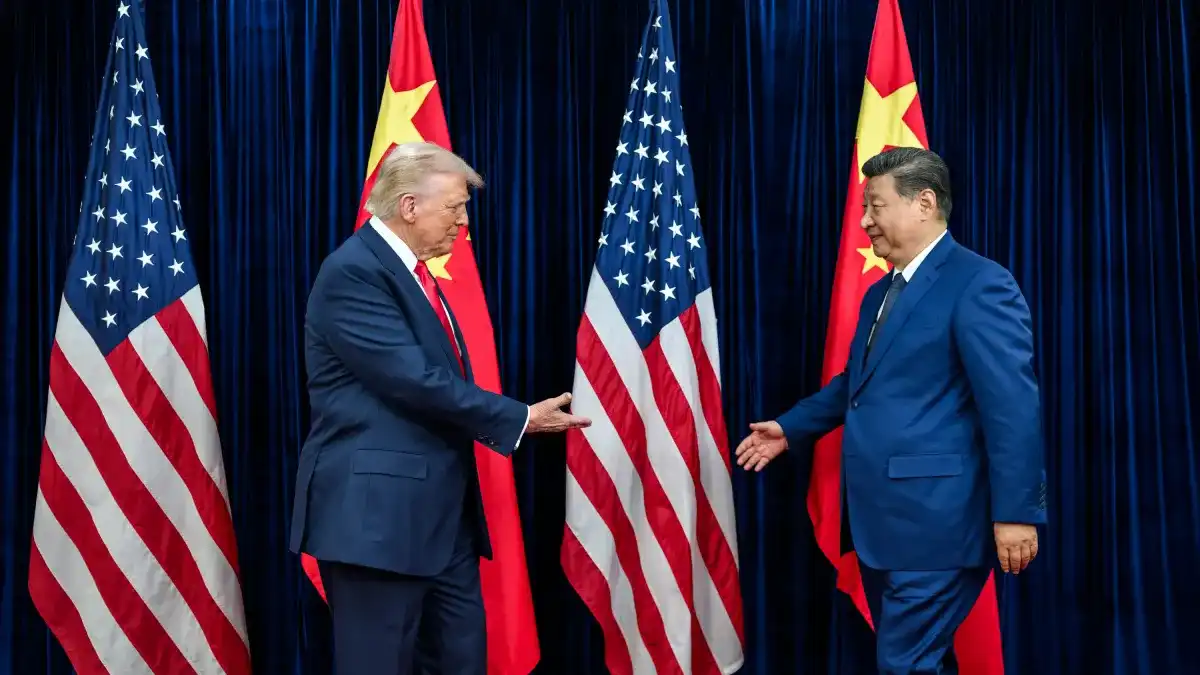
Key Points:
- U.S. President Donald Trump and Chinese President Xi Jinping are negotiating access to the tech market and mineral exports.
- Top executives, including Elon Musk and Tim Cook, traveled with the president to secure business deals.
- The U.S. government reportedly allowed Nvidia to sell its advanced H200 chips to Chinese technology firms.
- China holds significant leverage by controlling 59% of global rare earth mining and 91% of rare earth refining.
U.S. President Donald Trump and Chinese President Xi Jinping sat down for a massive diplomatic summit this Thursday. The two leaders plan to focus heavily on two major technology issues before the event wraps up on Friday. American tech companies desperately want better access to the massive Chinese consumer market. Meanwhile, the United States needs reliable access to China’s massive supply of critical earth minerals.
The friendly tone of this week’s meeting surprised many political observers. Just last year, the two nations fought a bitter tariff war. To show he means business, Trump brought some of the biggest names in American technology on his plane. Nvidia chief executive Jensen Huang, Tesla boss Elon Musk, and Apple leader Tim Cook all joined the diplomatic trip. Financial analysts say this star-studded guest list proves that artificial-intelligence supply chains are at the very top of the American priority list.
Trump told reporters that forcing China to open its markets to American businesses serves as his absolute first request. Xi responded with welcoming words during their Thursday talks. The Chinese leader promised that his country would open its economic doors even wider to foreign companies. This friendly exchange marks a huge shift from April 2025, when China aggressively fought back against Trump’s famous Liberation Day import taxes.
The ability to sell powerful computer chips sits at the very heart of these trade talks. Shortly after the two presidents met, news broke that Washington finally permitted Nvidia to sell its advanced H200 artificial intelligence chips in China. Several major Chinese technology firms plan to buy these highly restricted components. Financial experts believe Nvidia pressured the U.S. government hard to secure this exact deal so the company can maintain its grip on the global market.
However, letting Nvidia sell high-tech gear to China carries serious political risks back in Washington. Foreign policy experts warn that a special licensing deal for the H200 chips could spark a massive fight in Congress. Lawmakers who deeply distrust China might try to block the sales entirely. Experts predict the final deal will likely force Nvidia to pay special fees and adhere to strict limits on how many chips it can export.
The other tech billionaires on the trip have their own specific goals and want to set up a formal Board of Trade between the two countries. Tesla likely wants Beijing to approve its Full Self-Driving software for Chinese roads. Apple and Meta want to secure cheaper supply chain deals to build their consumer phones and virtual reality headsets. Industry watchers note that companies like Apple and Tesla do not really need a massive headline deal. Instead, they just want the two governments to stop fighting so they can run their local factories without constant drama.
While the Americans push for software and chip sales, China holds the ultimate trump card in the physical world. The Asian superpower controls an overwhelming share of the global critical mineral market. Data from the International Energy Agency show that China accounted for 59% of global rare earth mining in 2024. Even more shocking, Chinese factories handled exactly 91% of the world’s rare earth refining operations that same year.
Beijing knows exactly how much power these mining statistics provide. Chinese officials use their massive rare-earth supply as a powerful weapon in trade disputes. When the U.S. imposed heavy tariffs in 2025, China immediately restricted exports of critical minerals and industrial magnets to American factories. Those sudden export limits severely hurt American manufacturing until the two countries eventually agreed to a temporary trade truce.
Diplomatic advisors think the two leaders might agree to a simple trade-off this week. The U.S. could relax some of its strict rules on computer chip exports. In return, Trump could ask Xi to grant general licenses that would allow American commercial buyers to secure steady supplies of rare earths. However, the tense political atmosphere in America makes this kind of friendly swap very difficult to pass into law.
The absolute best outcome for both sides is to extend their current 2025 trade truce. A formal extension would keep import taxes low and keep factories running smoothly. Yet, foreign policy experts warn that the U.S. still operates from a weak position. American mining companies and their allies simply cannot dig and process rare earth minerals fast enough to beat China. Until the U.S. builds more refineries, American tech giants will remain at the mercy of Chinese raw materials.