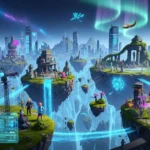
The debate around AI-generated art is a loud and angry one. We are caught in a loop of the same few questions. Is it “real” art? Did the AI “steal” from human artists to learn? Is typing a sentence into a box “cheating”? Will it take artists’ jobs? These are important, emotional, and often valid questions. But they are also a profound distraction. While we are arguing about the ethics of the paintbrush, we are ignoring the tidal wave it’s about to create. The real issue isn’t how AI art is made, but the consequences of its infinite, effortless production.
The Tsunami of Perfect Images
Before AI, creating a high-quality, compelling image required a combination of time, talent, and effort. This inherent friction, this scarcity, gave the resulting image value. A beautiful photograph or a stunning illustration was something to be savored because you knew the skill that went into it. The AI art generator is a machine that has removed that friction entirely. It has opened a firehose. We are no longer creating images; we are generating them, and we can generate a thousand “perfect” images before we’ve finished our morning coffee. We are at the beginning of a visual tsunami that will saturate our entire culture.
The Devaluation of Awe
What happens when a breathtaking image is no longer a rarity? When something is infinitely abundant, it becomes worthless. If diamonds were as common as grains of sand, we wouldn’t treasure them. The same thing is happening to the visual image. That feeling of awe you get when you see a truly masterful piece of art is, in part, an appreciation for the human skill behind it. When a “masterpiece” can be generated in 30 seconds with a clever prompt, that sense of awe begins to erode. We are becoming visually desensitized, and the “magic” of a powerful image is being devalued with every new generation.
The New Skill Isn’t Creation, It’s Curation
This new reality fundamentally changes what it means to be a “creative.” If the act of creation is now trivial and instantaneous, then the skill of creation is no longer the most valuable one. In a world of infinite images, the most important skill is curation. It’s the ability to sift through the endless digital noise to find or prompt something that is not just technically perfect, but genuinely meaningful, original, and resonant. The artist of the future may be less of a painter and more of an editor, a DJ, a tastemaker whose value is in their unique vision, not their technical execution.
The Future for Human Artists
So, will AI take the artist’s job? Not in the way we think. The threat isn’t that an AI will get hired to do the job of a human illustrator. The threat is that the entire ocean of “commercial art”—the stock photos, the background illustrations, the generic corporate graphics—will be instantly filled by AI, devaluing the market for everyone. The human artist’s new job is to offer the one thing the machine never can: authenticity. A story. A point of view. A physical object. A genuine human connection. The value will be in the person behind the art, not just the pixels on the screen.
We’re Arguing About the Engine, Not the Destination
While we are locked in a heated debate about the engine—the tool, the training data, the prompt—we are ignoring the profound change in our destination. We are entering an age of infinite visual content. This will fundamentally change our relationship with art, with creativity, and with reality itself. This is the conversation we should be having. The most important question isn’t “who made this?” It’s “what happens to all of us when everything can be made by anyone, instantly?”