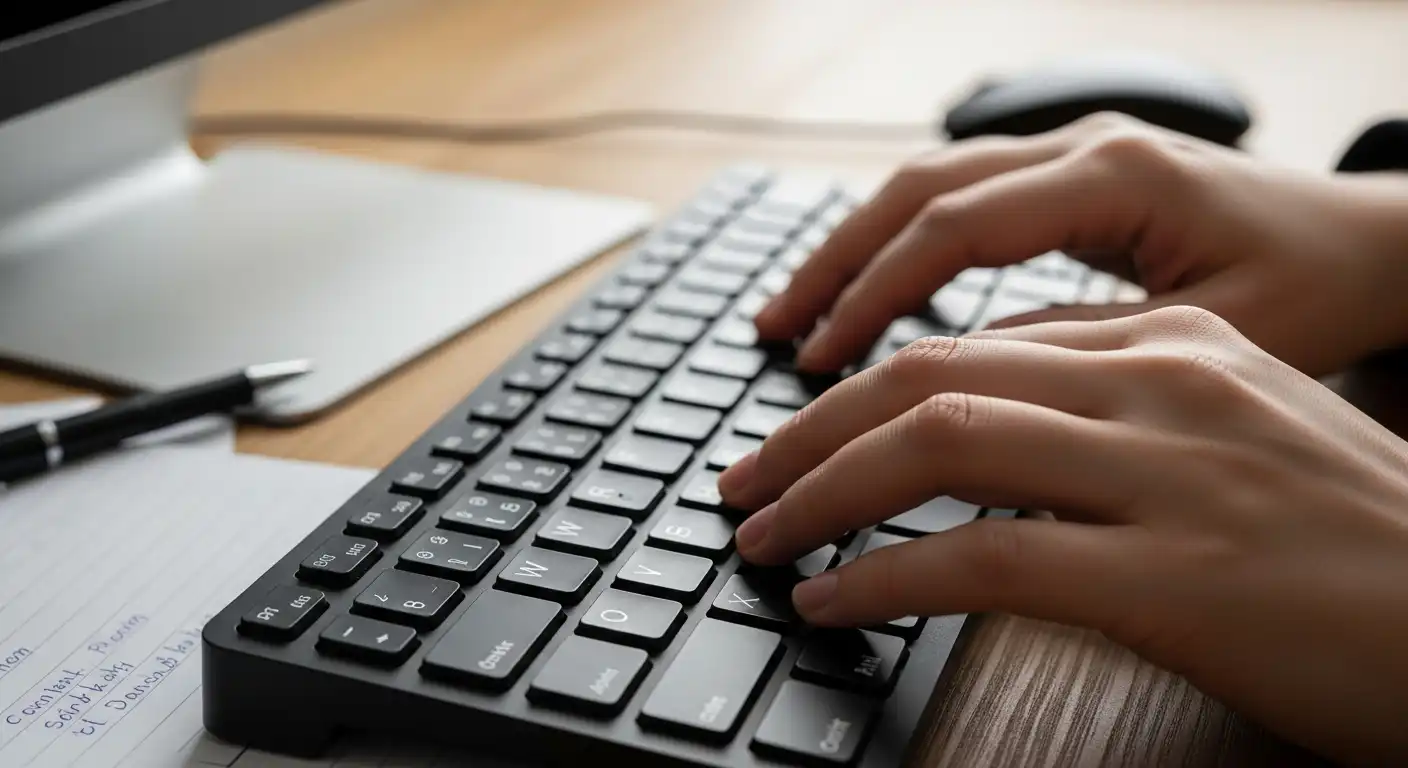
Take a look at the keyboard in front of you. Whether it’s a physical keyboard or a digital one on a screen, the layout is almost certainly “QWERTY.” This layout is a ghost. It’s a 150-year-old fossil from the age of mechanical typewriters, designed specifically to slow typists down to keep the metal arms from jamming. And yet, here it is, the unquestioned standard for how we talk to our machines. The story of the keyboard is a story of a technology that is both stuck in the past and slowly, strangely, evolving into something new.
The King That Cannot Be Dethroned
The first and most important part of the keyboard’s story is the story of what hasn’t changed. For decades, brilliant engineers have proposed better, more efficient layouts than QWERTY. The Dvorak layout, for example, is scientifically designed to be faster and more ergonomic, placing the most common letters on the home row. But it never caught on. The sheer inertia of QWERTY—the millions of people who already knew it, the millions of keyboards already produced—was too powerful to overcome. QWERTY is a powerful lesson in how the “best” technology doesn’t always win. Sometimes, “good enough” and “first” are all that matters.
The First Great Leap
While the layout remained the same, the first real evolution was the leap from the physical to the virtual. The arrival of the smartphone presented a crisis: how do you fit a full keyboard onto a tiny screen? The answer was the touchscreen keyboard. This was a monumental shift. For the first time, the keyboard was not a physical object, but a piece of software. This opened up a world of possibilities. The keys could now be smart. They could suggest the next word you were going to type. They could automatically correct your spelling. The keyboard was no longer just a set of dumb buttons; it was becoming intelligent.
The Age of the Swipe
The next evolution was a brilliant rethinking of the entire act of typing. Instead of tapping out each letter, what if you could just drag your finger across the keyboard in a single, fluid motion? This was the birth of “swipe” or “gesture” typing. It was a faster, more efficient, and surprisingly accurate way to type with one hand. It was one of the first and most successful examples of using machine learning on a phone, as a powerful algorithm predicted the word you were trying to spell based on the shape of your gesture.
The Rise of the Voice
The most radical evolution, however, has been the move to get rid of the keyboard entirely. The rise of surprisingly accurate “voice-to-text” dictation has changed the game for many people. For a short message or a quick note, it is often faster and easier to simply speak to your phone than to type on it. While it’s not perfect for long-form writing, it represents a fundamental shift in how we think about input. The keyboard is no longer the only way to get words into a machine.
A Hybrid Future
The keyboard is not going away. For focused, long-form writing, the tactile feedback of a physical QWERTY keyboard is still the undefeated champion. But its monopoly is over. We are now living in a hybrid world, where we seamlessly switch between different modes of input depending on the context. We tap out a quick message on a smart, predictive touchscreen. We swipe a reply with one hand while holding a coffee. We dictate a note while driving. The ghost of the typewriter still haunts our digital lives, but it is now surrounded by the strange, new, and wonderful ways we have learned to talk to the future.