Key Points:
- Southeast Asia is home to 8 of the 12 giant clam species on Earth, but poaching severely threatens their future.
- Police recently seized 10,000 kilograms of illegally harvested clam shells in the Philippines, underscoring that the black market still operates on a massive scale.
- Lab-bred clams have low survival rates in the wild, with one Singapore experiment reporting only a 29.9% success rate after 145 days.
- Turning giant clam habitats into local ecotourism spots helps coastal communities deter poachers and protect the animals in the long term.
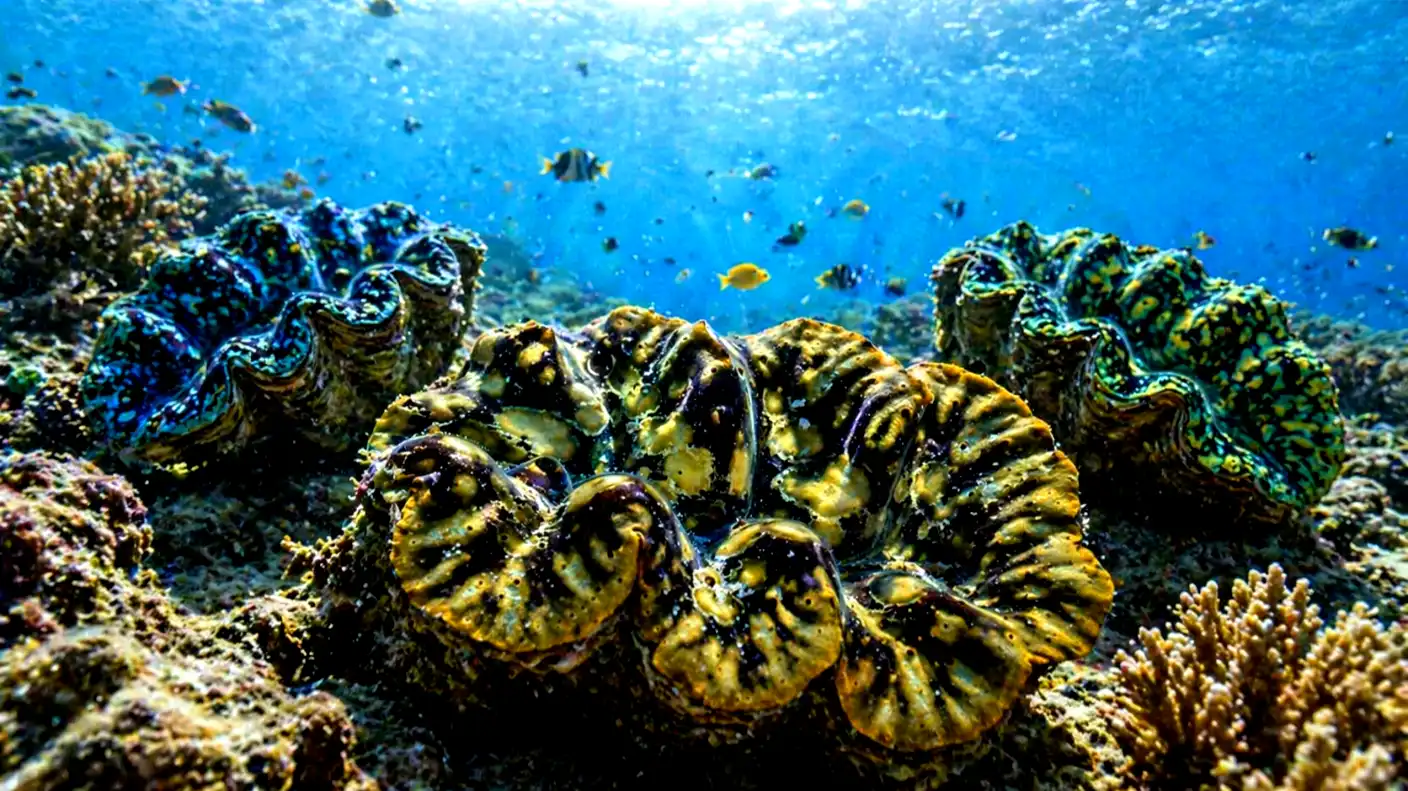
Giant clams build healthy reefs, offer shelter to ocean animals, and drop highly nutritious waste that feeds local fish. Some of these incredible creatures live for more than 100 years. Southeast Asia is home to 8 of the 12 giant clam species found worldwide. Unfortunately, their numbers are dropping rapidly across the entire region.
On April 6, a group of 20 Southeast Asian marine experts published a detailed policy paper outlining how to save these threatened ocean animals. They concluded that long-term survival depends heavily on enforcing strict anti-poaching laws and helping baby clams survive their early years. They also stressed that scientists urgently need consistent financial support to keep their breeding programs alive. While local and international laws ban poaching entirely, illegal fishing and underground trade remain huge problems. Local communities often capture the big clams for meat and harvest their shells for decorative ornaments.
Authorities see the sheer scale of this illegal trade firsthand. In January, police officers in the Philippine coastal town of El Nido seized more than 150 giant clam shells. This single huge haul weighed roughly 10,000 kilograms. Dr. Neo Mei Lin, a giant clam expert at the National University of Singapore who led the new report, explained the main enforcement problem. She noted that marine protected areas in Southeast Asia cover vast stretches of water. Park rangers find it nearly impossible to police the whole territory. When guards check one area, they leave the other side wide open for poachers to attack.
In Singapore, however, coastal development and habitat destruction cause the most harm, rather than illegal poaching. The tiny island nation holds onto just 2 remaining species: the critically endangered fluted giant clam and the endangered boring giant clam. Marine surveys up to 2024 counted only around 100 fluted giant clams and fewer than 30 boring giant clams left in Singaporean waters. Furthermore, these few survivors sit too far apart on the sea floor. Because they live so far apart, they cannot reproduce and multiply successfully.
To save these animals, scientists across the region breed giant clams in laboratories before releasing them onto natural coral reefs. Yet, these restocking projects face steep challenges. The young clams experience very low survival rates and high production costs. During a Singapore experiment that ran between 2011 and 2018, researchers released 144 lab-bred clams into the open ocean. After exactly 145 days, only 29.9% of those young clams survived.
Even when conservationists successfully move the healthy clams to the ocean, it takes decades to see real progress. The Philippines launched a large restocking program 40 years ago, but scientists note that the clams reared only recently began spawning a new generation on their own. Progress moves slowly, which makes securing funding incredibly difficult. Governments supply most of the money because private investors rarely want to fund a project that simply grows clams to drop back into the sea.
Marine scientist Alvin Chelliah, who co-authored the report, pointed out that short-term funding causes many good projects to fail. He suggested that countries like Malaysia should create long-term financing models by linking marine farming and ecotourism profits directly to conservation funds. We know long-term funding works beautifully. Starting in the 1980s, the Australian government spent $4 million in Australian currency over 25 years to boost clam conservation across the Indo-Pacific region. Finding new ways to raise money remains crucial, which is why the University of the Philippines restarted its adopt-a-clam program on April 20 to fund its ocean nursery.
Dr. Neo now plans to revamp regional efforts by partnering with the International Union for Conservation of Nature over the next 2 years. They will conduct a detailed species conservation planning exercise specifically tailored for Southeast Asia. She wants to focus heavily on the true giant clam, a critically endangered species that can grow over 1 meter long and weigh more than 200 kilograms. This large animal has already become extinct in Singapore. Today, divers must swim through a large habitat 20 to 30 times just to spot a single true giant clam elsewhere in the region.
Ultimately, local communities hold the key to stopping the poachers. When coastal villagers see direct benefits, such as ecotourism dollars, they actively protect their marine resources. Back in 2019, villagers in Air Batang on Malaysia’s Tioman Island transformed their hometown into a giant clam tourist attraction. They took direct action against poachers from neighboring villages who stole clams during the monsoon season. The locals directly asked the trespassers to leave and reported them to the park authorities. This community-driven approach gives researchers real hope that giant clams can thrive once again in Southeast Asian waters.