

For ten thousand years, the equation for milk has remained unchanged: grass plus cow equals milk. This biological conversion, domesticated by early humans in the Fertile Crescent, has fueled civilizations, strengthened bones, and given rise to a global culinary culture centered around cheese, yogurt, and ice cream. The dairy industry is a major component of the modern food system, deeply ingrained in our economy and our daily routines.
However, the 21st century has brought the traditional dairy model under unprecedented scrutiny. The environmental toll of industrial cattle farming, concerns over animal welfare, and the rising demand for sustainable nutrition are forcing a re-evaluation of the cow’s role as the world’s primary protein source.
Enter Cellular Agriculture—specifically, a branch known as Precision Fermentation.
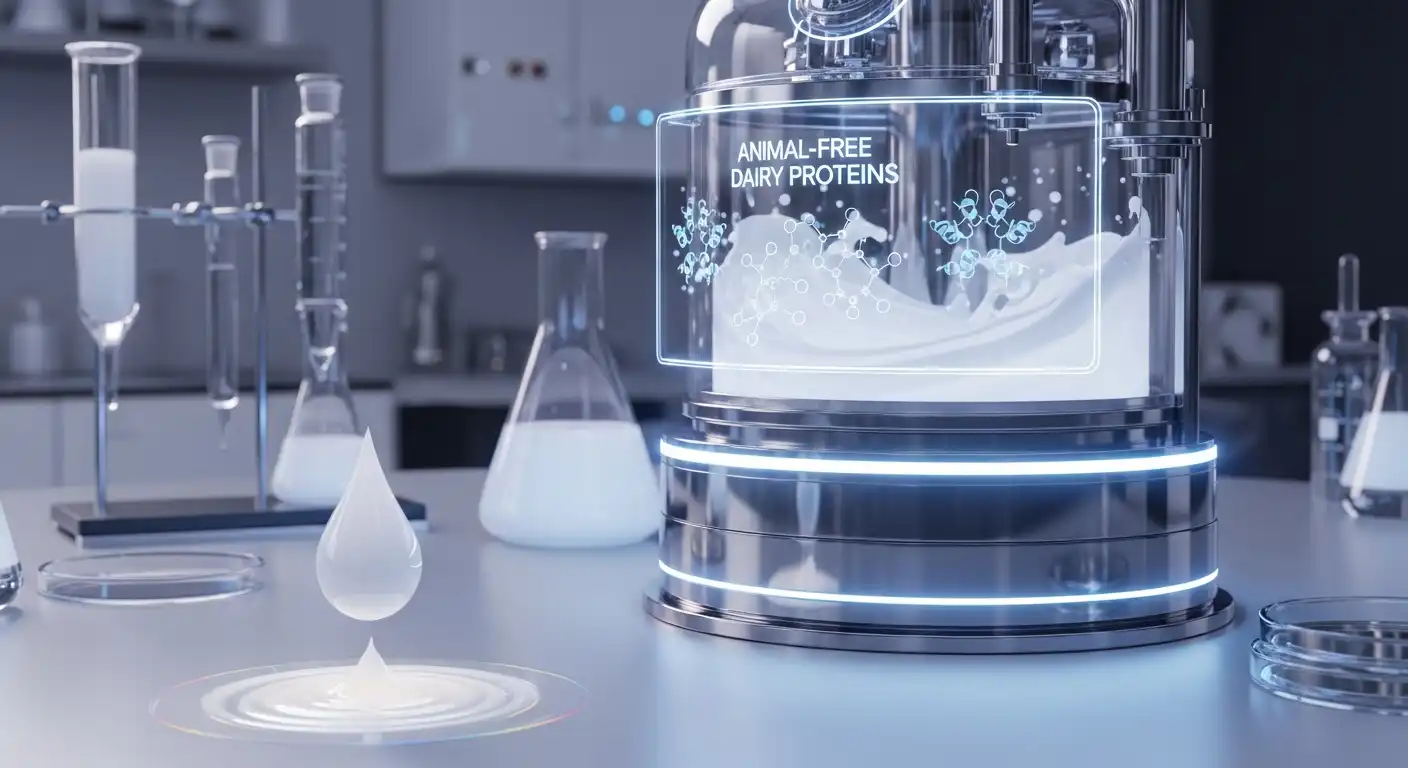
We are at the threshold of a food revolution. Scientists and startups are now proving that we do not need a 1,500-pound animal to produce milk proteins. Instead, we can program microorganisms to “brew” milk in giant steel tanks, much like we brew beer. This is not plant-based milk made from almonds or oats; this is molecularly identical dairy, produced without a single cow. This article explores the science, promise, and challenges of producing milk without animals.
The Science of Precision Fermentation
To understand how we can make milk without a cow, we must first understand what milk actually is. Although it is a complex white liquid, its functionality—the way it froths, curdles into cheese, or creates a creamy texture—derives from a few specific proteins, primarily casein and whey.
Plant-based milks have struggled to replicate the functionality of real dairy because they lack these specific proteins. Almonds and soy do not contain casein, which is unique to mammals. Casein is what allows milk to curdle and stretch; it is the “holy grail” of cheese making.
The Microbial Cow
Precision fermentation changes the game by using microorganisms (usually yeast, fungi, or bacteria) as tiny factories. The process involves four main steps:
- Genetic Encoding: Scientists access a digital database of the cow’s genome. They locate the specific genetic sequence (DNA) that instructs a cow’s cells to produce whey or casein proteins.
- Host Engineering: This DNA sequence is synthesized in a lab and inserted into a host microorganism. Common hosts include Trichoderma reesei (a fungus) or Pichia pastoris (a yeast). These microbes are now “programmed” to produce bovine proteins rather than their usual biological outputs.
- Fermentation: Microbes are placed in large-scale bioreactors (fermentation tanks). They are fed a nutrient-rich broth of simple sugars, water, and vitamins. As they consume the sugar, they follow their new genetic instructions and excrete milk proteins. This is the same fundamental process used to produce insulin for diabetics or rennet for cheese making (90% of cheese today is already made using fermentation-derived rennet).
- Purification: The broth is filtered. The genetically modified microbes are completely removed, leaving pure milk protein. This protein is then dried into a powder.
The Final Formulation
The result is a white powder that is molecularly identical to the protein found in cow’s milk. Food scientists then mix this “flora-based” protein with water, plant fats (like sunflower or coconut oil), minerals, and vitamins to recreate liquid milk, or use it as a base for ice cream, yogurt, and cheese. The end product tastes like dairy, functions like dairy, and is dairy—but no animal was involved in the process.
Why Disrupt the Dairy Cow?
If the traditional system works, why spend billions reinventing the wheel? The answer lies in efficiency, ethics, and the environment. The cow, biologically speaking, is an inefficient bioreactor.
The Environmental Toll
Industrial animal agriculture is a leading driver of climate change.
- Greenhouse Gases: Cows are ruminants; they burp methane, a greenhouse gas roughly 25 to 80 times more potent than carbon dioxide at trapping heat in the atmosphere. The global livestock sector emits more greenhouse gases than the entire transportation sector combined.
- Resource Intensity: Producing 1 liter of cow’s milk requires substantial land to grow feed and large quantities of freshwater.
- Waste: Industrial dairy farms produce large lagoons of manure that can leach into waterways, causing nitrogen pollution and toxic algal blooms.
Precision fermentation offers a staggering reduction in environmental impact. Early-life-cycle analyses suggest that producing milk protein via fermentation uses 97% less water, 99% less land, and emits 60% less energy than conventional dairy farming. By moving production from the field to the fermenter, we can rewild vast swathes of land currently used for grazing or growing feed crops.
Animal Welfare and Public Health
Beyond environmental considerations, cellular agriculture addresses the ethical concerns associated with factory farming. In the industrial dairy model, cows are artificially inseminated annually to maintain lactation. Their calves are removed shortly after birth. After 4-5 years, when their production drops, they are slaughtered. Precision fermentation eliminates the use of animals, removing concerns about confinement, treatment, and slaughter.
From a public health perspective, milk produced in a sterile bioreactor is free of contaminants commonly found in industrial milk, such as pus, blood, antibiotics, and growth hormones. Furthermore, because the process is controlled, scientists can omit lactose, producing dairy that is inherently lactose-free for the millions of people with lactose intolerance.
The Cheese Paradox: Solving the Plant-Based Problem
The plant-based food sector has experienced rapid growth, with oat and almond milks capturing significant market share from fluid dairy. However, there is one frontier where plant-based alternatives have consistently failed: Cheese.
Plant-based cheeses are typically made from starches and oils (like coconut oil and potato starch). While they can mimic the look of cheese, they lack the chemical structure to perform like it. They often don’t melt; they sweat oil. They don’t stretch; they crumble. They lack the complex, savory depth of fermentation-aged dairy.
This failure is chemical. The magic of cheese comes from casein micelles—clusters of proteins that bond together to form a solid network (the curd). Without casein, you cannot make true mozzarella that stretches on a pizza or a brie that oozes.
Cellular agriculture is the only technology capable of producing non-animal casein. Companies such as Change Foods and New Culture are focusing specifically on this, using precision fermentation to produce casein that yields the signature “cheese pull.” This is the key to winning over the flexitarian consumer who drinks oat milk but can’t give up their pizza.
The Industry Landscape: Who is Brewing Milk?
This is not a futuristic concept; the products are already on the shelves. The industry is moving from R&D to commercialization at a rapid pace.
Perfect Day: The Pioneer
The most prominent player in this space is Perfect Day. Founded in 2014, they pioneered the use of microflora to produce whey protein. Rather than selling their own milk, they operate as a B2B ingredient supplier. Their “animal-free whey” is now found in various consumer products, including Bored Cow (milk), Brave Robot (ice cream), and protein powders. They have proven that the FDA considers these proteins “Generally Recognized As Safe” (GRAS), paving the regulatory path for others.
Remilk and The Every Company
Based in Israel, Remilk is scaling up production of proteins for cheese and yogurt, aiming to undercut the price of traditional dairy. Meanwhile, The Every Company (formerly Clara Foods) is using similar technology to produce egg-white proteins without using chickens, demonstrating the versatility of fermentation technology.
Big Dairy Steps In
Perhaps the strongest validation of this technology is the involvement of traditional food giants. Corporations are realizing that cellular agriculture is not a fad, but a hedge against supply chain volatility and climate risk.
- General Mills launched a pilot brand called Bold Cultr (cream cheese made with non-animal whey).
- Nestlé, the world’s largest food company, has begun testing products using precision fermentation technology.
- Bel Group (makers of Babybel and The Laughing Cow) is partnering with startups to develop biomass-fermented cheeses.
When the incumbents begin investing in the disruptors, it signals a permanent shift in the industry’s trajectory.
Challenges to Mass Adoption
Despite the potential, cellular agriculture faces significant hurdles before it can truly replace the dairy cow on a global scale.
The Scale-Up Bottleneck
The biggest challenge is physical capacity: producing sufficient protein to supply the world requires millions of liters of fermentation capacity. Currently, the global infrastructure for precision fermentation (mostly used for pharmaceuticals and enzymes) is a fraction of what is needed for food. Building these massive “biorefineries” requires billions of dollars in capital expenditure (CAPEX). Until production scales up, the cost of animal-free dairy will remain higher than conventional milk, which governments heavily subsidize.
Regulatory Hurdles
While the US (FDA) and Singapore have been forward-thinking in approving these novel foods, other markets are slower. The European Union, with its strict novel food regulations and powerful agricultural lobbies, presents a more challenging path to market access. Furthermore, there are ongoing battles over labeling. Can you call it “milk” if it didn’t come from a mammal? The dairy lobby argues that these terms should be protected, whereas startup companies argue that, if the molecule is identical, the name should be protected to warn consumers with allergies.
The “Frankenfood” Perception
Consumer acceptance is the final frontier. While precision fermentation has been used for decades to produce insulin and rennet, its use for the main component of a meal is new. The industry must navigate the “GMO” stigma. Although the final protein product contains no genetically modified organisms (the yeast is removed by filtration), the process involves genetic engineering. Transparency is key. If the industry attempts to conceal the technology, it risks backlash. If they explain it as “brewing,” tapping into the familiarity of beer and bread, acceptance is much more likely.
The Allergen Warning
It is crucial to note a unique safety aspect of cellular agriculture. Because these proteins are molecularly identical to cow’s milk, they trigger the same milk allergies. A person with a dairy allergy cannot consume precision-fermentation ice cream. This presents a unique labeling challenge: the product is “vegan” (no animals), but it is not “dairy-free” in the chemical sense. Clear packaging is essential to prevent medical emergencies.
The Future: The Decentralized Dairy?
Looking ahead to 2035 and beyond, the implications of this technology are profound.
We could move from a centralized model—where milk is produced in rural areas and trucked thousands of miles to cities—to a decentralized model. Imagine a brewery-sized facility on the outskirts of a major city such as Tokyo or Dubai, producing all the fresh milk, yogurt, and cheese needed for the local population, regardless of the local climate or the lack of pasture.
This improves food security. Nations that rely heavily on dairy imports can become self-sufficient. It stabilizes prices, insulating food costs from droughts, heatwaves, or zoonotic diseases that affect cattle herds.
Furthermore, scientists are not limited to copying the cow. They can improve the milk. We could see “humanized” bovine milk, where the protein profile is tweaked to be closer to human breast milk for better infant formula. We could see high-protein, low-saturated-fat cheeses designed for athletes. Once we detach production from the animal, biology becomes software, and we can code for better nutrition.
Conclusion
Cellular agriculture represents the most significant shift in food production since the Neolithic Revolution. For centuries, we have relied on the cow as a technology to convert grass into protein. It was a good technology for a world with 1 billion people. It is a breaking technology for a world approaching 10 billion.
Producing milk without cows via precision fermentation allows us to retain the cultural and culinary traditions we love—the cheese board, the morning latte, the ice cream cone—while decoupling them from the destructive cycles of industrial animal agriculture. It promises a future where our dairy is cleaner, kinder, and more sustainable.
The transition will not happen overnight. It will be a gradual hybridization of our food system, where plant-based, fermentation-derived, and traditional grass-fed dairy coexist. But as the steel tanks rise and the costs fall, the era of the industrial dairy cow is slowly but surely coming to an end. The future of milk is not grown in a field; it is brewed.






