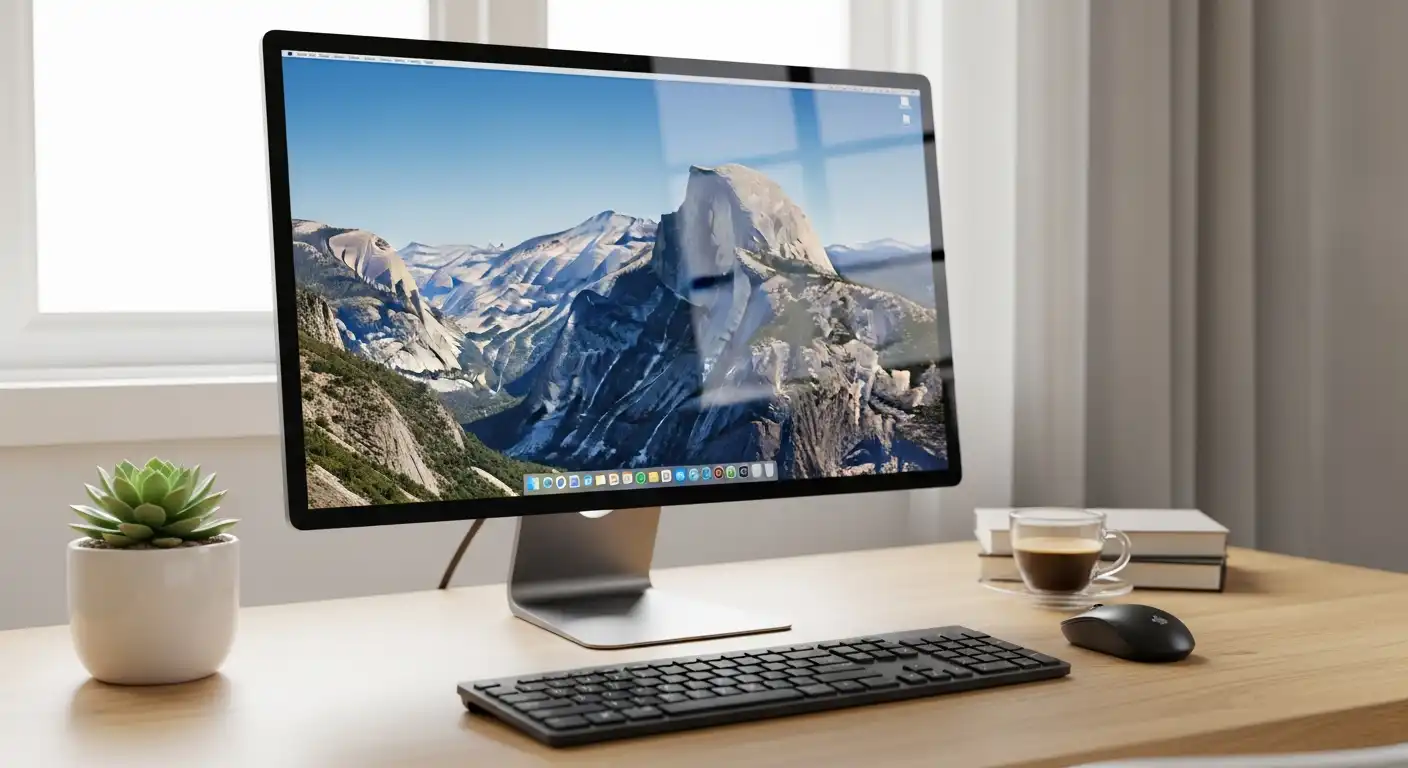
Think back to the television or computer monitor of your childhood. It was a piece of furniture. It was a massive, heavy box with a deeply curved, glowing screen. It took up half the desk or a huge corner of the living room, and it weighed a ton. Now, look at the screen you’re reading this on—a slim, impossibly thin slab of glass that produces a picture so sharp and vibrant it can look more real than reality itself. The journey from that glowing box to this crystal window is one of the most profound and most underappreciated technological revolutions of our lifetime.
The Tyranny of the Cathode Ray Tube (CRT)
For over half a century, the Cathode Ray Tube was the only game in town. The CRT was, in essence, a giant vacuum tube with an electron gun at the back that fired a beam of electrons at a phosphor-coated screen to make it glow. The very physics of this process demanded that the device be deep and heavy. The screen had to be a certain distance from the gun. This is why old TVs were so big. The CRT defined the look, the feel, and the limitations of our digital world.
The Great Flattening: LCD and Plasma
The first great leap forward was the war on the box. This was the “flat-panel” revolution, led by two competing technologies: LCD and Plasma. Both had the same magical goal: to create a screen just a few inches thick. Plasma offered incredible contrast and color, but it was power-hungry, hot, and prone to “burn-in.” LCD (Liquid Crystal Display) was the ultimate winner. Its genius was simple: it was like a high-tech stained-glass window with a giant light behind it. The liquid crystals acted as tiny shutters, opening and closing to let the backlight through. The box was dead. The flat screen was born.
The Quest for the Perfect Black
But the LCD had a fatal flaw: that backlight. Because the light was always on, it was impossible to create a true, deep black. The best it could do was close the shutters as tightly as possible, which left them dark and milky gray. The next great evolution was all about solving this problem. This was the OLED (Organic Light Emitting Diode) revolution. The concept was breathtakingly simple: what if each pixel could be its own tiny lightbulb? On an OLED screen, creating a black pixel doesn’t block light; you just turn the pixel off. The result is a perfect, infinite black that makes every other color pop with incredible vibrancy.
Faster, Brighter, and More Colorful
With the core technology perfected, the evolution became about refinement. We entered the age of “more.” We got higher resolutions, from 1080p to 4K and beyond, making the pixels themselves invisible. We got higher “refresh rates,” which is the speed at which the screen updates, giving us the buttery-smooth motion that is essential for modern video games. And we got HDR (High Dynamic Range), a technology that allows for incredibly bright highlights and deep, detailed shadows in the same scene, getting us closer than ever to the way our own eyes see the world.
The Window We Take for Granted
The display is the single most important interface we have with our digital lives. It is the canvas for our work, the portal for our entertainment, and the window through which we connect with the world. Its evolution from a fuzzy, heavy box to a paper-thin, crystal-clear sheet of glass has been so gradual that we often forget to be amazed by it. It is the unsung hero of the modern world, a piece of quiet magic that we are lucky enough to look through every single day.