In the digital tapestry of the 21st century, data centers are the silent, indispensable weavers. They are the physical heart of our virtual world, colossal nerve centers that store, process, and transmit the deluge of data powering our economies, entertainment, and daily lives. From the artificial intelligence models that are reshaping industries to the seamless video calls that connect continents, every byte of information begins or ends its journey within one of these high-tech fortresses. But this incredible digital utility comes at a staggering environmental price. Data centers are among the most energy-intensive facilities on the planet, with a collective electricity consumption that rivals that of entire nations.
As we stand on the cusp of 2025, the technology industry has reached a critical inflection point. The exponential growth of data, supercharged by the AI revolution, is on a collision course with the urgent global imperative to decarbonize. The question is no longer if the data center industry can be sustainable, but how it will lead the charge. The answer is not found in incremental efficiency gains alone, but in a fundamental revolution in how these facilities are powered. This is the story of how renewable energy technology is evolving from a peripheral corporate social responsibility initiative into the core engineering and economic driver of data center sustainability, transforming the digital world’s biggest problem into one of its most powerful climate solutions.
The Unseen Engine: Why Data Center Energy Consumption is a Global Challenge
Before we can explore the renewable solutions, we must first grasp the sheer scale and complexity of the data center energy problem. The industry’s power consumption is not a simple matter of plugging in more servers; it is a multi-faceted challenge involving exponential data growth, the physical laws of thermodynamics, and the immense supporting infrastructure required to maintain 99.999% uptime.
Understanding these underlying drivers is crucial to appreciating why a shift to renewable energy is not just beneficial but essential for the industry’s future.
The Exponential Growth of Data: The Unquenchable Thirst
The root cause of the data center energy challenge is the relentless, exponential growth of data creation and consumption. Every photo uploaded, every video streamed, every sensor reading from an IoT device, and every complex query posed to a large language model contribute to this digital tsunami.
Several powerful, concurrent technological trends fuel this explosion in data demand.
- The Artificial Intelligence (AI) and Machine Learning (ML) Revolution: Training and running large AI models is an incredibly compute-intensive process. A single AI training run can consume as much electricity as thousands of homes use in a year. As AI is integrated into more products and services, the energy demand from these specialized workloads is skyrocketing.
- The Internet of Things (IoT): Billions of connected devices—from smart home assistants and industrial sensors to connected cars—are constantly generating streams of data that need to be collected, processed, and analyzed, placing a continuous load on data center infrastructure.
- Big Data Analytics: Businesses and scientific institutions are leveraging massive datasets to unlock insights, optimize operations, and make discoveries. Processing these petabyte-scale datasets requires vast clusters of servers running at high capacity.
- Cloud Computing and Digital Services: The migration of enterprise IT from on-premise server rooms to large-scale cloud data centers, combined with the growth of streaming media, online gaming, and remote work, concentrates and amplifies global energy demand in these hyperscale facilities.
The PUE Paradox: Why Efficiency Alone is Not Enough
For over a decade, the data center industry has used a metric called Power Usage Effectiveness (PUE) to measure its efficiency. PUE is a ratio of the total power consumed by a facility to the power delivered to the IT equipment. A perfect PUE of 1.0 means all energy is used for computing, while a PUE of 2.0 means that for every watt used by servers, another watt is used for cooling and overhead. The industry has made remarkable progress, with hyperscale data centers achieving PUEs of 1.1 or even lower.
However, this has created a dangerous paradox. While individual facilities have become dramatically more efficient, the sheer growth in computing demand has resulted in total energy consumption continuing to rise. A data center that is 90% efficient but consumes 200 megawatts of power from a coal-fired plant is still a massive source of carbon emissions. Efficiency is crucial for minimizing waste, but it cannot solve the core problem if the energy source itself is not clean.
The Environmental Fallout: Carbon, Water, and Grid Strain
The impact of data centers extends far beyond their electricity consumption. Their environmental footprint is a complex equation with several critical variables.
These interconnected impacts underscore the need for a comprehensive approach to sustainability that encompasses more than just carbon emissions.
- The Carbon Footprint: The most significant impact is the carbon emissions associated with a facility’s energy source. A data center powered by fossil fuels is a major contributor to greenhouse gas emissions.
- The Water Footprint (WUE): Many traditional data centers use evaporative cooling, which consumes vast quantities of water—often millions of gallons a day for a single campus. In water-scarce regions, this creates a significant strain on local resources. Water Usage Effectiveness (WUE) has emerged as a key metric alongside PUE.
- Strain on Local Grids: The sudden arrival of a new hyperscale data center, which can have a power demand equivalent to that of a small city, can place an immense strain on local electricity grids. This can lead to grid instability and necessitate costly infrastructure upgrades.
- E-Waste and the Circular Economy: The rapid 3-5 year refresh cycle for servers and networking equipment generates a significant amount of electronic waste. A sustainable data center strategy must also include robust plans for hardware reuse, refurbishment, and responsible recycling.
The Renewable Revolution: A Paradigm Shift in Powering the Digital World
In response to these immense challenges, the world’s leading data center operators are undergoing a profound shift in their paradigm. They are moving away from a passive role as mere energy consumers to become active, sophisticated players in the global renewable energy market. A powerful confluence of economic, social, and technological forces drives this transition.
This revolution is about more than just “going green”; it is a strategic realignment that positions renewable energy at the very core of data center design, operation, and economic strategy.
Beyond Offsetting: The Evolution from RECs to Direct Impact
In the early days of corporate sustainability, many companies achieved “100% renewable” status by purchasing Renewable Energy Certificates (RECs). A REC is a tradable commodity that represents the “green” attributes of one megawatt-hour of electricity generated from a renewable source. While RECs helped create a market for green power, the practice was often criticized as an accounting exercise, as it didn’t necessarily lead to the construction of new renewable projects.
By 2025, the industry’s approach will have matured far beyond this. The focus is now on “additionality”—ensuring that a company’s actions directly lead to new clean energy being added to the grid. This is achieved through direct investment and long-term power purchase agreements that provide the financial certainty needed to build new wind and solar farms.
The Corporate Imperative: ESG, Investor Pressure, and Brand Reputation
The drive towards renewables is no longer solely an environmental concern; it is a core business imperative. Modern corporations are judged by their performance on Environmental, Social, and Governance (ESG) criteria, which investors, customers, and employees heavily scrutinize.
A strong commitment to renewable energy has become a critical component of corporate strategy for several key reasons.
- Investor Demand: Large institutional investors, such as pension funds and asset managers, are increasingly using ESG metrics to screen their investments. Companies with poor sustainability performance are seen as carrying higher long-term risk.
- Customer and Client Expectations: Enterprise customers choosing a cloud provider are now demanding transparency about the carbon footprint of their services. A cloud powered by renewable energy is a significant competitive differentiator.
- The War for Talent: Top engineering and tech talent, particularly from younger generations, want to work for companies that align with their values. A demonstrated commitment to sustainability is a crucial tool for attracting and retaining top talent.
- Social License to Operate: As data centers expand into new communities, they face increasing scrutiny from residents over their resource consumption. Proactively building facilities powered by new, local renewable energy projects is essential for gaining community acceptance and securing permits.
The Economic Tipping Point: When Renewables Became Cheaper
Perhaps the single most powerful driver of this transition is simple economics. Over the past decade, the Levelized Cost of Energy (LCOE) for utility-scale solar and wind power has plummeted, making them the most cost-effective sources of new electricity generation in many parts of the world.
This economic reality has fundamentally changed the financial calculus for data center operators, turning sustainability into a source of competitive advantage.
- Long-Term Price Stability: A long-term Power Purchase Agreement (PPA) with a wind or solar farm enables a data center operator to secure a predictable electricity price for 10-20 years. This acts as a hedge against the price volatility of fossil fuels, such as natural gas, providing significant financial certainty.
- Reduced Operational Costs: In regions with high electricity prices, generating power on-site from solar can be cheaper than purchasing it from the local utility, thereby directly reducing operational expenditures.
- Access to Green Financing: Companies with strong sustainability credentials can often access “green bonds” or other forms of sustainable financing at more favorable interest rates.
The Arsenal of Clean Energy: Key Renewable Technologies Powering Data Centers in 2025
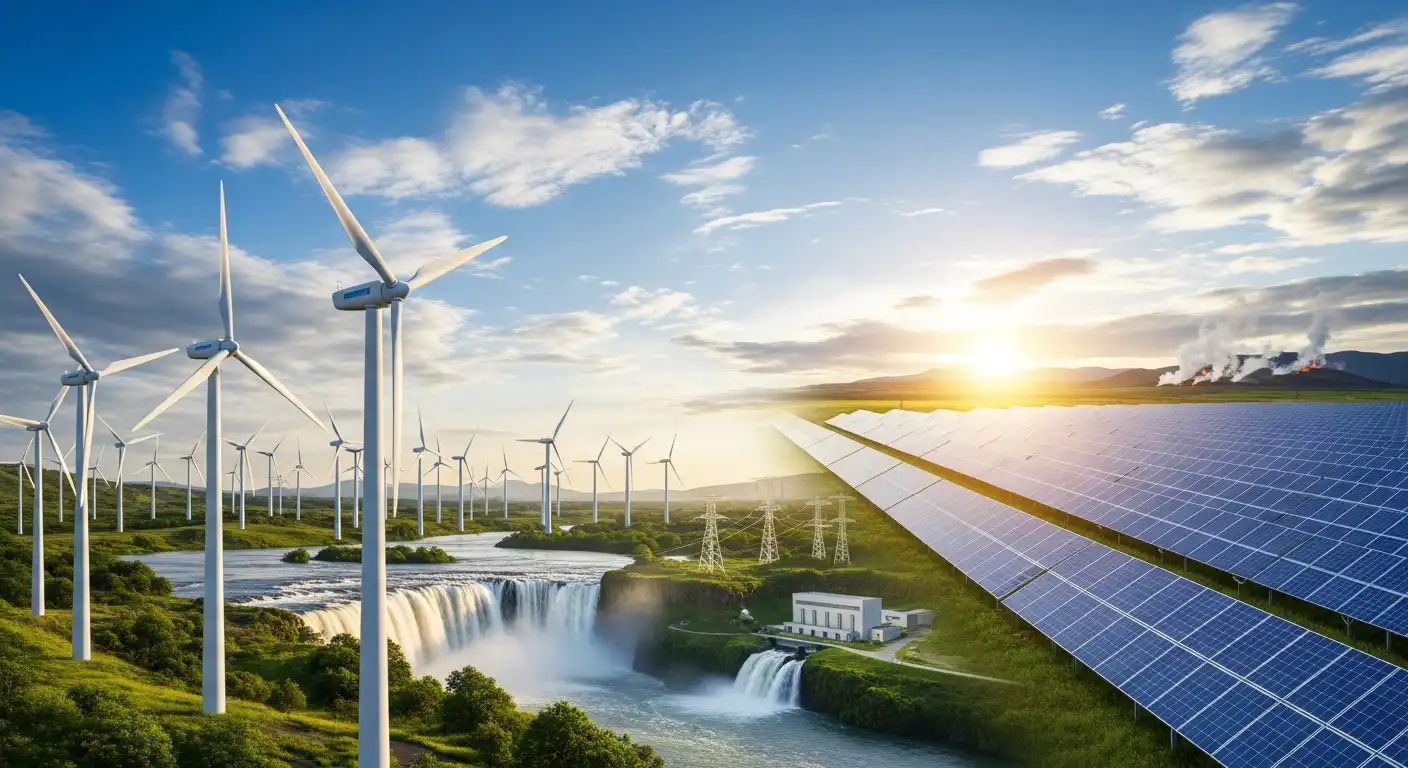
A single source of clean energy will not power the data center of 2025. Instead, it will draw from a diverse and sophisticated portfolio of renewable technologies, each with its own unique profile of availability, cost, and geographic suitability. The key is to blend these sources to create a reliable, resilient, and carbon-free power supply.
This diverse technological arsenal allows operators to tailor their energy strategy to the specific resources and conditions of each geographic location.
Solar Power: From Rooftop Arrays to Utility-Scale Farms
Solar photovoltaics (PV) have become a cornerstone of data center renewable strategies due to their rapidly falling costs and versatility. They convert sunlight directly into electricity and can be deployed in various configurations.
The application of solar power for data centers can be broadly divided into on-site and off-site generation.
- On-Site Solar Generation: This involves installing solar panels directly on the data center property. Common approaches include covering the vast, flat rooftops of data center buildings with panels or building solar canopies over parking lots. While on-site solar rarely meets the full power demand of a facility, it provides a direct source of clean energy, reduces reliance on the grid, and serves as a highly visible symbol of a company’s commitment to sustainability.
- Off-Site Utility-Scale Solar: To meet their massive energy needs, hyperscale operators enter into long-term PPAs with massive, utility-scale solar farms. These projects can cover thousands of acres and generate hundreds of megawatts of power, enough to power multiple data center campuses. These off-site projects are the primary mechanism for adding new clean capacity to the grid.
- Technological Advancements in 2025: By 2025, the efficiency of solar panels is expected to continue improving. Technologies like bifacial panels, which can capture reflected light from their underside, and intelligent tracking systems, which orient the panels to follow the sun throughout the day, will maximize the energy output from each project.
Wind Energy: Harnessing the Power of Onshore and Offshore Turbines
Wind power is another critical component of the renewable energy mix, offering a powerful complement to solar energy as wind often blows strongest when the sun isn’t shining, such as at night and during the winter.
Wind projects provide the large-scale, cost-effective generation needed to power the cloud.
- Onshore Wind Farms: These are the most common type of wind project, consisting of turbines located in areas with strong, consistent winds. Data center operators are among the largest corporate buyers of onshore wind power through PPAs, often contracting the entire output of a new wind farm before it is even built.
- Offshore Wind: The New Frontier: Offshore wind farms, built in shallow coastal waters, are a major emerging force. While more expensive to build, they benefit from stronger and more consistent winds, resulting in a higher capacity factor (meaning they generate power for a larger percentage of the time). Their proximity to coastal population centers, where many data centers are located, also helps reduce transmission challenges. By 2025, we will see the first major PPAs between data centers and offshore wind projects.
Hydropower: The Legacy Baseload and Its Modern Role
Hydropower, generated by the flow of water through dams, is one of the oldest and most reliable forms of renewable energy. It provides a consistent, 24/7 “baseload” of clean power that is not subject to the intermittency of sun and wind.
Many tech companies have strategically located data centers in regions with abundant, low-cost hydropower.
- Geographic Concentration: Regions such as the Pacific Northwest in the U.S. and the Nordic countries have become major data center hubs, largely due to their legacy of large-scale hydroelectric power. This provides a ready-made source of carbon-free electricity.
- Environmental Considerations: While reliable, the construction of new large-scale dams has significant environmental and social impacts. As a result, the focus is on utilizing and upgrading existing hydro facilities rather than building new ones.
Geothermal Energy: Tapping into the Earth’s Constant Heat
Geothermal energy is a powerful but geographically limited source of renewable power. It works by tapping into the natural heat of the Earth’s core, using steam or hot water from underground reservoirs to drive turbines.
Its key advantage is its ability to provide a constant, 24/7 supply of carbon-free power, making it a true baseload renewable resource.
- 24/7 Reliability: Unlike solar and wind, geothermal plants can run continuously, day and night, regardless of the weather. This makes them an ideal power source for data centers, which have a constant, unwavering energy demand.
- Co-location and Cooling Benefits: In some cases, the same geothermal resources can be used for both power generation and direct cooling of the data center, further enhancing efficiency and sustainability. Companies are actively exploring the construction of new data centers in geothermally active regions, such as Iceland and parts of Nevada, to capitalize on this unique resource.
The Emerging Frontier: Green Hydrogen and Advanced Nuclear
Looking toward 2025 and beyond, the industry is actively investing in and piloting next-generation technologies that could solve some of the final pieces of the decarbonization puzzle, particularly the problem of long-duration energy storage and backup power.
These advanced technologies promise to replace the last vestiges of fossil fuels within the data center’s energy ecosystem.
- Green Hydrogen for Backup Power: For decades, data centers have relied on massive diesel generators as a backup power source during grid outages. These are a major source of localized pollution and carbon emissions. By 2025, the first large-scale deployments of green hydrogen fuel cells are expected to begin replacing these diesel generators. Green hydrogen is produced by using renewable electricity to split water into hydrogen and oxygen through the process of electrolysis. The hydrogen can be stored and then used in a fuel cell to generate carbon-free electricity on demand.
- Advanced Nuclear (SMRs): While still a longer-term prospect, there is growing interest in using Small Modular Reactors (SMRs) to provide clean, reliable, 24/7 power directly to data center campuses. These next-generation nuclear reactors are designed to be much smaller, safer, and more scalable than traditional nuclear plants. A successful deployment could provide a dedicated, carbon-free power source capable of powering an entire data center campus independently of the grid. However, significant regulatory and public perception hurdles remain.
The 24/7 Carbon-Free Challenge: The Holy Grail of Data Center Sustainability
By 2025, the leading edge of data center sustainability will have moved far beyond the goal of simply matching 100% of annual energy consumption with renewable purchases. The new gold standard, championed by companies like Google, is 24/7 Carbon-Free Energy (CFE). This is a far more ambitious and impactful goal.
The pursuit of 24/7 CFE is forcing a complete re-architecture of how energy is procured, managed, and consumed, turning the data center into a dynamic, intelligent participant in the new clean energy grid.
What is 24/7 Carbon-Free Energy (CFE)?
24/7 CFE means that every single kilowatt-hour of electricity consumed by a data center, on every hour of every day, is matched with carbon-free electricity that was generated on the same local grid at the same time. This is a radical departure from the traditional model, which allows a company to buy solar power from a desert region to “offset” the coal-powered electricity its data center is consuming at night in a different region.
The goal of 24/7 CFE is to ensure that the data center’s operation is truly driving the decarbonization of the local grid where it is physically located, at all times.
The Intermittency Problem: Tackling the “Ducks and Canyons” of the Grid
The single greatest challenge to achieving 24/7 CFE is the intermittency of solar and wind power. The sun doesn’t shine at night, and the wind doesn’t always blow. This creates daily and seasonal variations in renewable energy production. The famous “duck curve” illustrates this, showing a midday glut of solar power followed by a steep ramp-up in demand for fossil fuel generation in the evening when the sun sets. The challenge is to fill these gaps with other forms of carbon-free energy or storage.
The Technology Solution Stack for 24/7 CFE
Achieving round-the-clock clean energy requires a sophisticated, multi-pronged strategy that combines a diverse portfolio of renewables with cutting-edge energy storage and intelligent load management.
This integrated technology stack represents the nervous system of the 2025 24/7 CFE data center.
- Battery Energy Storage Systems (BESS): The most critical technology for bridging short-term gaps in renewable generation is the battery. Large-scale BESS installations, often co-located with solar farms or at the data center itself, will store the excess solar energy generated during the day and discharge it during the evening hours or when clouds pass over. By 2025, the scale of these battery deployments will be massive, measured in hundreds of megawatt-hours.
- A Diverse Portfolio of Renewables: A 24/7 CFE strategy cannot rely on a single renewable source. It requires a carefully blended portfolio of technologies whose generation profiles complement each other. A common combination is solar (which produces during the day), wind (which is often stronger at night), and a firm, 24/7 source like geothermal or hydropower where available.
- AI-Powered Load Shifting: The data center itself will become an active tool for managing intermittent power outages. Non-urgent, batch-processing workloads (like video transcoding or AI model training) can be intelligently scheduled by an AI platform to run when renewable energy is most abundant and cheap. This “load shifting” turns flexible computing demand into a virtual battery.
- Geographic Load Balancing: Hyperscale cloud providers can take this a step further. They can move computing tasks between data centers in different geographic regions in real-time. If it’s a calm, cloudy evening in Virginia, a non-latency-sensitive workload could be automatically shifted to a data center in wind-swept Iowa or sun-drenched Arizona, effectively “following the renewables” around the grid.
- Long-Duration Storage (Green Hydrogen): While batteries are excellent for daily cycling, they are not cost-effective for storing energy for days or weeks to ride out prolonged periods of bad weather. This is where green hydrogen comes in. By 2025, we will see the first pilot projects utilizing excess renewable energy to produce hydrogen, which can be stored for extended periods and then used to power fuel cells as needed.
Innovative Integration Strategies: Beyond Simply Buying Green Power
The practical implementation of these renewable energy strategies requires innovative contractual and physical integration models. Data center operators have become pioneers in developing new ways to procure and integrate clean energy into their operations at an unprecedented scale.
These strategies are creating a new playbook for how large corporations can actively drive the energy transition.
The Power Purchase Agreement (PPA): The Workhorse of Corporate Renewables
The PPA is the most important contractual tool used by data centers to procure renewable energy. It is a long-term contract (typically 10-20 years) between a buyer (the data center) and an energy developer.
There are two main types of PPAs, each serving a different strategic purpose.
- Physical PPA: In a physical PPA, the company directly owns the electricity produced by the renewable project. This is often used when the project is on the same grid as the data center. The company either receives the power directly or through a “sleeved” arrangement with the local utility.
- Virtual PPA (VPPA) or Synthetic PPA: This is a financial contract rather than a physical power delivery agreement. The data center agrees to pay the renewable project a fixed price for its energy. The project then sells its power into the wholesale market. If the market price is lower than the fixed price, the data center pays the difference; if it’s higher, the project pays the data center. The VPPA provides the developer with the revenue certainty needed to build the project, while the data center receives the RECs and a financial hedge against volatile energy prices.
Direct Investment and On-Site Generation: Taking Control of the Power Source
A growing trend is for tech companies to move beyond being just customers of renewable energy to becoming direct investors or owners. This gives them greater control over their energy supply and can accelerate the deployment of new technologies.
This strategy includes building and owning on-site generation and investing equity in large off-site projects.
- On-Site Generation at Scale: This goes beyond simple rooftop solar. It involves building dedicated microgrids with solar, batteries, and other sources to power an entire data center campus, providing both clean energy and enhanced resilience against grid failures.
- Direct Equity Investment: Some companies are taking direct ownership stakes in large wind and solar projects alongside traditional energy developers. This gives them more influence over the project’s development and a share in its financial returns.
Co-location with Renewable Generation: The Ultimate Symbiosis
One of the most efficient and forward-looking strategies is to eliminate the distance between power generation and consumption. This involves strategically building new data centers directly adjacent to or on the same site as a massive renewable energy project.
This symbiotic co-location offers several powerful advantages that are expected to become more common by 2025.
- Reduced Transmission Losses: Electricity is lost as it travels over long distances on transmission lines. By co-locating the data center with the power source, these losses are minimized, increasing overall system efficiency.
- Bypassing Grid Congestion: One of the biggest hurdles to connecting new renewable projects to the grid is a lack of available capacity on transmission lines. A co-located data center that consumes most of the power on-site can bypass these grid bottlenecks.
- Creation of “Green Data Hubs”: This strategy is leading to the development of new data center hubs in rural areas that have excellent solar or wind resources but were not previously considered prime locations.
The Road to 2025 and Beyond: Overcoming Hurdles and Future Trends
The path to a fully decarbonized data center industry is not without significant challenges. Overcoming these hurdles will require continued innovation, strategic policy support, and unprecedented collaboration between tech companies, utilities, and governments.
The challenges of today are shaping the trends and innovations that will define the sustainable data center of the late 2020s.
The Land and Resource Scarcity Challenge
Both utility-scale solar farms and large data center campuses require vast amounts of land. As the industry scales, competition for suitable land is intensifying, resulting in rising costs and increased permitting challenges. There is also a growing focus on the supply chain for key minerals required for batteries, solar panels, and wind turbines, as well as the need to ensure these are sourced responsibly.
Grid Congestion and Transmission Bottlenecks
Perhaps the single greatest obstacle to a fully renewable-powered digital economy is the inadequacy of our existing electrical grid. The grid was designed for a world of a few large, centralized fossil fuel plants, not for a distributed network of intermittent renewable sources. There is a massive need for investment in new high-voltage transmission lines to move clean energy from the windy and sunny regions where it’s produced to the population centers where it’s consumed.
The Future: AI-Optimized Grids and Deeper Integration
Looking beyond 2025, the future lies in even deeper integration between data centers and the energy grid, orchestrated by artificial intelligence. Data centers will not just be consumers of clean energy; they will be active, dynamic assets that help stabilize the grid. Their vast banks of batteries and flexible computing loads can be utilized to provide grid services, such as frequency regulation, which helps smooth out fluctuations from renewable generation and enables the grid to absorb even higher percentages of clean power.
Conclusion
The narrative of the data center has undergone a remarkable transformation. Once cast as a primary villain in the story of rising global energy consumption, it is now emerging as a central protagonist in the transition to a sustainable, carbon-free future. By 2025, the integration of renewable energy technology will be a defining characteristic of modern, competitive data centers. The industry’s immense scale, insatiable demand for power, and relentless drive for innovation have made it a powerful catalyst, accelerating the deployment of wind, solar, and energy storage at a speed and scale that would have been unimaginable a decade ago.
The pursuit of 24/7 Carbon-Free Energy is forging a new blueprint for how a 21st-century industry can operate in harmony with the planet’s limits. It is a future where the cloud is not just a metaphor for a placeless, ethereal internet, but a reflection of a power source as clean and boundless as the sun and the wind. The green engine of the cloud is not just powering our digital lives more sustainably; it is actively pulling the entire global energy system forward into a cleaner, more resilient, and more hopeful future.