

Key Points
- Polish scientists developed B-STING, a smart self-disinfecting surface material.
- It uses copper atoms to turn air and water into germ-killing compounds.
- The material activates automatically when it detects chemical signals from bacteria.
- It requires no electricity or light and does not wear out over time.
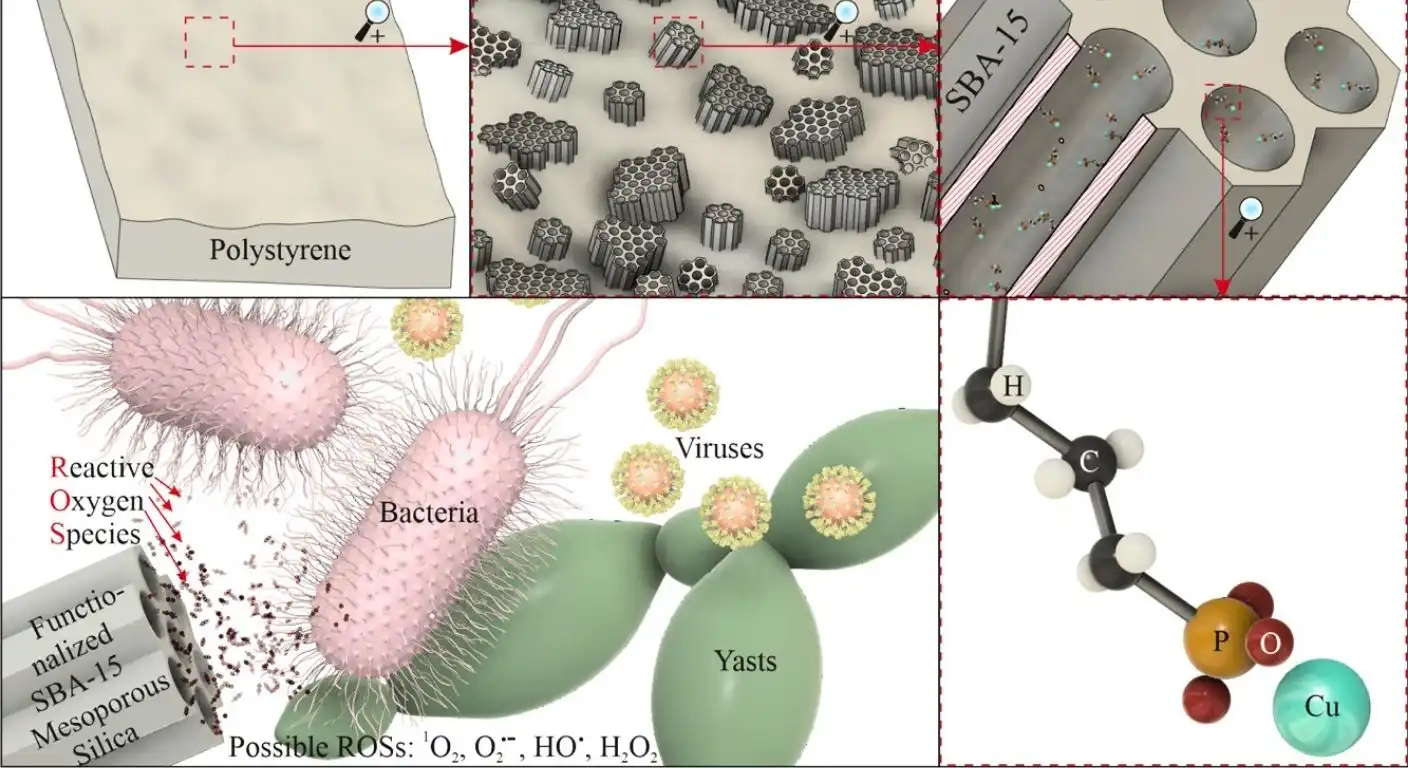
Imagine walking into a hospital where the door handles, rails, and light switches clean themselves. Scientists at the Institute of Nuclear Physics in Poland have made this a reality with a new material called B-STING. This smart coating acts like a microscopic factory, producing powerful cleaning agents the moment it detects bacteria, fungi, or viruses.
Most antibacterial surfaces use silver or gold nanoparticles to kill germs on contact. B-STING takes a different approach. The material is built on a silica base that resembles a honeycomb when viewed under a microscope.
Inside its tiny pores, researchers placed single copper atoms. These copper bits act as engines that grab oxygen and water from the surrounding air to create “reactive oxygen species.” These chemical compounds are lethal to microbes, effectively piercing their cell walls and destroying them.
What makes this technology revolutionary is its ability to sense danger. It does not need batteries, UV light, or ultrasound to work. Instead, it reacts to the chemical environment created by the bacteria themselves, such as changes in acidity or the presence of sulfur.
The material effectively sits and waits, activating its cleaning power only when germs are present. Because the copper acts as a catalyst, it doesn’t wear out or need refilling. It keeps working indefinitely as long as there is air and moisture.
Early tests show the coating destroys dangerous pathogens but remains completely safe for human cells. It is durable, transparent, and cheaper to produce than gold-based alternatives. While it might take years to develop into medicine, the researchers believe B-STING is ready now for coating high-touch surfaces. In the future, doctors might even use it on medical implants or dental fillings to prevent infections inside the body.
Source: Applied Surface Science (2026).






