For thousands of years, human biology was synchronized to the rhythm of the sun. We rose with the bright, cool light of dawn, we worked under the intense overhead light of midday, and we wound down by the warm, dim glow of firelight and sunset. This natural cycle of light and dark is the primary driver of our Circadian Rhythm—the internal 24-hour clock that governs nearly every process in our bodies, from our sleep-wake cycles and hormone production to our metabolism and mood.
Then came the lightbulb.
In the last 150 years, we have brought the sun indoors. We have flooded our homes and offices with static, artificial light, effectively severing our connection to the natural world. We now spend roughly 90% of our lives indoors, bathed in a constant, unchanging glow.
This disruption has profound consequences for our health. The wrong light at the wrong time can lead to poor sleep, eye strain, afternoon slumps, and even contribute to depression and other mood disorders.
But what if you could hack your home lighting? What if you could turn your living space into a tool that supports your biology rather than fights against it?
By understanding the science of light and making a few strategic changes, you can transform your home into a dynamic environment that boosts your energy during the day, promotes deep relaxation at night, and significantly enhances both your productivity and your well-being. This is the art of Human-Centric Lighting.
The Science of Light: Color Temperature and Brightness
To optimize your lighting, you must first understand the two primary characteristics of light that influence your biology: Color Temperature and Brightness (Lux).
Color Temperature (Kelvin)
Color temperature is not about heat; it is about the color appearance of the light. It is measured in Kelvin (K).
- Warm Light (Under 3000K): This light has a yellow, orange, or reddish hue, like a candle or a sunset. It is calming, cozy, and contains very little blue light, which means it has a minimal impact on your circadian rhythm.
- Neutral White (3100K – 4500K): This is a balanced white light, often found in retail stores.
- Cool/Daylight (4600K and above): This light has a blueish-white tint, like the sky on a clear day. It is stimulating, enhances focus, and boosts alertness. However, it is also a powerful suppressor of melatonin, the hormone that makes you sleepy.
Brightness (Lux)
Lux is a measure of the intensity of light falling on a surface.
- A bright, sunny day can be 100,000 lux.
- A typical, well-lit office is around 500 lux.
- A cozy living room at night might be 50 lux.
- Full moonlight is less than 1 lux.
Your brain uses both color temperature and brightness as signals to know what time it is and how it should be behaving.
The Strategy: Syncing Your Home to the Sun
The goal of human-centric lighting is to mimic the natural progression of daylight inside your home. This means bright, cool light in the morning and dim, warm light in the evening.
The Morning “Sunrise” (6:00 AM – 10:00 AM)
Your first exposure to light in the morning is the most powerful signal to your circadian clock. It effectively “starts the timer” for your day.
- The Goal: Get as much bright, cool-toned light as possible within the first hour of waking. This suppresses any lingering melatonin, resets your clock, and boosts cortisol (the alertness hormone) in a healthy way.
- The “Analog” Method: Go outside. A 10-minute walk, even on an overcast day, exposes you to thousands of lux—far more than any indoor bulb.
- The “Digital” Method: If you can’t get outside, use artificial light strategically.
- Smart Bulbs: Use tunable white smart bulbs (like Philips Hue or Wyze) in your kitchen and bathroom. Program them to turn on to a bright, cool white (5000K) at your wake-up time.
- “SAD” Lamps: Seasonal Affective Disorder (SAD) lamps are designed to provide 10,000 lux. Sitting in front of one for 15-20 minutes while you drink your coffee can have a profound impact on your energy and mood, especially in the winter.
The Midday “Peak” (10:00 AM – 4:00 PM)
This is your peak productivity window. Your lighting should support focus and alertness.
- The Goal: Maintain bright, neutral-to-cool light in your workspace.
- Workspace Lighting:
- Ambient: Your overhead room light should provide a general, diffuse base layer of light.
- Task: You need a dedicated desk lamp to illuminate your work surface. This prevents eye strain. Position it to the side to avoid glare on your screen.
- Bias Lighting: Place an LED strip behind your computer monitor. This reduces the contrast between the bright screen and the dark wall, which is a major cause of eye fatigue.
The Evening “Sunset” (4:00 PM onwards)
As the sun goes down, so should your indoor lighting. This is the “wind-down” phase, where you are signaling to your brain that it is time to start producing melatonin.
- The Goal: Eliminate blue light and dramatically reduce brightness.
- The “Overhead Off” Rule: At sunset, turn off all bright, overhead lights. Switch exclusively to lamps.
- The Bulb Swap: Replace the bulbs in your living room and bedroom lamps with warm, dimmable bulbs (2700K or lower). “Amber” or “Vintage Edison” style bulbs are excellent for the evening.
- The Red Light Hack: For the last hour before bed, use only light sources that are red or deep orange. Red light has the longest wavelength and has virtually zero impact on melatonin. You can use red-tinted smart bulbs or even salt lamps for this purpose.
The Digital Sunset: Taming Your Screens
Your lightbulbs are only half the battle. The most potent source of sleep-disrupting blue light in your home is the screen in your hand.
- Night Shift/Night Light: Enable this feature on all your devices (phones, tablets, computers). It automatically shifts the screen color to a warmer tone after sunset.
- Blue Light Blocking Glasses: For a more robust solution, invest in a pair of amber or red-tinted blue-light-blocking glasses. Wear them for 2-3 hours before bed. This allows you to watch TV or use your computer without sabotaging your sleep.
Layering Light: The Three Types of Home Lighting
A well-lit room is like a well-composed painting; it requires layers. Professional lighting designers use three types of lighting to create a functional and beautiful space.
Ambient Lighting
This is the general, overall illumination of a room. It is the base layer.
- Sources: Ceiling-mounted fixtures (chandeliers, flush mounts), recessed lighting, or bright floor lamps.
- Mistake to Avoid: The “single boob light” in the center of the ceiling. This creates harsh shadows and a flat, uninviting atmosphere. Use multiple sources of ambient light.
Task Lighting
This is a focused, directional light for specific activities.
- Sources: Desk lamps, under-cabinet lighting in the kitchen, reading lamps by a chair or bed.
- The Rule: Task lighting should be 3-10 times brighter than the ambient light in the room to prevent eye strain.
Accent Lighting
This is the “jewelry” of the room. It adds depth, drama, and visual interest.
- Sources: Picture lights (to highlight art), uplights (behind plants), or track lighting aimed at architectural features.
- The Effect: Accent lighting bounces light off walls and ceilings, making a room feel larger and more dynamic.
By combining these three layers, you create a flexible environment. You can have all three on for a bright, energetic gathering, or just the accent lights for a relaxing, intimate evening.
Practical Tips for Every Room
Some of the useful practical tips you should follow for every room are below.
The Home Office
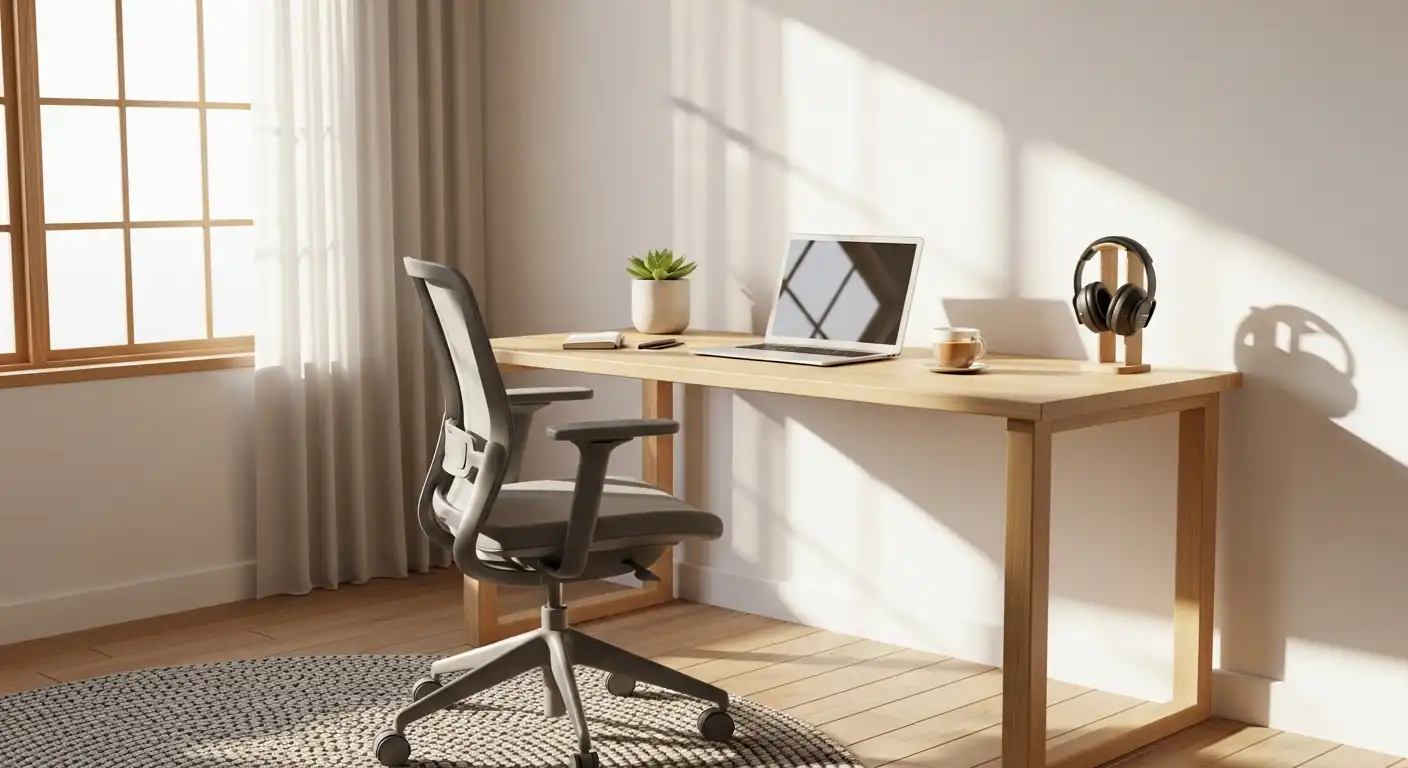
- Position your desk perpendicular to a window, not directly in front of or behind it. Facing a window causes glare. Having a window behind you creates a silhouette on video calls.
- Use a high CRI bulb. The Color Rendering Index (CRI) measures a bulb’s ability to show colors accurately. For work, you want a CRI of 90+ to reduce eye strain and see your work clearly.
The Kitchen
- Layer it up. You need bright ambient light (overhead) and strong task lighting (under-cabinet LEDs).
- Dimmers are essential. You want bright light for cooking and cleaning, but a dim, warm light for a late-night snack.
The Living Room
- Flexibility is key. Use a mix of floor lamps and table lamps, each on its own switch or dimmer.
- Avoid “ceiling fan glare.” If you have a ceiling fan with lights, point the bulbs upward to bounce light off the ceiling for a softer, more diffuse effect.
The Bedroom
- This should be a screen-free, blue-light-free sanctuary.
- Bedside Lamps: Use low-wattage, warm bulbs. They should be for reading, not for illuminating the whole room.
- Blackout Curtains: For optimal sleep, the room should be pitch black. Even a small amount of light from a streetlamp can disrupt sleep cycles.
The Smart Home Solution
The easiest way to implement a human-centric lighting plan is with smart lighting.
- Tunable White Bulbs: These are the workhorses. They allow you to change the color temperature from a cool 6500K to a warm 2200K via an app.
- Automated Scenes: You can create “scenes” that trigger automatically.
- “Wake Up” Scene (7:00 AM): Lights fade on to a cool white, mimicking sunrise.
- “Focus” Scene (10:00 AM): Office lights switch to 100% brightness and 5000K.
- “Wind Down” Scene (8:00 PM): Living room lights dim to 30% and shift to a warm 2700K.
- “Bedtime” Scene (10:00 PM): All lights turn off except a single, dim red light in the hallway.
This automation removes the need for willpower. Your environment adapts to your biological needs without you having to think about it.
Conclusion
We often think of health in terms of diet and exercise. We meticulously track our calories and our steps, but we ignore the primary nutrient our brains use to regulate our entire biological system: Light.
Optimizing your home lighting is not about interior design; it is about bio-hacking your environment for better health. It is a form of preventative medicine that can improve your sleep, sharpen your focus, and elevate your mood.
Start small. Change the bulb in your bedside lamp to a warm one. Take a 10-minute walk first thing in the morning. Turn off the overhead light tonight. By becoming conscious of the light you live in, you can move from a life of fatigue and distraction to one of energy, clarity, and well-being.