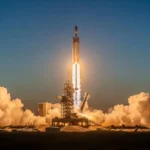
For most of human history, space was a place for governments. It was about national pride, scientific discovery, and planting flags. That era is over. Today, space is becoming the next great economic frontier, driven not by politicians but by entrepreneurs. We are at the dawn of a new gold rush, where the sky is no longer the limit; it is the marketplace.
Getting to Orbit Gets Cheap
The single biggest change is the cost. It used to cost a fortune to launch anything into space. Companies like SpaceX, with their reusable rockets, have changed the game. They have turned what was once a monumental effort into something closer to a routine delivery service. This drop in price is like the invention of the railroad for the American West. It opens up the frontier to everyone, not just the super-rich. Small startups can now realistically plan to put a satellite in orbit, and new ideas are flooding the market.
Building the Infrastructure of Space
The first wave of space commerce isn’t about flying to Mars; it’s about building the tools and services that will support the new economy. We are already seeing this with satellite internet constellations like Starlink, which aim to connect every corner of the globe. Then there is space tourism, where companies like Virgin Galactic and Blue Origin are selling tickets for a few minutes in zero gravity. These are the “picks and shovels” of the space gold rush. They are the foundational businesses that make more ambitious projects possible, from in-orbit manufacturing to space debris cleanup services.
The Trillion-Dollar Prize: Mining the Sky
The long-term goal for many is to tap into the vast resources of our solar system. Asteroids are packed with precious metals like platinum and gold, which are rare on Earth but common in space. The Moon’s soil contains Helium-3, a potential fuel for clean nuclear fusion energy. This is the high-risk, high-reward venture. While the technology is still developing, the first company to successfully mine an asteroid and bring the resources back to Earth will become one of the most valuable enterprises in human history.
The Wild West Above Our Heads
This new commercial rush brings huge challenges. Right now, space is like the Wild West; there are very few laws. Who owns the resources mined from an asteroid? If one company’s satellite crashes into another’s, who is liable? We are making the rules up as we go. Nations will need to come together to create a legal framework for space commerce before a major conflict or disaster occurs. Without clear rules of the road, the final frontier could become a chaotic and dangerous place to do business.
Conclusion
The privatization of space is one of the biggest economic opportunities of our lifetime. It will create industries we can barely imagine and generate immense wealth. But it also comes with significant risks and ethical questions that we must address. We are standing at the very beginning of humanity’s journey as a multi-planetary species. The decisions we make now about how we conduct business in the cosmos will shape the future for generations to come.