Key Points:
- Scientists found a new way to fix damaged swallowing muscles using stem cells.
- Traditional stem cell treatments fail because the injected cells die too quickly.
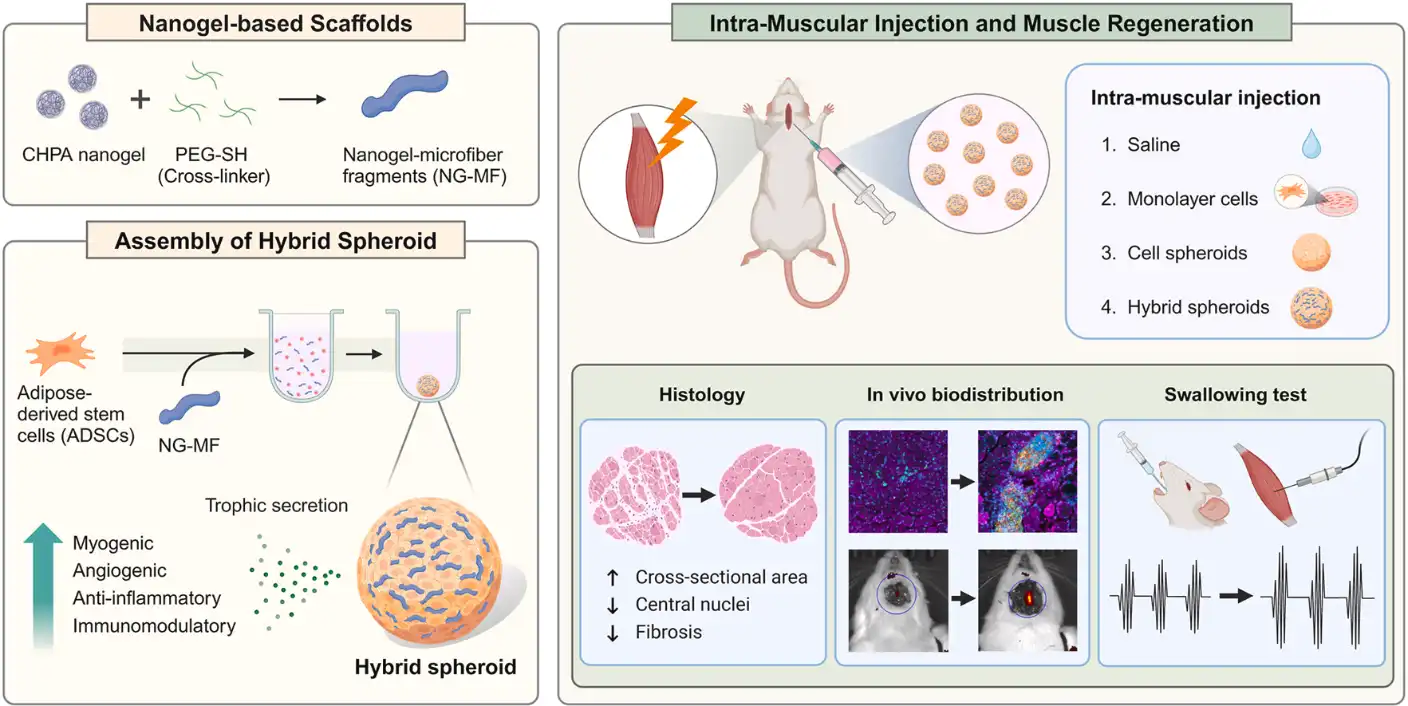
- Researchers mixed stem cells with soft nanogels to keep them alive and breathing.
- The new mixture boosted cell survival by five times in laboratory tests.
Swallowing lets us eat and communicate. When cancer treatments or aging damage throat muscles, people often suffer from poor nutrition or severe lung infections. Doctors have tried using stem cells to heal these muscles, but the treatments usually fail. The injured tissue kills the transplanted cells before they can do their job.
To keep cells alive, scientists often clump them together into small balls called spheroids. Unfortunately, these clusters create a new problem. The cells trapped in the middle suffocate and die because oxygen and nutrients cannot reach the center of the tight ball.
A research team from Kyoto University and McGill University solved this breathing problem. They designed a smart, soft material to act as a spacer inside the cell clusters. They built biodegradable nanogels using a modified sugar molecule and mixed these tiny gel fibers directly with the stem cells.
Lead author Hideaki Okuyama explained that the team wanted to restore actual muscle function, not just keep cells alive for a few days. The nanogels worked perfectly. They opened up space inside the cell balls, allowing oxygen to flow freely. This clever design stopped the center cells from dying and boosted overall survival rates more than fivefold.
The international team tested their hybrid creation on rats with swallowing muscle injuries. The results showed remarkable success. The rats retained twenty percent more cells than those receiving standard treatments. The new cells also helped restore the electrical signals needed for normal muscle contraction.
Okuyama noted that mixing cells and smart materials overcomes the biggest hurdle in regenerative medicine. The researchers plan to test this approach over longer periods. They believe this gel technology could eventually treat age-related muscle loss and heal other severe muscle injuries across the human body.
Source: Biomaterials (2026).