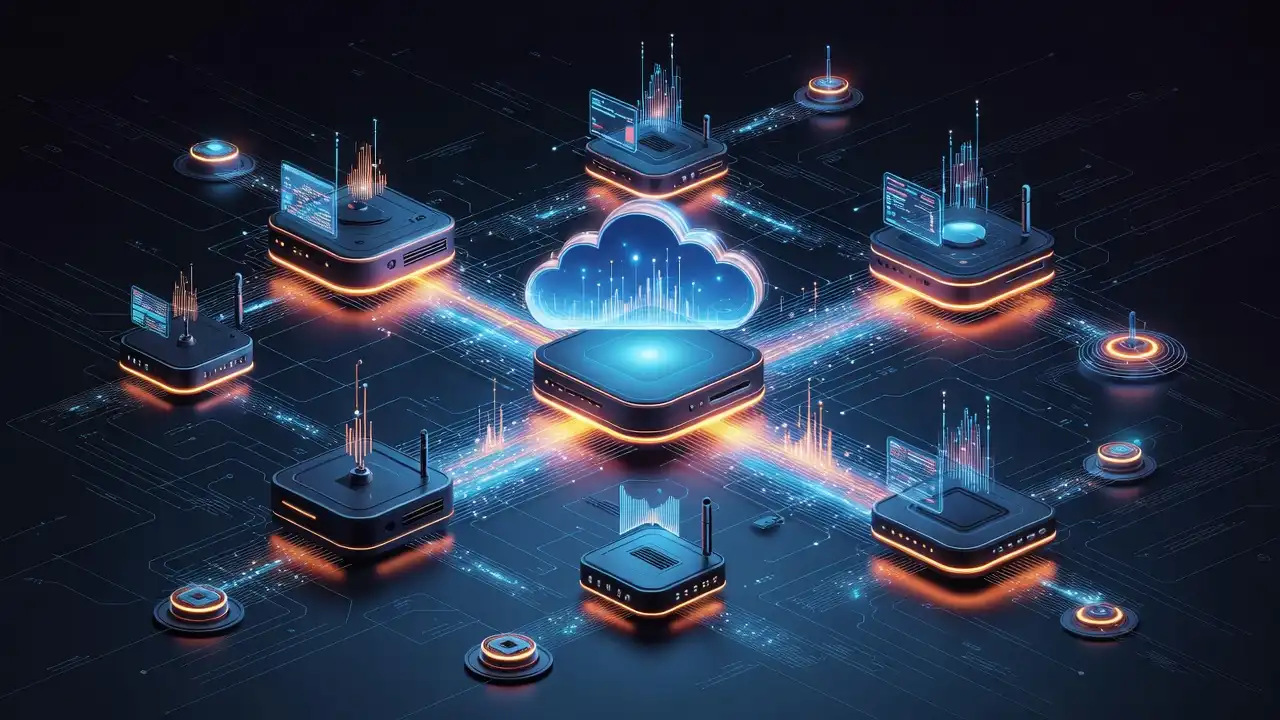
It is a digital world, and we expect every single thing to happen instantly. Waiting three seconds for a video to load on your phone feels incredibly annoying. However, in the real business world, a three-second delay does not just annoy people; it destroys companies and costs human lives. We now live and work in a strictly latency-sensitive market. Latency simply describes the time it takes for a piece of data to travel from your device to a computer server and back. For a long time, we sent all our digital information to giant cloud servers sitting in foreign countries. Today, that long trip takes too much time. To fix this dangerous delay, we are bringing the computer brain much closer to the physical body. We call this brilliant shift edge computing.
The Cloud Fails the Speed Test
Think about a self-driving delivery van navigating the chaotic, busy traffic of Dhaka this evening. If a child suddenly runs into the street, the van’s camera spots the danger. If that van must send the video feed across an underwater cable to a massive cloud server in Singapore just to ask for permission to use the brakes, the van will crash. The internet travels incredibly fast, but the pure physical distance creates a deadly delay. Edge computing solves this exact problem. Instead of sending data across the ocean, a small, powerful computer chip inside the van makes the final decision right there on the street. It processes the heavy information at the “edge” of the network. The van stops instantly. We strip away the travel time, and that raw speed changes everything.
Upgrading the Heavy Industries
Our massive ready-made garment factories rely heavily on perfect timing and speed. A few years ago, factory managers tracked their daily production using delayed reports from distant cloud servers. By the time the software spotted a broken sewing machine or a bad batch of fabric, the factory had already lost hours of valuable work. Edge computing puts the processing power directly on the local factory floor. Smart sensors on the weaving machines analyze their own mechanical performance in real-time. If a spinning motor gets too hot, the edge sensor shuts it down immediately before it catches fire. It never waits for a signal from a faraway corporate headquarters. This instant local reaction keeps the supply chain moving smoothly and fiercely protects our millions of workers.
Saving Lives Across the Distance
We also see the incredible power of edge computing in our local healthcare system. A top surgeon sitting in a modern hospital in the capital city can now operate on a sick patient in a remote rural village near Sylhet using a robotic arm. This kind of robotic surgery demands absolute perfection. If the surgeon moves her hand, the robot must move during the exact same millisecond. Even the slightest lag means the scalpel cuts the wrong tissue. To make this work, telecom companies install local edge servers right outside the rural clinic. These local boxes handle the massive data flow instantly. They guarantee a flawless, unbreakable connection. We finally remove the geographic walls that kept poor communities away from world-class medical care.
The Hidden Risks on the Edge
However, we absolutely cannot ignore the real physical and digital dangers of moving data away from the secure cloud. When you keep data in one giant server warehouse, you only have to guard one big door with security guards and cameras. Edge computing scatters millions of tiny servers across city streets, factory walls, and local clinic roofs. Hackers and thieves now have millions of small doors they can try to break open. A criminal could physically walk up to an edge server on a street pole and smash it with a hammer, shutting down the local traffic lights. Tech companies must install bank-level encryption on every single local device. They must build tough, tamper-proof metal boxes to hold the hardware. Speed means absolutely nothing if we hand our physical safety over to street vandals and cybercriminals.
Conclusion
We built a modern world that simply refuses to wait. As we connect more autonomous cars, remote surgical robots, and smart factories to the internet, we cannot rely on distant cloud servers anymore. The physical distance creates a dangerous delay that we can no longer afford. Edge computing steps in as the perfect, logical solution. It pushes the raw brainpower right to the front lines where the real action actually happens. We just need to secure these scattered devices fiercely. If we manage the strict security risks, edge computing will power a much faster, safer, and incredibly efficient economy for every single one of us.