Key Points:
- The European Commission wants to limit foreign access to public contracts to protect local industries.
- China threatened to launch aggressive countermeasures against Europe if lawmakers pass the new legislation.
- European politicians debated how to handle Beijing during a recent broadcast at the European Parliament.
- Lawmakers largely agree Europe must reduce its economic reliance on China without completely cutting ties.
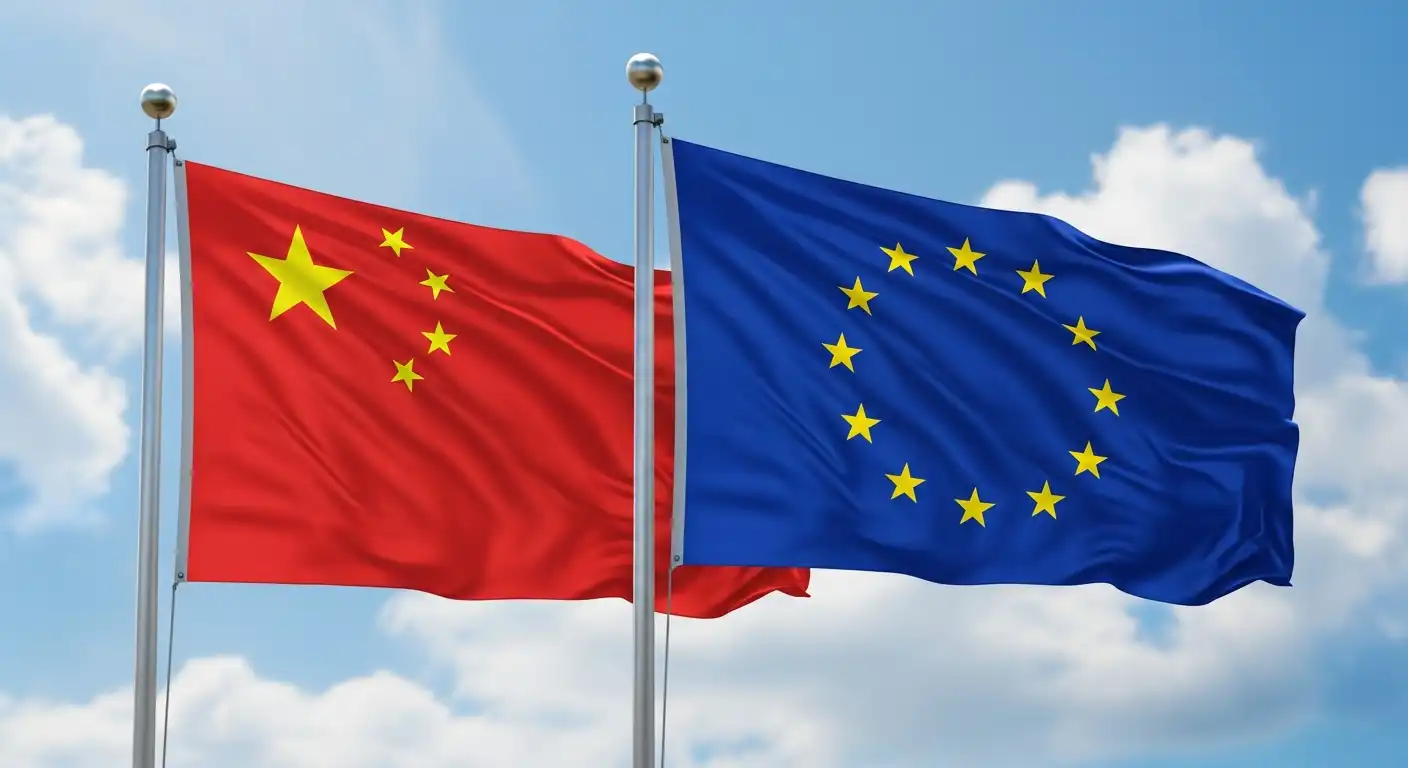
Trade tensions between the European Union and China reached a dangerous new high this week. Officials in Beijing issued a stern warning to European leaders regarding newly proposed trade laws. The Chinese government demanded that European lawmakers immediately revise their upcoming “Made in Europe” legislation. If Europe moves forward with the current draft, China promises to launch aggressive countermeasures against European businesses operating overseas.
The European Commission recently drafted this new legislation specifically to protect local businesses. The proposal establishes strict rules for any foreign company seeking to bid on public procurement contracts across the 27 member states. European leaders want to keep billions of euros in government spending inside the local economy. By tightening these investment rules, the Commission hopes to rebuild Europe’s manufacturing base and strengthen local industrial capacity.
China views these new rules as a direct attack on its economy. The Chinese commerce ministry released a sharp public statement criticizing the proposed European laws. Ministry officials stated that if Europe insists on punishing foreign companies and treating Chinese enterprises unfairly, Beijing will hit back hard. This threat of retaliation raises serious fears of a full-scale trade war between two of the world’s largest economies.
European leaders currently face heavy economic pressure from multiple sides. While trying to manage this growing conflict with China, Europe also faces severe tariff threats from the United States under the Trump administration. Lawmakers in Brussels must figure out how to protect local factories without triggering massive trade conflicts with their largest trading partners. Finding a stable balance between protecting local jobs and keeping global markets open remains a massive challenge for the bloc.
This high-stakes economic drama took center stage during a recent episode of “The Ring,” a weekly political debate show. The producers film the program directly at the European Parliament in Brussels. Journalist Stefan Grobe anchors the show, bringing together politicians with vastly different views to debate the most important topics on the European political agenda. The most recent episode focused entirely on the looming trade war and how Europe should respond to Beijing.
Greek politician Sakis Arnaoutoglou stepped into the debate representing the Socialists and Democrats group. As a key member of the official delegation for relations with China, he urged his colleagues to handle the situation with extreme caution. Arnaoutoglou argued that Europe must keep its doors open to cooperation with Chinese markets. He warned that escalating the conflict will only hurt European consumers and factory workers in the long run.
However, Arnaoutoglou also stressed that European leaders can no longer act naively when making international trade deals. He demanded a new economic relationship built on total transparency and strict fairness. If European companies face heavy restrictions when operating in China, then Chinese companies should face the same rules when bidding on European government contracts. He told the audience that the ultimate goal is fair reciprocity, not angry confrontation.
On the other side of the debate stood Nicolás Pascual de la Parte, a Spanish politician from the center-right European People’s Party. Sitting on the influential Committee on Security and Defense, he views the trade dispute through a much harsher lens. He warned the audience about a massive global power shift currently driven by the Chinese government. He strongly believes Beijing actively weaponizes its trade policies to hurt Western democracies and gain unfair advantages.
To prove his point, the Spanish lawmaker pointed to China’s recent export restrictions on critical raw materials. He argued that Europe must confront these aggressive economic tactics with smart, defensive strategies. He told the debate audience that Europe cannot completely decouple its economy from China, because the two markets currently share too many vital supply chains. Instead, he championed a strategy of active de-risking.
The concept of de-risking means that Europe will continue to trade with China while aggressively seeking other business partners. By building new supply lines in South America, Africa, and Southeast Asia, European factories will not have to rely on a single country for their most important materials. Both politicians ultimately agreed that Europe stands at a critical economic crossroads. The decisions made in Brussels over the next 12 months will shape the global economy for decades to come.