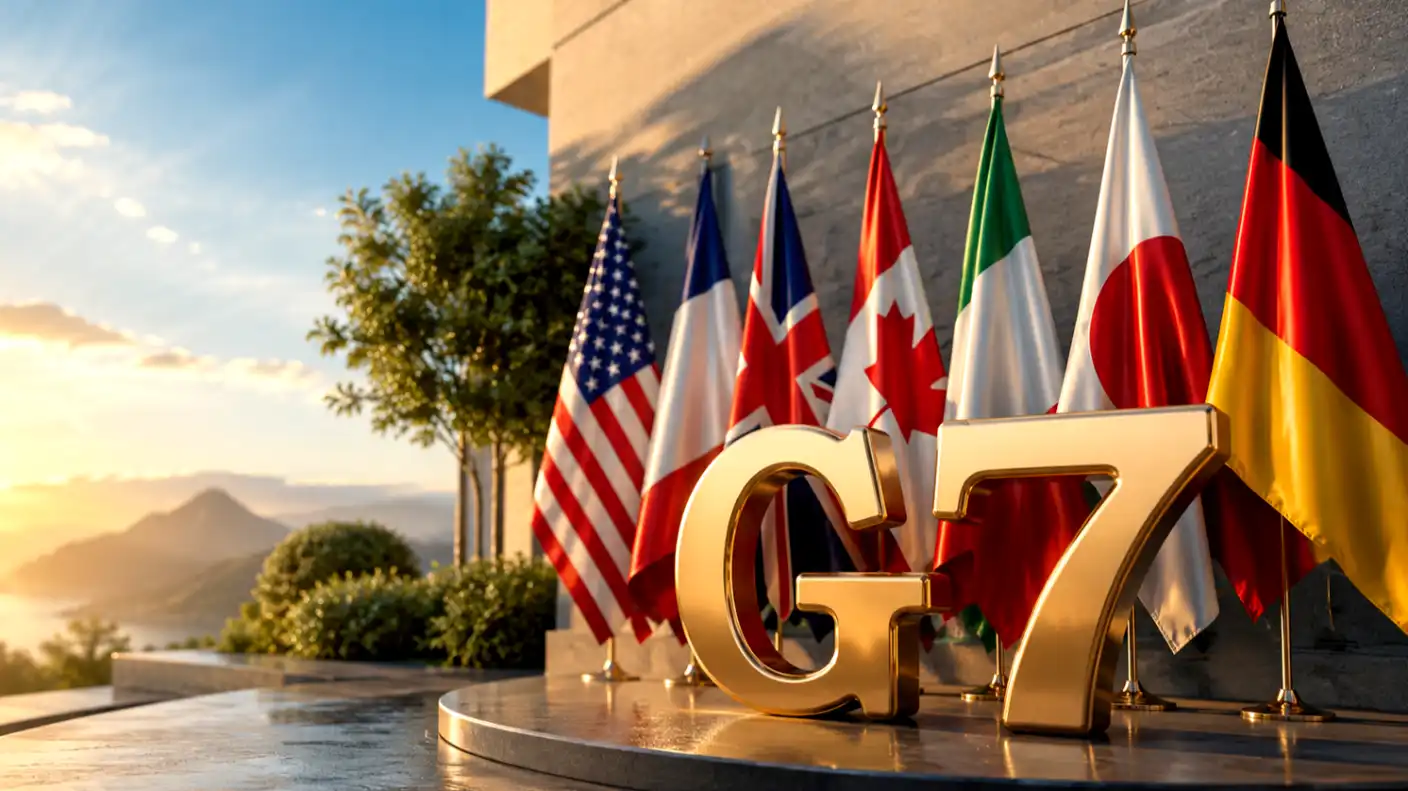
Key Points:
- Trade ministers from the Group of Seven met in France to launch a major overhaul of global supply chains.
- The officials strongly condemned foreign countries that use arbitrary export restrictions to manipulate global markets.
- G7 leaders pledged to stop hostile nations from weaponizing the world’s dependence on rare earth materials.
- Allied countries will establish a dedicated financial framework to protect new domestic mining operations against predatory pricing.
Trade ministers from the Group of Seven reached a major agreement in France on Wednesday to accelerate the diversification of critical mineral supply chains. The global leaders gathered to address severe fears about long-term resource security. United States Trade Representative Jamieson Greer and Japan’s Economy Minister Akazawa Ryosei led the high-stakes discussions. Together, the powerful group mapped out a clear strategy to break the world’s heavy reliance on single suppliers for essential manufacturing materials.
Following the crucial summit, the group released a firm joint communique. The top trade officials expressed grave concerns over recent acts of economic coercion. They specifically called out nations that use arbitrary export restrictions to punish trading partners and manipulate foreign governments. Trade experts and political analysts widely view the public statement as a direct response to China and its increasingly aggressive trade policies.
The global reliance on a single nation presents a massive security risk. Right now, Chinese companies dominate the global market for rare earths and critical minerals. Chinese factories control roughly 85% of the worldwide processing capacity for rare earth elements. The country also handles nearly 90% of the global gallium and germanium refining. Tech giants and defense contractors desperately need these specific minerals to build everything from smartphone chips to advanced military radar systems.
The tension escalated significantly over the past 36 months. The Chinese government systematically restricted the export of several highly valuable materials. Beijing imposed strict limits on critical elements such as gallium, germanium, natural graphite, and antimony. These sudden export curbs forced manufacturers across North America, Europe, and Asia to scramble for alternative sources. The sudden supply shock caused panic in the market and threatened to halt the production lines of major electronics companies.
G7 leaders refuse to let this dangerous trend continue. The trade ministers vowed to stop these aggressive geopolitical tactics once and for all. Their official French statement declared that any attempts or threats to weaponize economic dependencies will fail. The allied leaders promised to stand ready and take strong actions against future economic coercion. They want to ensure that no single country can hold the global economy hostage by shutting off the daily flow of basic resources.
Fixing this massive supply chain vulnerability requires extraordinary financial commitments. Mining industry experts estimate that building a completely independent mineral network will cost well over $150 billion over the next decade. Opening a brand new domestic copper or lithium mine often takes between 7 and 10 years due to strict environmental reviews and permitting delays. The G7 ministers explicitly recognized these steep challenges during their private policy talks.
To ensure the long-term viability of these expensive new supply capacities, governments must create a fair market environment. Private mining companies hesitate to invest billions of dollars if they risk losing money to unfair competition. State-sponsored overseas competitors often flood the market with cheap minerals to drive foreign mines out of business. The G7 leaders agreed they must protect new domestic mining operations from this predatory price dumping.
The leaders also know they cannot build this massive new ecosystem alone. The ministers confirmed the G7 bloc will continue to work closely with trusted international partners. They plan to create a specific framework and draw up necessary policies to link their allied economies. Friendly nations with vast natural resources, such as Australia, Canada, and Brazil, will play a vital role in this new trade strategy.
Global demand for these raw materials continues to skyrocket every single year. The global transition to green energy requires massive amounts of lithium, cobalt, and nickel. An average electric vehicle battery needs roughly 8 kilograms of lithium and 35 kilograms of nickel just to function. If the G7 nations want to hit their ambitious manufacturing goals by 2035, they must secure a steady flow of these materials outside of Chinese control.
This new French agreement marks a major turning point in modern economic strategy. For over 20 years, Western nations gladly bought cheap, fully processed minerals from overseas suppliers. They prioritized short-term cost savings over long-term national security. Now, rising geopolitical tensions are forcing these massive economies to change how they source their raw materials fundamentally. The real test begins later this year when these powerful trade ministers attempt to turn their written promises into active, fully funded mining operations.