Key Points:
- Nvidia reached a massive $5.7 trillion market capitalization as its stock surged more than 4% on Thursday.
- The United States Commerce Department allowed roughly 10 Chinese companies to buy the powerful H200 chip.
- Tech giants such as Alibaba, Tencent, ByteDance, and JD.com received clearance to purchase advanced hardware.
- Nvidia Chief Executive Officer Jensen Huang joined President Donald Trump for a major diplomatic trip to China.
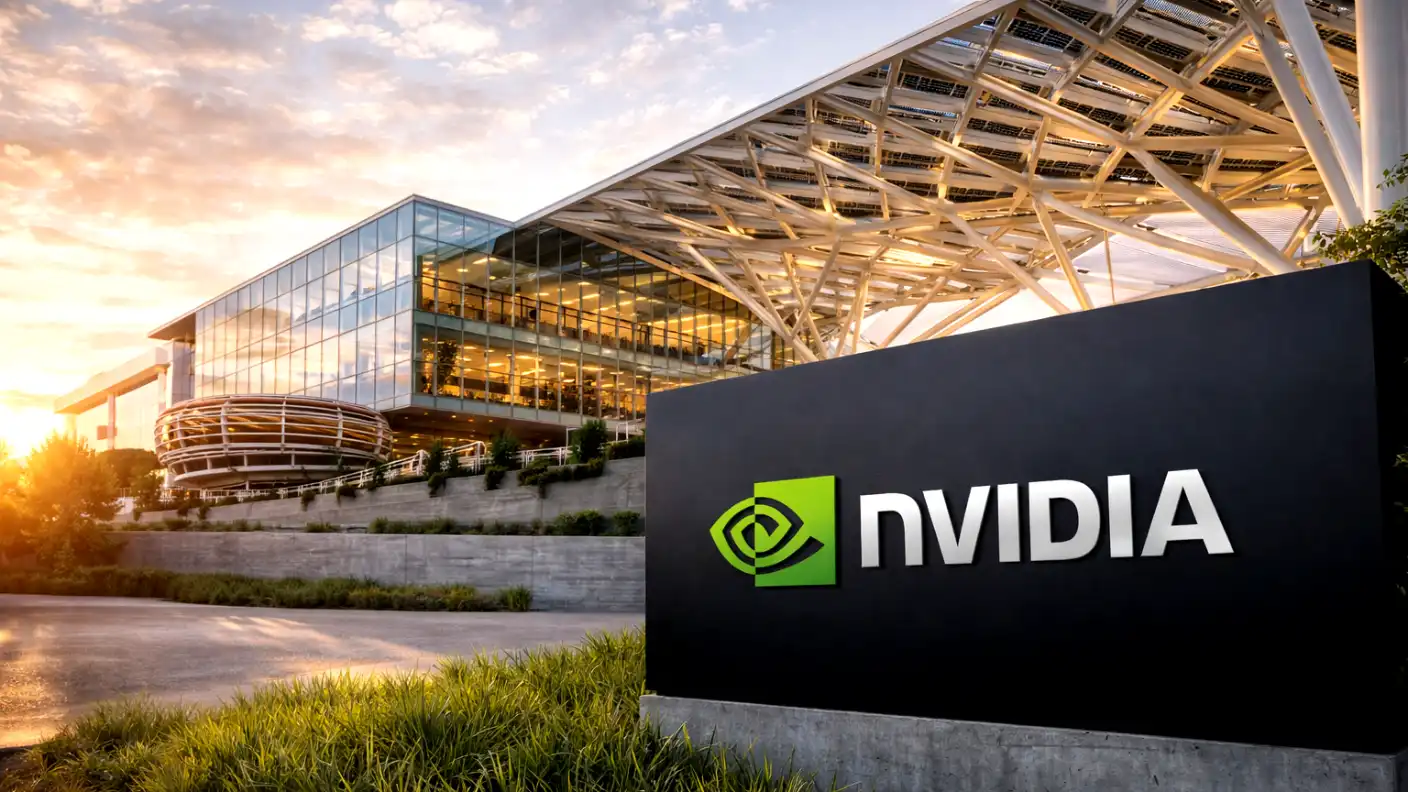
Nvidia achieved a massive financial milestone on Thursday. The semiconductor giant saw its total market capitalization hit a record $5.7 trillion. Investors rushed to buy the stock, pushing shares up by more than 4% during the active trading session. This sudden surge helped the stock reach an all-time intraday high. The entire technology sector enjoyed a strong rally as Wall Street prepares for the chipmaker’s highly anticipated earnings report next week.
A major news report drove much of this sudden excitement on the trading floor. Reuters revealed that the United States Commerce Department gave the green light to a select group of Chinese technology companies. The government agency cleared roughly 10 Chinese firms to purchase the highly coveted H200 processor. The H200 currently stands as the second-most powerful artificial intelligence chip that Nvidia produces.
The list of approved buyers includes some of the biggest corporate names in Asia. Giant technology conglomerates such as Alibaba, Tencent, ByteDance, and JD.com all received official permission to purchase advanced hardware. These massive companies run sprawling e-commerce platforms, popular social media networks, and massive cloud computing services. They desperately need top-tier processors to train their own artificial intelligence models and stay competitive in the global market.
Despite the official government approval, actual business transactions remain in limbo. Sources familiar with the situation noted that Nvidia has not yet made any deliveries to these Chinese firms. This delay creates significant uncertainty about future chip sales between the American manufacturer and the Asian tech giants. Investors wonder if the government might suddenly change its mind or impose new hidden restrictions before the hardware ever ships across the ocean.
Government officials remain tight-lipped about the ongoing situation. United States Treasury Secretary Scott Bessent spoke with CNBC during a television interview on Thursday. When reporters pressed him about the export approvals, Bessent stated he had no new updates to share regarding additional access to Nvidia chips in China. His brief response offered little comfort to investors who want clear, permanent rules for international technology sales.
The United States government maintains strict control over the semiconductor industry. Over the past few years, federal regulators have severely curbed American chipmakers’ ability to sell their most advanced products to Chinese companies. Officials cite national security concerns as the primary reason for these strict export bans. They want to prevent foreign militaries from using American technology to win the global artificial intelligence race.
These strict export rules completely changed how Nvidia handles its financial forecasting. The company actually stopped providing sales guidance for the Chinese market in its recent quarterly financial results. Executives found it impossible to predict how much money they could make in China when government rules changed so frequently. Losing access to such a massive consumer market initially worried investors, but the company found plenty of eager buyers in other countries to make up the shortfall.
Corporate diplomacy now takes center stage as business leaders try to smooth over these international tensions. Nvidia Chief Executive Officer Jensen Huang recently packed his bags for a high-stakes diplomatic mission. The White House added Huang to a special group of business leaders traveling with President Donald Trump at the very last minute. The American delegation will fly directly to China for a major political summit with Chinese President Xi Jinping.
During this international summit, Huang will likely advocate for his company and the broader American technology sector. Having the chief executive directly in the room with world leaders gives Nvidia a powerful voice. He can explain exactly how trade restrictions impact the global supply chain and try to secure a more stable trading environment for his highly prized computer processors.
Meanwhile, the financial numbers speak for themselves. Even with the ongoing trade friction, Nvidia continues to generate massive wealth for its shareholders. The company’s stock has climbed more than 26% since the start of the current calendar year. Looking back over the past 12 months, the shares show an incredible 70% gain.
All eyes now turn to next week’s earnings report. Financial analysts expect the chipmaker to post another quarter of massive profits. Demand for artificial intelligence hardware shows absolutely no signs of slowing down. Companies around the world continue to build massive data centers, and they all need Nvidia chips to power their new software tools.
If the company delivers strong earnings and provides a positive outlook for future sales, the stock could easily push past this new $5.7 trillion record. The recent news regarding Chinese export approvals simply adds extra fuel to an already roaring fire. Investors clearly believe that Nvidia will continue to dominate the global technology landscape for the foreseeable future.