Key Points:
- Gold fell 0.45% to $4,664.1 per ounce as inflation data altered interest rate expectations.
- Nicholas Frappell notes a reopened Strait of Hormuz could weaken the dollar and boost gold.
- India restricted duty-free gold imports to protect the rupee during the Middle East conflict.
- Silver gained 13% in May due to heavy speculation and a strong rally in the copper market.
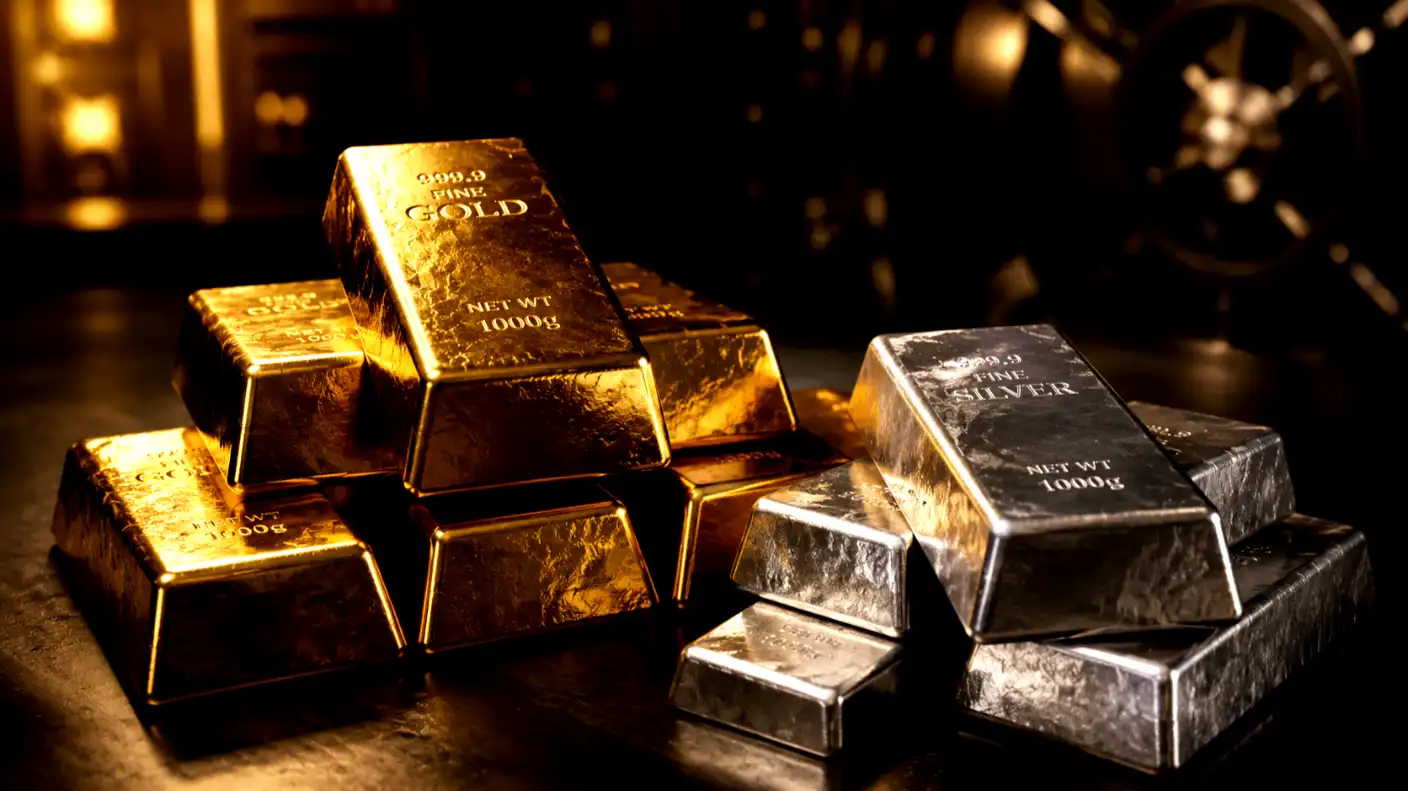
Gold prices took a hit on Thursday as traders digested new economic data from the United States. A sudden surge in inflation, driven heavily by the ongoing war in Iran, forced investors to rethink the future path of interest rates. By the late afternoon, gold fell 0.45% to settle at $4,664.1 per ounce. Other major metals followed this downward trend. Silver dropped 1.29% to $84.225, while platinum fell 0.91% to $2,072.3. Copper and palladium also recorded minor losses of 0.48% and 0.47%, respectively.
The yellow metal remains stuck in a very tight trading range. Prices originally fell sharply during the opening days of the Middle East conflict. Since then, traders face a difficult balancing act. On one side, rising inflation risks suggest the Federal Reserve will keep interest rates higher for a much longer period. On the other side, growing concerns about a slowing global economy could force central banks to cut rates if the war drags on.
Because gold pays no interest, higher borrowing costs make the metal much less attractive to large institutional buyers. When the Federal Reserve keeps interest rates high, the United States dollar usually gets stronger. A strong dollar makes commodities like gold much more expensive for foreign buyers holding different currencies. Investors simply refuse to make massive bets until they receive clear signals from the central bank about the future cost of borrowing.
Market participants spend their days trying to predict exactly how the war will unfold. They want to know the exact likelihood that hostilities will end and commercial shipping will return to normal. Nicholas Frappell serves as the global head of institutional markets at ABC Refinery. He explained that traders desperately want to see the Strait of Hormuz reopen fully.
The strait serves as a vital chokepoint for the global energy supply. When military conflicts threaten oil tankers traveling through this narrow waterway, crude oil prices skyrocket instantly. Expensive oil drives up the cost of manufacturing and shipping goods worldwide, creating the very war-driven inflation that currently scares the Federal Reserve. Frappell noted that if the strait opens, energy prices will drop. This scenario would lead to a softer United States dollar and less aggressive policy tightening from central banks, giving gold a massive boost.
While American markets react to inflation, policymakers in Asia deal with their own currency crisis. The Indian government just announced strict new rules for importing gold into the country. Prime Minister Narendra Modi ordered these changes to defend the local rupee currency. The ongoing war in the Middle East puts heavy pressure on emerging-market currencies, forcing governments to take aggressive defensive measures to prevent capital from leaving their borders.
The new trade rules specifically target the tax-exempt status program. This program previously allowed local jewelers and large manufacturers to import raw metal into India duty-free. To qualify, these companies simply had to prove they intended to export the finished jewelry products later. Now, the government wants to monitor these shipments much more closely to ensure strict compliance.
While these new restrictions sound dramatic, they only impact a relatively small portion of the overall market. India is the second-largest consumer of bullion in the world. Most everyday citizens buy their gold through traditional retail channels that already pay standard import duties. Therefore, the new manufacturing restrictions will not destroy the massive local appetite for physical gold bars and wedding jewelry.
Away from the gold market, silver tells a completely different story. Despite a minor 1.29% loss on Thursday, the white metal recorded a massive 13% gain throughout May. This impressive surge caught many financial analysts completely by surprise. However, experts warn that genuine industrial demand did not cause this sudden price spike.
Nicky Shiels works as the head of research and metals strategy at MKS PAMP SA. She explained the recent silver rally in a detailed note to clients. Shiels stated that aggressive speculators drove the massive gains while operating in a low liquidity environment. These traders pushed prices higher using sheer momentum rather than relying on strong market fundamentals.
Shiels also highlighted the strong connection between different industrial materials. She noted that a recent rally in copper prices directly helped propel the massive surge in silver. The market faces real concerns about future copper supplies, which makes investors panic and buy related assets.
Currently, silver, zinc, and copper all show incredibly strong trend signals. In modern financial markets, computer algorithms execute thousands of trades every single second. Shiels added that mechanical trading positions keep increasing automatically, without needing any fresh news to sustain the momentum. As algorithms chase the upward trend, human traders must constantly weigh the threat of sticky inflation against the daily headlines from the Middle East to determine their next move.