Key Points:
- Trade Minister Yeo Han-koo led a meeting on Monday to address mounting trade pressures from the United States and the European Union.
- Officials strategized their response to a Section 301 investigation by the United States that threatened new tariffs on South Korean goods.
- The European Union plans to cut tariff-free steel import quotas by 47 percent and double penalty tariffs to 50 percent by July 2026.
- South Korea is pushing to upgrade its economic partnership with India and to sign a new trade agreement with Mongolia to diversify its export markets.
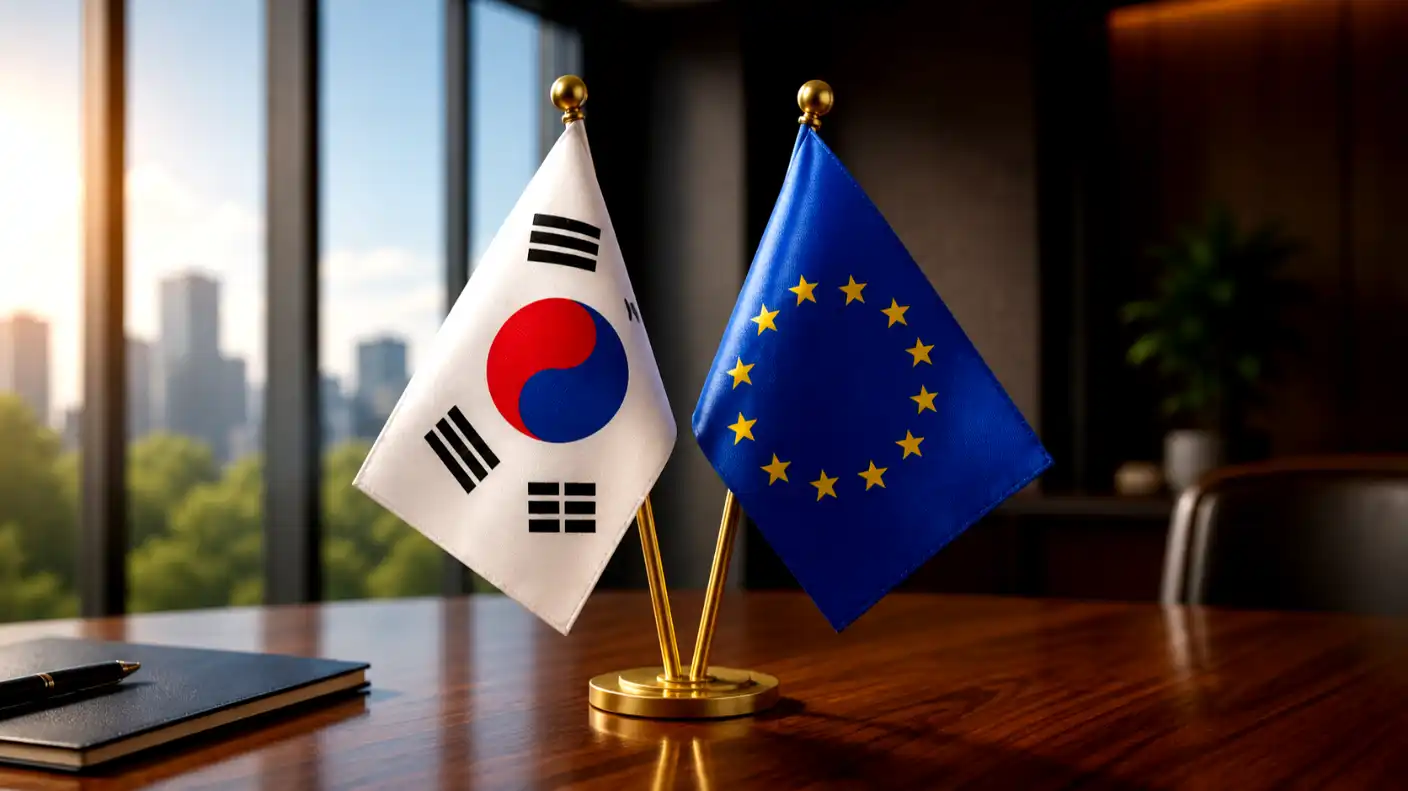
South Korea faces mounting pressure from its biggest global trading partners. The government convened a regular trade promotion meeting on Monday to discuss these urgent economic challenges. Trade Minister Yeo Han-koo led the discussions alongside officials from various related ministries. They focused heavily on pending trade disputes with the United States, the European Union, and other key economic allies worldwide.
The meeting focused on a major trade probe recently launched by the United States. The Office of the United States Trade Representative opened an aggressive Section 301 investigation into South Korea under the 1974 Trade Act. American officials accuse South Korea and several other nations of engaging in unfair foreign trade practices. The investigation specifically targets structural excess capacity in industries such as steel, automobiles, and shipbuilding, as well as allegations of forced labor in the global supply chain.
If the United States Trade Representative finds South Korea guilty of these unfair practices, the American government could impose severe economic penalties. Section 301 allows the United States to levy massive tariffs or enforce other strict trade barriers without a strict upper limit. South Korean officials view this probe as a strategic maneuver by Washington to restore previous tariff levels. The trade ministry plans to submit a formal written response to defend domestic companies and prevent a new wave of heavy taxes on their overseas exports.
Meanwhile, South Korean steelmakers face another major threat originating from Europe. During the Monday meeting, Yeo and his team discussed how to handle the European Union’s new steel safeguard plan. Europe wants to protect its own domestic steel industry from a growing global oversupply. To achieve this, European lawmakers plan to implement a highly restrictive tariff-rate quota system starting in July 2026.
The new European rules will hit South Korean exporters incredibly hard. The European Union intends to reduce its overall tariff-free import quotas by a staggering 47 percent. Furthermore, if a country exports more steel than its assigned quota, the penalty tariff will immediately double from the current 25 percent to 50 percent. South Korean officials fear this aggressive move will devastate local steel companies that already struggle with a sluggish global economy and existing American trade barriers.
To survive these growing protectionist walls in Western markets, South Korea desperately needs to find new buyers. The trade ministry outlined active efforts to diversify the national trade network away from the United States and Europe. A major part of this strategy involves upgrading the current Comprehensive Economic Partnership Agreement with India. South Korea currently boasts a trade surplus of more than 10 billion dollars with India. Yeo wants to expand this relationship to secure critical industrial supplies, such as naphtha, and boost exports of locally manufactured goods.
In addition to India, the government set its sights on expanding its economic footprint in Central Asia. Officials at the meeting discussed the ongoing push to sign a brand new Comprehensive Economic Partnership Agreement with Mongolia. Securing a trade deal with Mongolia would give South Korean businesses better access to valuable natural resources and open up a fresh, developing consumer market for their products.
Yeo also took the opportunity to brief the room on broader global trade developments. He shared insights from recent international discussions regarding the World Trade Organization. Earlier this year, Yeo led the South Korean delegation to the 14th World Trade Organization Ministerial Conference. The high-profile event took place in Yaounde, Cameroon, where representatives from over 160 member countries gathered to debate the future of global commerce.
At the conference in Cameroon, Yeo served as a key facilitator for sessions on institutional reform. He told his colleagues on Monday that the international community urgently needs to restore the multilateral trading system. With global trade protectionism rising sharply, South Korea depends on a functioning World Trade Organization to ensure fair competition. The trade minister emphasized that a reformed, transparent trading system offers the best defense against sudden, unilateral tariffs imposed by economic heavyweights such as the United States and the European Union.
The Monday meeting highlighted the difficult road ahead for the South Korean export economy. With both Washington and Brussels tightening their trade borders, Seoul must act quickly and strategically. By fighting unfair tariffs, negotiating stronger ties with emerging markets such as India and Mongolia, and championing global trade reform, the government hopes to shield local businesses from turbulence in international markets.