For decades, scientific progress in the frozen wilderness of Antarctica has depended entirely on a dirty, loud, and high-emission fuel source: diesel. Because polar research stations sit completely isolated from external electrical grids, they must generate their own power locally around the clock to keep scientists alive, heat living quarters, and power sensitive laboratory equipment. Transporting and burning millions of liters of diesel fuel in the world’s most pristine and fragile ecosystem has always presented a severe environmental and logistical challenge.
But a landmark agreement signed in Seoul represents a massive step toward ending this fossil fuel dependency. Hyundai Motor Group announced a partnership with South Korea’s Ministry of Oceans and Fisheries and the Korea Polar Research Institute (KOPRI) to build a state-of-the-art clean hydrogen energy circulation system.
By designing and deploying a self-sustaining, sub-zero green hydrogen microgrid, the partners aim to transition South Korea’s Antarctic research station away from diesel generators, establishing a historic blueprint for off-grid clean energy.
This comprehensive analysis explores the physics of operating a clean hydrogen energy circulation system in the coldest place on Earth, breaks down the massive logistical and environmental costs of polar diesel dependency, details the specific engineering innovations required to keep water from freezing inside fuel cells, and examines how this project will establish South Korea as a major leader in global environmental stewardship and remote green technology.
The Logistical and Environmental Toll of Polar Diesel Dependency
To understand why the transition to a green hydrogen grid is such a massive milestone, one must first look at the incredible physical and financial difficulties of powering a polar research station. Antarctica is the coldest, windiest, and most isolated continent on Earth.
During the dark winter months, research stations must operate as completely self-contained survival pods, entirely cut off from the rest of the world for up to six months at a time.
Historically, the only practical way to generate reliable, baseline electricity under these extreme conditions was to run industrial diesel generators. Diesel fuel is relatively easy to store, does not degrade quickly in the cold, and can be easily throttled up and down to match the station’s electrical load.
However, maintaining this diesel-based power system carries an extraordinary price tag.
The High Cost of Polar Logistics
The logistical process of getting diesel fuel to Antarctica is a dangerous, multi-million-dollar undertaking. Every year, massive polar supply vessels, such as South Korea’s advanced icebreaker Araon, must navigate the treacherous, storm-swept waters of the Southern Ocean to deliver fuel to stations like Jang Bogo on Terra Nova Bay and King Sejong on King George Island.
These vessels must break through miles of solid pack ice to pump millions of liters of fuel into the stations’ storage tanks. By the time a single liter of diesel is successfully delivered, its real economic cost can spike up to ten times its original purchase price, making polar diesel one of the most expensive fuel sources on Earth.
The Ecological Risk of Fuel Spills
Beyond the financial cost, burning fossil fuels in Antarctica directly violates the spirit of the Antarctic Treaty System, which mandates that all participating nations must protect the polar environment and minimize their ecological footprints.
Operating massive diesel storage tanks and transporting fuel across ice-covered land carries a constant risk of accidental fuel spills and pipeline leaks. In the sub-zero temperatures of Antarctica, natural biodegradation slows to a complete halt, meaning a single diesel spill can permanently contaminate local soils and fragile marine ecosystems for centuries, creating a massive, long-term environmental liability for the operating nation.
Key Components of the Antarctic Green Hydrogen Grid
To replace these high-risk diesel systems, Hyundai is designing a highly integrated, automated green hydrogen microgrid capable of operating with absolute reliability under extreme polar conditions:
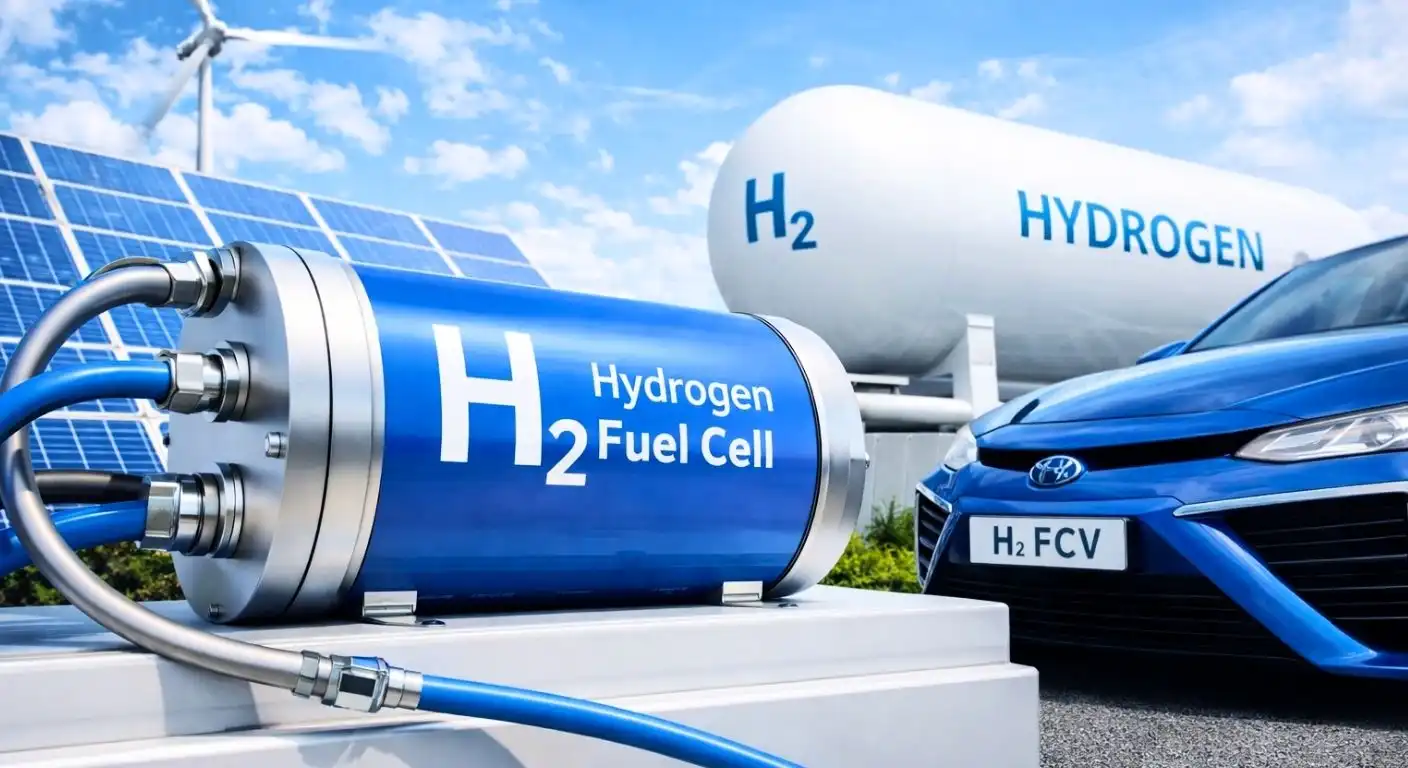
- Water Electrolysis Units: High-performance Proton Exchange Membrane (PEM) electrolyzers that use surplus solar electricity to split water into high-purity hydrogen and oxygen.
- Thermal-Insulated Fuel Cells: Advanced hydrogen fuel cells equipped with custom electric heating jackets and closed-loop waste-heat recovery systems to generate electricity in sub-zero environments.
- High-Pressure Hydrogen Storage Tanks: Secure, low-temperature-tolerant carbon-fiber storage cylinders designed to hold compressed hydrogen gas through the dark polar winter.
- Microgrid Power Management Systems: Intelligent, software-driven energy controllers that automatically balance real-time solar generation, battery storage capacity, and hydrogen production.
- Closed-Loop Water Recycling: Capturing the pure water vapor produced by the fuel cell during electricity generation and recycling it back to the water electrolysis unit to create a self-sustaining system.
The Mechanics of the Clean Hydrogen Energy Circulation System
The fundamental challenge of relying on renewable energy in Antarctica is the extreme seasonal shift in daylight. During the polar summer, which runs from November through February, the sun never sets, providing the research station with a continuous, 24-hour supply of solar energy.
However, during the dark polar winter, which runs from May through August, the sun disappears entirely, leaving the station in complete, frozen darkness for months at a time.
The clean hydrogen energy circulation system solved this seasonal storage problem by using hydrogen as a high-capacity, long-term energy storage medium, acting as a massive geological battery.
The Summer Hydrogen Production Phase
During the bright summer months, the research station’s extensive solar arrays generate far more electricity than the facility needs to run its daily scientific and living operations. The intelligent microgrid management system captures this massive surplus of solar energy and routes it directly to advanced Proton Exchange Membrane (PEM) electrolyzers.
These units use clean electricity to split water molecules, generating high-purity hydrogen gas. The system then compresses this hydrogen and pumps it into high-pressure, low-temperature-tolerant storage cylinders, building up a massive fuel reserve throughout the sunny summer.
The Winter Fuel Cell Reversal Phase
When the polar winter arrives, and the solar panels go completely dark, the microgrid automatically reverses the loop. The system begins drawing the compressed hydrogen gas out of the storage tanks and feeding it into advanced proton-exchange fuel cells.
The fuel cells combine the stored hydrogen with oxygen drawn from the atmosphere, initiating an electrochemical reaction that generates clean, reliable electricity and heat.
Because the chemical byproduct of this process is pure, distilled water, the system automatically captures this water vapor, filters it, and stores it in insulated tanks, ready to be used by the electrolyzers during the next summer production cycle, creating a completely closed-loop, self-sustaining energy system.
Engineering for the Extreme: Surviving Sub-Zero Temperatures
While the theoretical chemistry of hydrogen energy storage is straightforward, building a system that can actually operate in the hostile, sub-zero climate of Antarctica is an extraordinary engineering challenge.
Proton exchange membrane electrolyzers and fuel cells rely on liquid water to operate, but at South Korea’s Antarctic stations, winter temperatures frequently plummet below minus 30 degrees Celsius (minus 22 degrees Fahrenheit), accompanied by howling, high-speed winds.
If any water freezes inside the system’s delicate membranes, internal pipelines, or storage valves, the ice will expand rapidly, rupturing the expensive hardware and causing a catastrophic system failure.
Hyundai’s Passive and Active Thermal Protections
To protect the green hydrogen grid from freezing, Hyundai is applying advanced thermal engineering techniques drawn from its extensive experience developing fuel cell vehicles like the Nexo.
The entire hydrogen circulation system—including the water tanks, electrolyzers, compressors, and fuel cells—sits inside heavily insulated, containerized modules designed to withstand extreme polar winds and sub-zero temperatures. These containers are equipped with active electric heating jackets powered by local battery storage systems to maintain a stable, above-freezing internal operating temperature.
The Co-Generation Efficiency Loop
More importantly, the system utilizes a highly efficient cogeneration loop. The electrochemical reaction inside a hydrogen fuel cell is only about 50% to 60% efficient at generating electricity; the remaining energy is released as heat.
Instead of letting this thermal energy escape, the system captures this high-grade waste heat and routes it through a closed-loop liquid thermal network. This heat is used to keep the system’s internal water pipelines warm, prevent ice formation in the storage tanks, and provide space heating for the research station’s living quarters and laboratories.
By utilizing this waste heat, the system dramatically increases its overall thermal efficiency, reducing the total amount of hydrogen required to keep the station warm and operational throughout the winter.
Geopolitical and Strategic Significance of Polar Decarbonization
The signing of the polar energy agreement by Hyundai Motor Co. President Sung Kim and Oceans Minister Hwang Jong-woo carries immense geopolitical and strategic importance for South Korea’s standing in the international scientific community.
Under the rules of the Antarctic Treaty System, nations do not gain international influence or scientific prestige simply by building large research bases. Instead, they must demonstrate active leadership in environmental stewardship, scientific innovation, and international cooperation.
By building the world’s first fully functional, zero-emission green hydrogen grid in Antarctica, South Korea is demonstrating its deep commitment to polar conservation, earning the respect of the international community and solidifying its position as a responsible participant in Antarctic affairs.
A Commercial Blueprint for Remote off-Grid Markets
Furthermore, the lessons learned from operating a hydrogen microgrid in the most hostile environment on Earth will have immediate commercial applications for remote, off-grid markets worldwide.
There are thousands of isolated communities, remote military bases, deep-wilderness mining camps, and island nations across the globe that currently rely entirely on expensive, polluting diesel generators to keep their lights on.
By proving that its fuel cell and electrolysis systems can operate with absolute reliability in the sub-zero winds of Antarctica, Hyundai is building a robust, field-tested commercial portfolio.
The company can use this polar success story as a powerful sales pitch to market its green hydrogen microgrid solutions to utility companies, governments, and industrial operators around the world, opening up a massive new global market for its clean energy technologies.
Conclusion
The historic partnership between Hyundai Motor Group, KOPRI, and the Ministry of Oceans and Fisheries represents a major milestone in the global transition toward clean, sustainable energy. By designing and deploying a state-of-the-art clean hydrogen energy circulation system in the hostile, sub-zero climate of Antarctica, the partners are successfully proving that even the most isolated and environmentally sensitive facilities on Earth can escape their dependency on fossil fuels. From the seasonal storage of surplus summer solar energy to the integration of advanced thermal insulation and cogeneration heating loops, this green hydrogen microgrid represents a major triumph of modern energy engineering. As the world continues to search for reliable, zero-emission alternatives to dirty diesel generators, the success of this polar installation will provide a vital, field-tested blueprint for off-grid decarbonization, proving that the future of clean energy is being built right now in the most remote corners of our planet.