Key Points:
- Chinese brands comprise 95% of the 800 new energy shuttle buses deployed to transport World Cup fans in Mexico City.
- China’s overall automobile exports hit 930,000 units in May, representing a rapid 68.7% year-on-year growth rate.
- Cumulative exports of new energy vehicles (NEVs) climbed to 1.83 million units in the first five months of the year.
- Automakers like Geely and Shaanxi Automobile are building local production plants globally to integrate with domestic economies.
In Mexico City, the transit buses shuttling millions of World Cup fans to stadium matches are Chinese-built vehicles manufactured by Yutong, a leading coach enterprise based in central China’s Henan Province. Of the 800 new energy shuttle buses officially deployed for the major sporting tournament, an impressive 95% come from Chinese brands, with Yutong alone capturing 85% of the total fleet. This heavy presence on the international sporting stage highlights a much broader trend: the surging global popularity and rapid market expansion of Chinese exported automobiles.
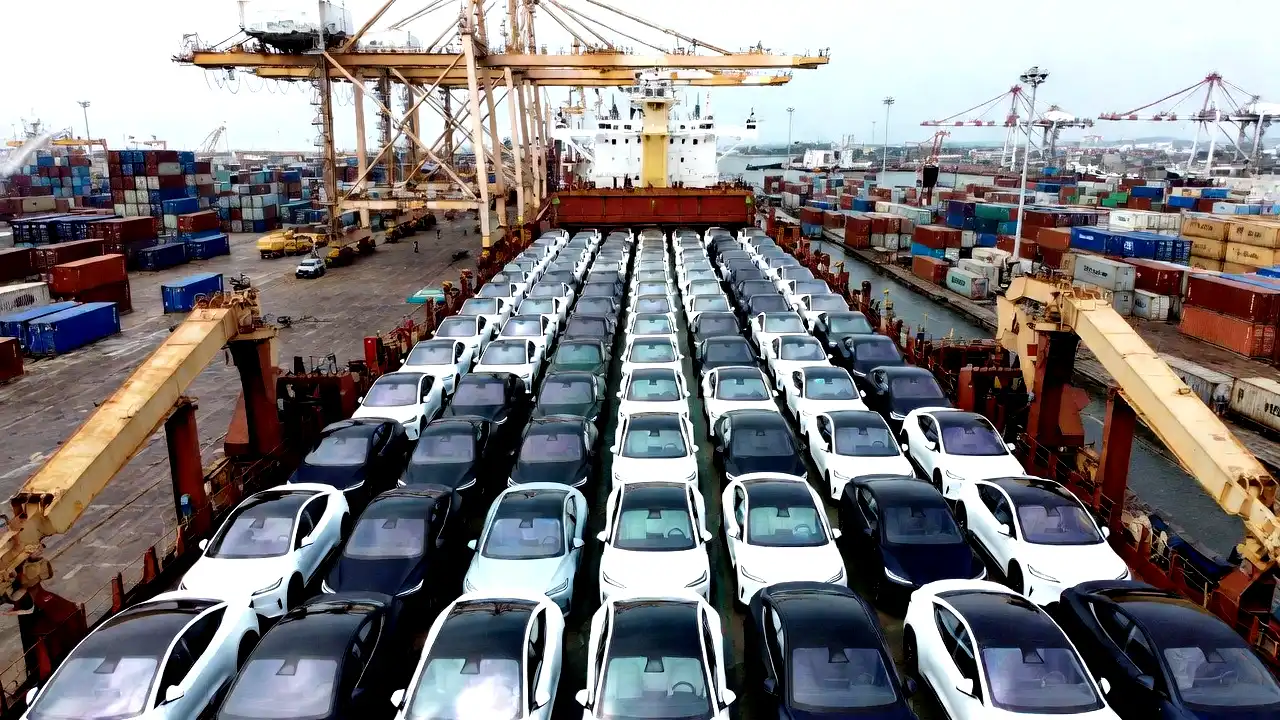
According to newly released market data from the China Association of Automobile Manufacturers, the nation’s auto exports maintained an explosive growth momentum throughout May. Total vehicle exports reached 930,000 units during the month, representing a sharp 68.7% increase compared to the same period last year. This milestone marks the second consecutive month that national automobile exports have remained comfortably above the 900,000-unit threshold, cementing the country’s position as a dominant force in the global automotive supply chain.
A massive portion of this export wave consists of new energy vehicles, making the country the world’s largest exporter of electric and hybrid transport. Cumulative exports of these green models reached 1.83 million units during the first five months of the year, marking an astounding 110% year-on-year increase. This rapid growth aligns directly with the pressing global demand for environmental protection and carbon reduction. International buyers are increasingly turning to these eco-friendly vehicles as governments worldwide implement stricter emissions regulations.
Long-established manufacturers are leading this green transition by expanding their overseas product portfolios. Shaanxi Automobile Holding Group, a prominent vehicle builder headquartered in Xi’an, is stepping up its pace of green expansion alongside its traditional fuel-powered heavy trucks. In 2025, the company successfully entered the Australian market with its hydrogen fuel cell heavy-duty trucks and won a major municipal project in Uzbekistan with its battery-electric compression garbage trucks. The group has also exported advanced clean-energy utility models to developed markets like Britain and the Netherlands.
Instead of simply shipping finished vehicles to foreign dealerships, Chinese automakers are building localized industrial ecosystems directly within target markets. Shaanxi Automobile has set up assembly and marketing plants across 17 countries to recruit and train thousands of local workers. This deep integration is happening across the entire industry. For instance, Great Wall Motors recently began operating a vehicle plant in Brazil, BYD announced plans to construct an assembly factory in Malaysia, and SAIC-GM-Wuling rolled out its 3 millionth new energy vehicle from its industrial site in Indonesia.
Geely Auto, one of the nation’s largest independent exporters, is also executing an aggressive localization strategy. The company operates modern vehicle and powertrain manufacturing facilities in major global markets like the United States, Britain, and Sweden, supported by a retail network of more than 4,000 sales outlets worldwide. In Malaysia, Geely acquired a strategic stake in national car brand Proton, successfully turning the struggling manufacturer’s losses into substantial profits. Furthermore, Geely is partnering with local developers to construct the Automotive High Tech Valley in Tanjung Malim, aiming to build a premium automotive hub in Southeast Asia.
Chinese automotive engineering is also gaining praise for its ability to customize heavy-duty equipment for complex infrastructure projects. During the construction of the Masi Railway in Guinea, a major regional resource corridor, Shaanxi Automobile customized its F3000 super dump truck to survive the country’s harsh tropical monsoon climate and punishing mining road conditions. Engineers implemented extensive upgrades to the truck’s chassis protection, ground clearance, and cabin sealing. The company also deployed a team of ten field engineers to provide round-the-clock maintenance services, directly creating hundreds of local construction jobs.
The high level of software intelligence is another primary driver behind the rising popularity of these vehicles. Chinese auto developers are no longer just building mechanical parts; they are actively designing and standardizing the software operating systems that run modern smart cars. Neusoft Reach Automotive Technology, based in Shenyang, developed an independent vehicle operating system that adapts seamlessly across different regional computing platforms. The software has already entered mass production globally, with the company establishing collaborative engineering partnerships with more than 150 international automotive suppliers.
As these advanced technological systems enter mass production, they are driving a major shift in how the global automotive industry cooperates and competes. Industry researchers note that China is no longer just a high-volume manufacturing center, but a key player in reshaping global standards and technological patterns. By combining high-performance electric powertrains with localized factory employment and smart software platforms, these manufacturers are redefining what global consumers expect from modern vehicles. This comprehensive approach ensures that the global export boom will remain highly resilient for years to come.