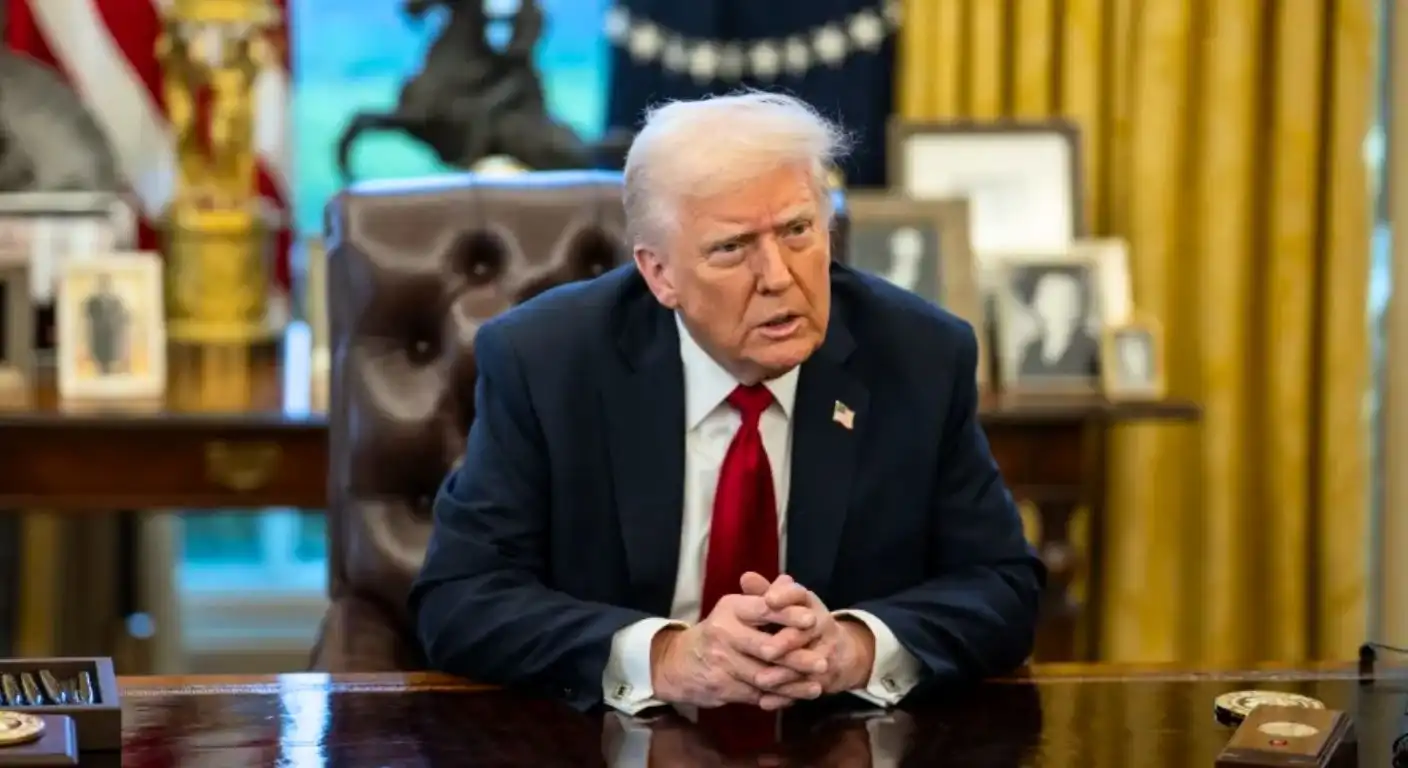
The historic Palace of Versailles has witnessed many of the world’s most dramatic diplomatic negotiations, but the candlelit dinner held there recently may prove to be one of the most controversial. Sitting with French President Emmanuel Macron and other global leaders, U.S. President Donald Trump put his signature to a 14-point preliminary peace framework with Iran, formally known as the Islamabad Memorandum. Hours later, Iranian President Masoud Pezeshkian signed the matching document in Tehran, bringing a sudden, fragile halt to a destructive 100-day war that had rattled global markets.
While the Trump administration immediately declared the agreement a major diplomatic victory, a closer look at the circumstances surrounding the deal reveals a different reality. Shortly after signing the agreement, Trump publicly admitted that his primary motivation was to prevent a “worldwide depression” and “global economic collapse.” By laying bare his deep anxiety over the state of the economy, Trump has broken his own golden rule of negotiation. This public admission of economic vulnerability has exposed a major weakness, severely undercutting U.S. leverage just as the two nations prepare for a difficult 60-day diplomatic window to negotiate a final, comprehensive settlement.
The Versailles Treaty of 2026: Details of the Islamabad Memorandum
The signing of the memorandum represents a dramatic attempt to draw a line under a war that began on February 28, 2026. The conflict erupted after coordinated military strikes by the United States and Israel targeted installations inside Iran. The ensuing hostilities quickly escalated, resulting in significant casualties. A particularly tragic U.S. cruise missile strike on a school in Minab killed over 175 people, mostly young schoolgirls, drawing widespread international condemnation.
In retaliation, Iran launched massive missile and drone salvos across the region and moved to effectively shut down the Strait of Hormuz. By blocking maritime traffic through this vital waterway, which handles roughly 20% of the world’s commercial oil shipments, Tehran triggered a severe global energy crisis. The United States responded by imposing a tight naval blockade on Iranian ports, freezing billions of dollars in foreign accounts, and tightening its economic sanctions to a chokehold.
The newly signed Islamabad Memorandum, which was mediated by Pakistan and Qatar, aims to immediately freeze the conflict. Under the terms of the 14-point agreement:
- Both sides and their respective allies agreed to an immediate, permanent cessation of hostilities on all fronts, including the active conflict in Lebanon.
- The Islamic Republic of Iran is committed to instantly reopening the Strait of Hormuz to international shipping.
- The United States agreed to immediately lift its naval blockade of Iranian ports and waive the oil sanctions that have crippled the Iranian economy.
- Both parties agreed to a 60-day trial framework to negotiate a final, permanent settlement regarding Iran’s nuclear enrichment capabilities, the future of its ballistic missile program, and the release of frozen Iranian assets.
The Art of the Desperate Deal: Breaking Trump’s Own Rules
While the immediate reopening of the Strait of Hormuz brought instant relief to global energy markets, foreign policy analysts have raised major questions about the structural imbalances in the agreement. By granting Iran significant, upfront economic relief before securing any long-term concessions on its nuclear program, the United States appears to have negotiated from a position of strategic weakness.
Strategic Impatience vs. Strategic Patience
The primary imbalance in the negotiations stems from a fundamental mismatch in patience. Over the course of the 100-day conflict, Iran demonstrated what analysts call “strategic patience,” absorbing military strikes while maintaining its leverage over the global economy through the closure of the Strait of Hormuz. In contrast, Trump exhibited intense “strategic impatience,” driven by fears of how a prolonged energy crisis would impact his domestic political standing.
This impatience flies directly in the face of the core negotiation principles Trump outlined in his own book, The Art of the Deal. In his writing, Trump asserted that the worst thing a negotiator can possibly do is seem desperate to make a deal, as it gives the other side an immediate advantage. By admitting that the alternative to the agreement was a global economic collapse, Trump signaled to Tehran exactly where his pain threshold lies. Iranian negotiators now know that the U.S. president is terrified of economic volatility, giving them immense leverage as they enter the next round of talks.
Domestic Outrage on Capitol Hill and Israel’s Isolation
The upfront concessions granted under the Islamabad Memorandum have sparked intense backlash in Washington. Critics on Capitol Hill have accused the president of capitulating to Iranian pressure. Republican Senator Bill Cassidy led the domestic opposition, publicly labeling the agreement as the “worst foreign policy blunder in decades.” Lawmakers are furious that the administration has surrendered its most powerful economic leverage—the oil sanctions and naval blockade—in exchange for what is essentially a temporary freeze.
The deal has also created a major diplomatic rift with Israel. Prime Minister Benjamin Netanyahu made it clear that his country was not involved in the negotiations and is not bound by the terms of the Versailles memorandum of understanding. By immediately halting U.S. military operations and waiving sanctions while Israel’s security concerns regarding Iran-backed Hezbollah militants in Lebanon remain unresolved, the deal has left Israel feeling deeply isolated. Critics argue that the U.S. has prioritized short-term domestic economic stability over the long-term security commitments of its primary Middle Eastern ally.
How Upfront Concessions Destabilize the Next 60 Days of Talks
The primary danger of the Islamabad Memorandum is that by giving away its biggest bargaining chips on day one, the United States has left itself with very few peaceful levers to influence Iran’s behavior over the next 60 days of negotiations.
The Switzerland Cancellation and the Fragile Truce
The fragility of the truce became obvious less than 48 hours after the papers were signed. A planned follow-up meeting in Switzerland between key negotiators from the United States, Iran, Pakistan, and Qatar was suddenly canceled without explanation. While the White House suggested the delay was due to minor logistical issues, diplomatic insiders reported that Iran backed out of the talks due to ongoing local hostilities.
In response to the canceled meeting, Trump took to social media to issue an aggressive warning, asserting that Iran is “FINISHED” and will “get no money” if they do not comply with the outstanding terms of the agreement. However, this aggressive rhetoric has been widely interpreted by diplomats as a symptom of weakness rather than strength. Having already lifted the naval blockade and waived the oil sanctions, the U.S. president has very few options left short of restarting a direct military conflict—an option he has already made clear he desperately wants to avoid due to its economic consequences.
The Core Friction Points in the Final Settlement
The cancellation of the Swiss meeting highlights the immense challenges facing negotiators as they try to draft a final treaty. While the preliminary memorandum established a ceasefire, it left the most difficult structural questions unresolved:
- Uranium Enrichment: The two sides must agree on a mutually satisfactory framework regarding Iran’s civilian nuclear needs and its uranium enrichment levels. Under the preliminary deal, Iran agreed to dilute its existing stockpile of enriched uranium, but the long-term limits remain highly contested.
- Frozen Assets and Investment: The memorandum commits the U.S. to unfreezing billions of dollars in frozen Iranian assets and facilitating outside investment into the country once a final agreement is reached. While Trump has slammed reports of a direct $300 billion U.S. investment fund, stating that the U.S. is “not investing 10 cents,” the promise of broad economic relief remains a massive point of friction.
- Ballistic Missiles: The Trump administration has signaled that it may not pressure Tehran to abandon its ballistic missile program in the final deal. This represents a massive concession that has outraged defense analysts, who argue it leaves regional allies completely defenseless against future Iranian aggression.
The sense of triumph in Tehran is palpable. Following the signing ceremony, Iran’s chief negotiator, Mohammad Bagher Ghalibaf, boasted to state television that everything Iran sought to achieve through military action, it obtained several times over through negotiation. This public boasting illustrates how successfully Iran has exploited the U.S. president’s fear of an economic downturn, turning a military conflict into a massive geopolitical victory for the Islamic Republic.
The Broader Economic Stakes for the U.S. and Global Markets
To understand why President Trump was so willing to make these significant concessions, one must analyze the broader economic landscape of 2026. The U.S. economy has been grappling with persistent inflationary pressures, elevated interest rates, and a delicate recovery.
The sudden closure of the Strait of Hormuz in February had an immediate, devastating impact on global supply chains. As commercial shipping ground to a halt, the price of crude oil spiked, threatening to push retail gasoline prices past five dollars a gallon in the United States. Such an energy shock would have acted as a massive tax on American consumers, severely dampening retail spending, driving up shipping costs for businesses, and potentially plunging the country into a deep stagflationary recession.
For a president heading into a critical midterm election cycle later this year, a sustained economic downturn of this magnitude would be a political death sentence. Trump’s political advisors warned him that a prolonged war and an ongoing energy crisis would guarantee a massive wave of losses for his party at the ballot box. Driven by these immediate political and economic anxieties, the president chose to prioritize short-term market relief over long-term strategic leverage, signing a deal that immediately sent oil prices tumbling below $80 per barrel but left America’s foreign policy objectives in tatters.
In Short
The signing of the Islamabad Memorandum at the Palace of Versailles represents a classic case of a short-term economic fix bought at the expense of long-term strategic leverage. By publicly admitting that his primary goal was to avert a global economic collapse, President Donald Trump has broken his own negotiation rules, signaling to Iran that his foreign policy is entirely captive to domestic economic anxieties.
While the immediate reopening of the Strait of Hormuz and the subsequent decline in global oil prices have brought welcome relief to consumers and financial markets, the upfront concessions have left the United States with very little leverage as it enters the critical 60-day negotiation window. With regional allies like Israel feeling isolated and domestic critics accusing the administration of capitulation, the coming weeks will test whether this fragile truce can mature into a lasting peace, or if the structural imbalances of the deal will cause it to collapse back into renewed conflict.