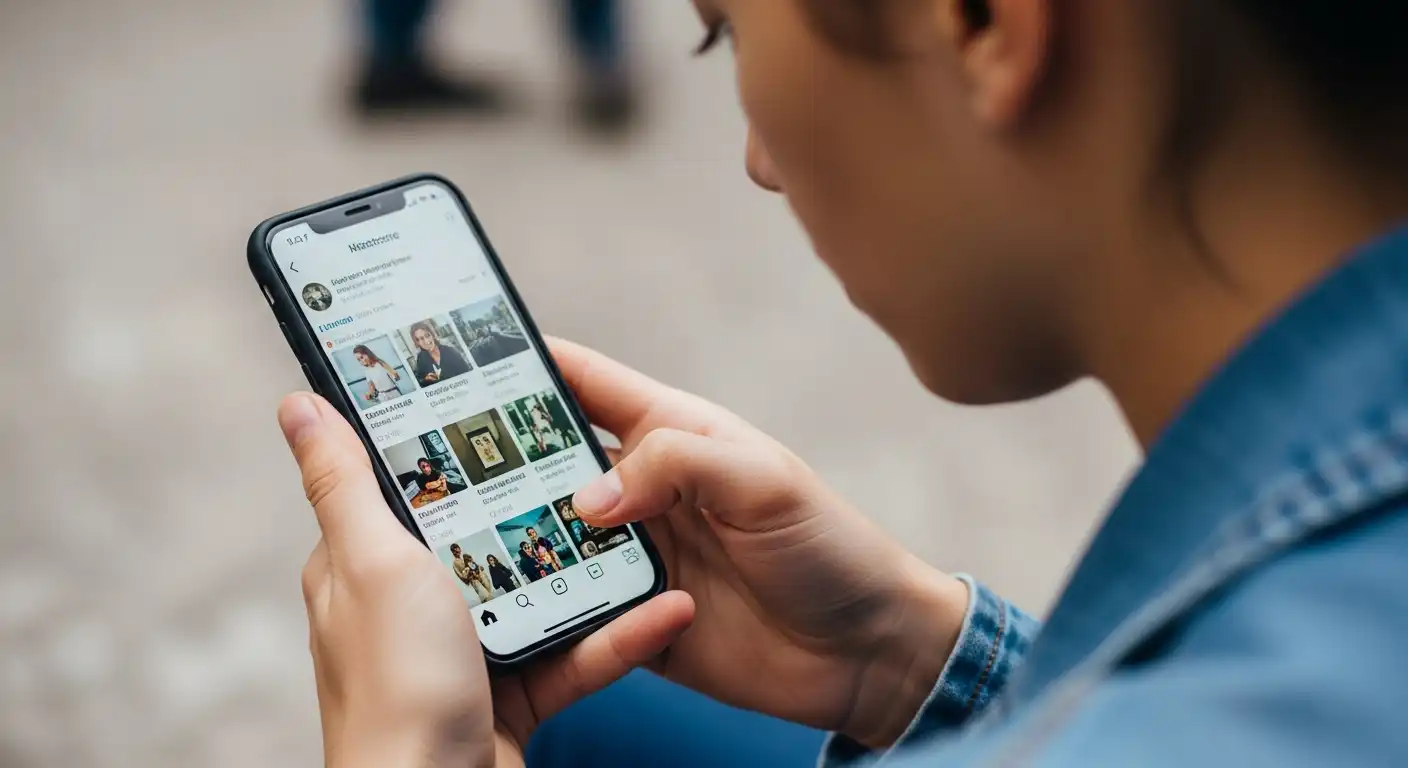
We are the most connected generation in human history, yet we are also the loneliest. We carry supercomputers in our pockets that grant us access to the sum of human knowledge and a global network of billions of people. We can order food, find a date, and watch a movie without ever leaving our couches.
This digital revolution has brought incredible benefits, but it has come at a steep, often invisible cost. We have traded presence for notifications, conversation for comments, and community for followers. Many of us are living in a state of “continuous partial attention,” our minds perpetually fractured between the physical world in front of us and the digital world in our hands.
This imbalance is not just a matter of “spending too much time on the phone.” It is a neurochemical and psychological crisis. It is contributing to rising rates of anxiety, depression, and burnout. It is eroding our ability to focus, to be bored, and to connect deeply with the people who matter most.
Finding a healthy balance between our online and offline lives is no longer a wellness trend; it is a critical survival skill for the 21st century.
This comprehensive guide will explore the psychology of digital addiction, the damage it does to our brains, and a practical, actionable framework to help you reclaim your time, your attention, and your life from the algorithm.
The Dopamine Loop: Why You Can’t Stop Scrolling
To solve the problem, you must first understand the enemy. And the enemy is not your phone; it is the sophisticated psychological machinery that has been built into the apps on your phone.
Social media, news feeds, and games are designed by “attention engineers” who use the principles of behavioral psychology to make their products as addictive as possible. Their business model depends on it.
The Intermittent Reinforcement Schedule
This is the same mechanism that makes slot machines so addictive. In the 1950s, psychologist B.F. Skinner found that lab rats would press a lever more obsessively if the reward (a food pellet) was delivered at random, unpredictable intervals.
Social media notifications operate on the same principle. Every time you pull down to refresh your feed, you are pulling the lever on a digital slot machine. Most of the time, you get nothing. But sometimes, you get a “win”—a like, a comment, a juicy piece of gossip. Your brain gets a hit of dopamine, the neurotransmitter of desire and anticipation.
This “intermittent reinforcement” is what creates the compulsive “checking” behavior. You are not looking for anything specific; you are chasing the possibility of a reward.
The Social Validation Feedback Loop
Humans are social creatures. Our brains are wired to seek approval from the tribe. Likes, shares, and positive comments are the modern equivalent of social validation. Each one provides a small hit of dopamine, creating a feedback loop that trains us to perform for the algorithm. We start curating our lives to generate more engagement, losing touch with our authentic selves in the process.
The Cost of Imbalance: What Are We Losing?
A life lived primarily through a screen is a life half-lived. The consequences of this imbalance are both subtle and profound.
The Erosion of Deep Work
“Deep Work,” a term coined by Cal Newport, is the ability to focus without distraction on a cognitively demanding task. It is the skill that creates real value in the knowledge economy.
Our constant digital snacking—checking email for 30 seconds, scrolling Instagram for two minutes—is destroying our ability to sustain deep focus. We are training our brains to crave constant novelty, making the long, quiet, and often boring work of mastery feel intolerable.
The Death of Boredom
Boredom is not a void to be filled; it is a canvas for creativity. When we are bored, our brains enter a state known as the “Default Mode Network.” This is where we connect disparate ideas, reflect on our past, and plan for our future. It is where our best ideas are born.
By filling every “in-between” moment (waiting in line, commuting, sitting on the toilet) with our phones, we are robbing ourselves of the essential mental space required for creativity and self-reflection.
The Decline of Real-World Community
Digital “communities” are often a poor substitute for the real thing. A “like” is not the same as a hug. A comment is not the same as a deep, face-to-face conversation.
Studies have shown a strong correlation between high social media use and increased feelings of loneliness. We are replacing the rich, nuanced, and sometimes difficult work of real human connection with the shallow, frictionless interactions of the digital world.
Phase 1: The Audit (Confronting the Data)
You cannot change what you do not measure. The first step to finding balance is to get a brutally honest assessment of where your time is actually going.
Use Your Phone’s Built-in Tools
Both iOS and Android have built-in digital wellness dashboards.
- iOS: Go to Settings > Screen Time.
- Android: Go to Settings > Digital Wellbeing & parental controls.
Look at the numbers. How many hours a day are you on your phone? How many times do you pick it up? Which apps are consuming the most time?
The average user spends over 3 hours a day on their phone and picks it up nearly 100 times. Seeing your own data can be a shocking but necessary wake-up call.
Phase 2: The Digital Declutter (Designing Your Environment)
You cannot rely on willpower to fight a system designed by a thousand engineers to break it. You must change your environment to make distraction harder and focus easier.
The Great App Purge
Go through your phone, app by app, and ask one question: “Does this app consistently bring value and joy to my life?”
If the answer is no, delete it.
- Social Media: You do not need Facebook, Instagram, Twitter, and TikTok on your phone. Choose one (or none). Access the others via a web browser, which is a less addictive experience.
- News Apps: Most news apps are designed to stoke outrage and keep you scrolling. Delete them. Get your news once a day from a reputable website.
- Games: Delete any “infinite scroll” or micro-transaction-based games.
The Notification Slaughter
Turn off all non-human notifications. A notification is a demand. It is an algorithm telling you what to pay attention to right now. Reclaim your agency.
Go to Settings > Notifications and turn off banners, badges, and sounds for every single app except for:
- Phone calls.
- Text messages from real people.
- Calendar alerts.
You check your email and social media on your schedule, not theirs.
The Home Screen Makeover
Your home screen should be a tool, not a toy.
- Remove all “infinity pool” apps: Social media, news, email, and web browsers do not belong on your home screen.
- Move them to the second page in a folder: This adds a layer of “friction.” You have to consciously swipe and tap to open them, which breaks the mindless “checking” reflex.
- Embrace Grayscale: Go to your phone’s accessibility settings and turn the screen to grayscale (black and white). This removes the bright, slot-machine-like colors that trigger dopamine, making your phone significantly less appealing.
Phase 3: The Boundaries (Building Your Firewall)
Now that your phone is less distracting, you need to create rules of engagement.
The “No Phone” Zones and Times
Designate sacred spaces and times where phones are not allowed.
- The Bedroom: Your bedroom should be for sleep and intimacy only. Buy an old-school alarm clock and charge your phone in the kitchen overnight. This is the single most effective habit for improving sleep quality.
- The Dinner Table: Meals are for conversation. Put all phones in a basket in the center of the table.
- The First and Last Hour: Do not touch your phone for the first hour after you wake up or the last hour before you go to sleep. Use this time to read, journal, stretch, or talk to your partner.
The “Deep Work” Blocks
Schedule blocks of time in your calendar for focused work. During these blocks, your phone is in another room, and your computer has a site blocker (like Freedom or Cold Turkey) running.
The “Slow” Response
You do not have to reply to every email or text instantly.
- Batch your communication: Check email only two or three times a day at set times (e.g., 10 AM, 1 PM, 4 PM).
- Turn off read receipts: This removes the social pressure to reply immediately.
Phase 4: The Re-Engagement (Cultivating an Offline Life)
Creating a digital vacuum is only half the battle. You must fill that vacuum with high-quality, real-world activities. If you are bored, you will inevitably return to the comforting glow of the screen.
Reclaim Your Hobbies
What did you love to do before you had a smartphone?
- Play an instrument?
- Hike?
- Paint?
- Read physical books?
Schedule time for analog hobbies. They engage your hands, your body, and your mind in a way that passive consumption cannot.
Schedule Social Time (and Leave the Phones Behind)
Be intentional about seeing people in person.
- The “Phone Stack”: When you go out to dinner with friends, have everyone put their phone in a pile in the center of the table. The first person to touch their phone pays the bill.
- The Walk and Talk: Instead of a Zoom call, meet a friend for a walk. Movement facilitates deeper conversation.
The Practice of Solitude
Learn to be alone with your thoughts.
- Go for a walk without headphones.
- Sit in a park and just observe.
- Keep a journal.
This is where you process your emotions, solve problems, and get to know yourself. It is uncomfortable at first, but it is essential for mental health.
Conclusion
Finding a balance between your online and offline life is not about rejecting technology. It is about using it on your own terms. It is about moving from a life of mindless consumption to a life of intentional creation.
The algorithm does not have your best interests at heart. It wants your attention. Your family, your health, your hobbies, and your deep work—these are the things that matter to your well-being.
The battle for your time is the battle for your life. By implementing these strategies, you are casting a vote. You are voting for depth over shallowness, for presence over distraction, and for a life that is lived, not just scrolled.
Put down the phone. Look up. The real world is waiting.