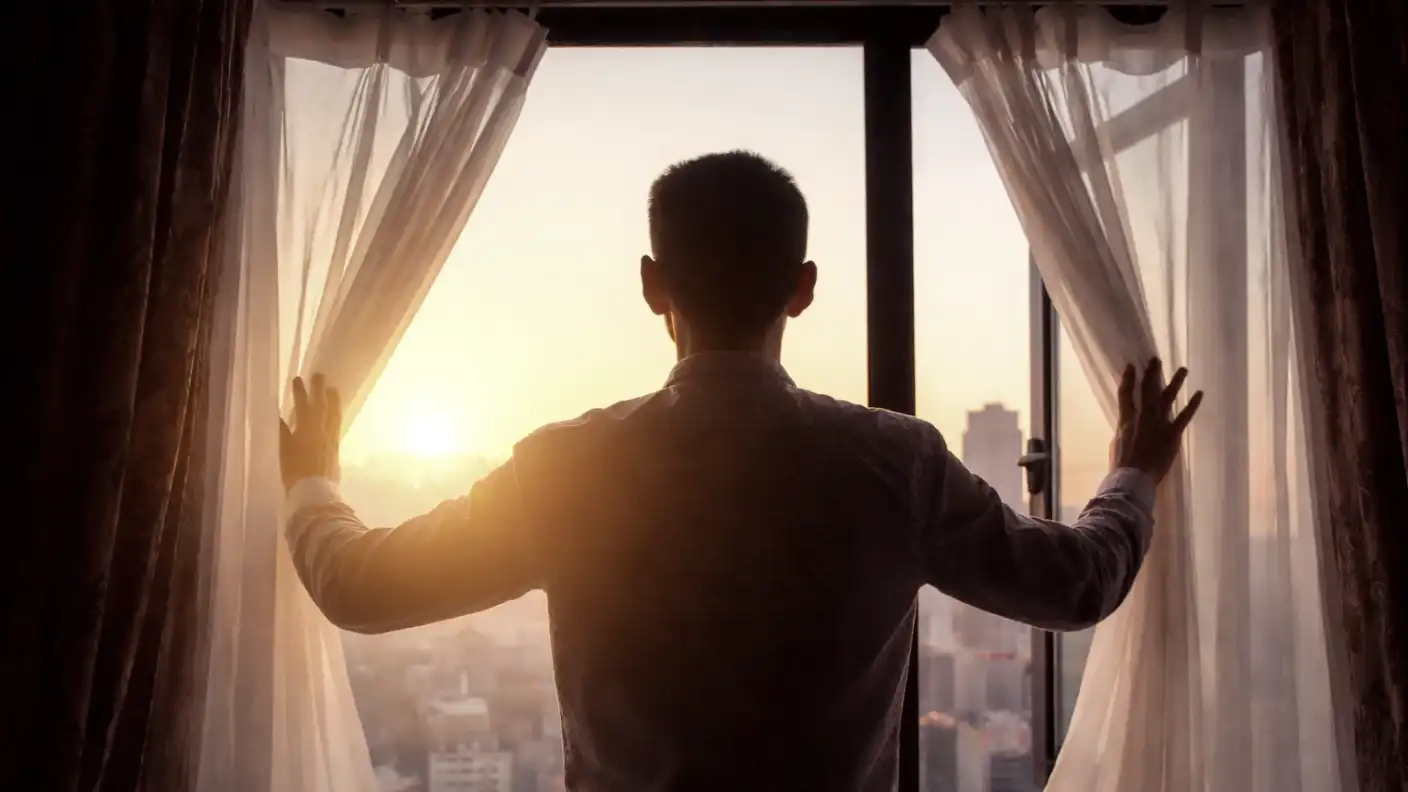
We live in a world that is engaged in a constant, silent war against our biology. We wake up to jarring alarms before the sun rises, we stare at blue-light-emitting screens for ten hours a day, we chug caffeine to power through afternoon slumps, and we stay up late scrolling through social media, bathing our retinas in artificial daylight when our bodies are screaming for darkness.
Then, we wonder why we are exhausted. We wonder why we have brain fog, why our digestion is off, why we feel anxious, and why we cannot sleep even when we are tired. The problem isn’t that you aren’t working hard enough or that you need more willpower. The problem is that you are desynchronized. You are living at odds with your Circadian Rhythm.
Your circadian rhythm is not just a “sleep clock.” It is the master conductor of your entire biological orchestra. It dictates your hormone release, your body temperature, your metabolism, your immune system, and your cognitive sharpness. When the conductor is out of sync, the music of your health turns into noise. However, when you align your lifestyle with this ancient 24-hour cycle, the results feel like a superpower. Energy becomes abundant and consistent. Sleep becomes deep and restorative. Focus sharpens. Mood stabilizes.
This comprehensive guide will move beyond the basic advice of “get eight hours of sleep.” We will explore the neuroscience of the body clock, the potent triggers that control it, and actionable “hacks” you can implement from sunrise to sunset to optimize your physiology for peak performance and health.
The Master Clock: Understanding the Machinery
To hack the system, you must first understand how it works. Deep inside your brain, within the hypothalamus, sits a tiny bundle of about 20,000 neurons called the Suprachiasmatic Nucleus (SCN). This is your Master Clock.
The SCN does not know what time it is on your watch. It relies on external cues from the environment to set the time. These cues are called Zeitgebers (German for “time givers”).
While there are several zeitgebers—including food, temperature, and social interaction—the undisputed king is Light.
When light hits specialized cells in your retina, a signal shoots directly to the SCN.
- In the morning: Light tells the SCN to signal the release of Cortisol (to wake you up and alert the immune system) and Epinephrine (adrenaline). It also starts a countdown timer for sleep roughly 12-14 hours later.
- In the evening: The absence of light (darkness) tells the SCN to trigger the pineal gland to release Melatonin, the hormone that transitions the body into sleep.
Modern life disrupts these signals. We miss the bright morning light (delaying the wake-up signal) and get too much evening light (delaying the sleep signal). This pushes our rhythm backward, leading to “Social Jetlag.”
Phase 1: The Morning Anchor (Wake-Up Optimization)
The most critical moment for your circadian health is the first hour after waking. What you do here sets the trajectory for your entire day and determines how well you will sleep tonight.
Solar Loading: The Golden Rule
The single most effective hack for your circadian rhythm is viewing sunlight within 30 to 60 minutes of waking up.
- The Science: You need a high intensity of light (lux) to trigger the cortisol pulse that wakes up your brain and body. Indoor lighting is often too dim (500 lux) compared to outdoor light (10,000+ lux, even on cloudy days).
- The Hack: Go outside. Do not wear sunglasses (eyeglasses and contacts are fine). Spend 5-10 minutes facing the general direction of the sun (never look directly at it) on sunny days, or 15-20 minutes on cloudy days. This anchors your rhythm and starts the timer for melatonin release later that night.
The 90-Minute Caffeine Delay
Most people reach for coffee immediately. This is a mistake. When you sleep, your brain clears out Adenosine, a molecule that creates “sleep pressure.” If you didn’t sleep perfectly, you still have some adenosine lingering. Caffeine blocks adenosine receptors. If you drink it immediately, you block the receptors, but the adenosine is still floating around. When the caffeine wears off in the afternoon, all that adenosine rushes back in, causing the dreaded “2 PM Crash.”
- The Hack: Wait 90 minutes after waking before consuming caffeine. This allows your natural cortisol levels to clear out the remaining adenosine naturally. Your energy will be smoother and last longer.
Cold Exposure (Thermal Trigger)
Your body temperature needs to rise to wake up. Paradoxically, exposing the surface of your body to cold causes your core body temperature to rise as a compensatory mechanism.
- The Hack: Take a cold shower (or finish your hot shower with 1-2 minutes of cold) in the morning. The shock releases a massive spike of dopamine and adrenaline, sharpening focus and signaling to your SCN that the day has begun.
Phase 2: The Midday Peak (Sustaining Energy)
The middle of the day is often where the rhythm falters. Biological performance naturally dips in the early afternoon. You can hack this dip to minimize its impact.
Meal Timing and the Peripheral Clocks
While the SCN is the Master Clock in the brain, every organ in your body (liver, gut, heart) has its own “peripheral clock.” Food is the primary zeitgeber for these clocks.
If you eat constantly throughout the day and night, your liver clock gets out of sync with your brain clock. This causes metabolic chaos.
- The Hack: Practice a form of Time-Restricted Eating (TRE). Try to consume all your calories within a 10 or 12-hour window. Crucially, try to keep your biggest meals when daylight is highest. This aligns your metabolism with your insulin sensitivity, which is highest in the morning and early afternoon.
The Power of Optic Flow
When we stare at screens, our eyes focus on a fixed point, which can trigger a low-level stress response in the brainstem.
- The Hack: Take a “horizon walk.” Walking outside and allowing images to pass by your eyes (optic flow) quiets the amygdala (fear center) and lowers stress. Doing this around midday or sunset provides a “second anchor” of light information to your clock.
Non-Sleep Deep Rest (NSDR)
If you feel the afternoon slump, do not rely on a second pot of coffee (which will ruin your sleep tonight).
- The Hack: Utilize NSDR or Yoga Nidra. These are guided relaxation protocols (freely available on YouTube) that last 10-20 minutes. They mimic the restorative brainwave states of sleep without you actually falling asleep. Studies show 20 minutes of NSDR can replenish dopamine and cognitive focus as effectively as a long nap, without the grogginess (sleep inertia).
Phase 3: The Evening Descent (Preparing for Restoration)
The modern world is too bright at night. To hack your sleep, you must engineer a “digital sunset.”
The Blue Light Blockade
Melatonin is the “vampire hormone”—it only comes out in the dark. Blue light (from LEDs, phones, and TVs) suppresses melatonin twice as effectively as other wavelengths.
- The Hack (Level 1): Turn on “Night Shift” or “Eye Comfort Shield” on all devices after sunset.
- The Hack (Level 2): Dim the overhead lights. Overhead lighting mimics the sun. Switch to floor lamps or table lamps that are at eye level or below.
- The Hack (Level 3): Wear blue-light blocking glasses (the ones with red or amber lenses) two hours before bed. This allows you to watch a movie or check your phone without your brain thinking it is noon.
Thermal Regulation (The Cool Down)
To fall asleep and stay asleep, your core body temperature must drop by about 2-3 degrees Fahrenheit.
- The Hack: Keep your bedroom cool (around 65-68°F / 18-20°C).
- The Warm Bath Trick: Taking a warm bath or shower 1-2 hours before bed actually helps you cool down. It dilates the blood vessels in your hands and feet (vasodilation), which draws heat from your core and releases it. This rapid cooling creates a massive sleep signal.
The 3-Hour Fast
Eating late is one of the biggest disruptors of deep sleep (SWS) and REM sleep. Digestion is a thermogenic (heat-producing) process. If you eat a heavy meal right before bed, your body temperature stays high, preventing deep sleep.
- The Hack: Stop eating 3 hours before your intended bedtime. If you must eat, stick to light, easily digestible snacks.
Phase 4: Chronotypes (Personalizing the Hack)
Not everyone’s clock is set to the same time. Dr. Michael Breus popularized the idea of “Chronotypes.” Understanding yours allows you to stop fighting your nature.
The Lion (Morning Type)
You wake up early naturally and are tired by 9 PM.
- Hack: Do your hardest, most analytical work between 8 AM and 12 PM. Avoid social obligations late at night; they will wreck you.
The Bear (The Middle/Majority)
You follow the solar cycle closely. You need 8 hours of sleep and wake up with the sun.
- Hack: Prioritize a solid breakfast. Your productivity peaks mid-morning. The afternoon dip hits you hard, so schedule meetings or low-focus admin work for 2 PM – 4 PM.
The Wolf (Evening Type/Night Owl)
You struggle to wake up before 9 AM and feel most energetic at 7 PM.
- Hack: Stop shaming yourself for not being part of the “5 AM Club.” It doesn’t work for your biology. If your job allows, shift your schedule later. Exercise in the evening (between 5 PM and 7 PM) to utilize your peak energy, but give yourself a buffer before bed.
The Dolphin (The Insomniac)
You are a light sleeper, often anxious, with an erratic rhythm.
- Hack: You need the strictest hygiene. No caffeine after 12 PM. Extreme darkness in the bedroom. Do not force sleep; if you can’t sleep, get out of bed and do something low-stimulation until you are tired.
Advanced Hacks: Jet Lag and Shift Work
The ultimate test of circadian hacking is when life forces you completely off schedule.
Surviving Shift Work
Shift work is classified by the WHO as a probable carcinogen because of the circadian disruption.
- The Anchor Sleep: Try to keep at least 4 hours of your sleep time “anchored” to the same time every day, regardless of your shift.
- Darkness is Key: When you leave a night shift, wear dark sunglasses on the drive home. If sunlight hits your eyes, your body will wake up, and you won’t be able to sleep when you get home.
- The Red Light Room: If you are awake at 3 AM, use red lights in your environment. It allows you to see but doesn’t suppress melatonin as much, making it easier to go back to sleep later.
Beating Jet Lag
- Fast to Reset: Your gut clock can override your brain clock. Fast for 12-16 hours during the flight. Break your fast with a large, protein-rich meal at breakfast time in your destination’s time zone. This signals to your body that it is “morning.”
- View Light Immediately: Upon arrival, get outside. If you arrive at night, avoid bright lights and go to sleep.
Consistency: The Weekend Trap
Many people practice great circadian hygiene Monday through Friday, then stay up until 2 AM on Saturday and sleep until 11 AM on Sunday. This is called Social Jetlag.
By doing this, you are effectively flying across three time zones every weekend. Your body spends Monday, Tuesday, and Wednesday recovering, leaving you with only two days of optimal function.
- The Hack: Keep your wake-up time consistent, even on weekends. You can stay up a little later, but try to wake up within 60 minutes of your weekday time. If you are tired, take a 20-minute NSDR nap in the afternoon rather than sleeping in.
Conclusion
Hacking your circadian rhythm is not about adding more tasks to your to-do list. It is about timing. It is about doing the right things at the times your body is biologically primed to do them.
When you align with your clock, the friction of life decreases.
- You don’t need three alarms to wake up.
- You don’t need a gallon of coffee to focus.
- You don’t need sleeping pills to turn off your brain.
You are simply leveraging the ancient, solar-powered machinery that you were born with. By respecting the light and the dark, the heat and the cold, and the rhythm of the day, you reclaim the health and vitality that modern life tries to steal.
Start tomorrow morning. Go outside. Look toward the light. Your body is waiting for the signal.