Key Points:
- Amazon executive chairman Jeff Bezos wants the government to stop taxing lower-income workers on federal income tax.
- Bezos argues that the bottom half of earners pay just 3% of total taxes, while the top 1% pay almost 40%.
- Senator Cory Booker recently introduced a bill to make the first $75,000 of household income completely tax-free.
- The average American still pays over $520,000 in various lifetime taxes, wiping out a third of all their earnings.
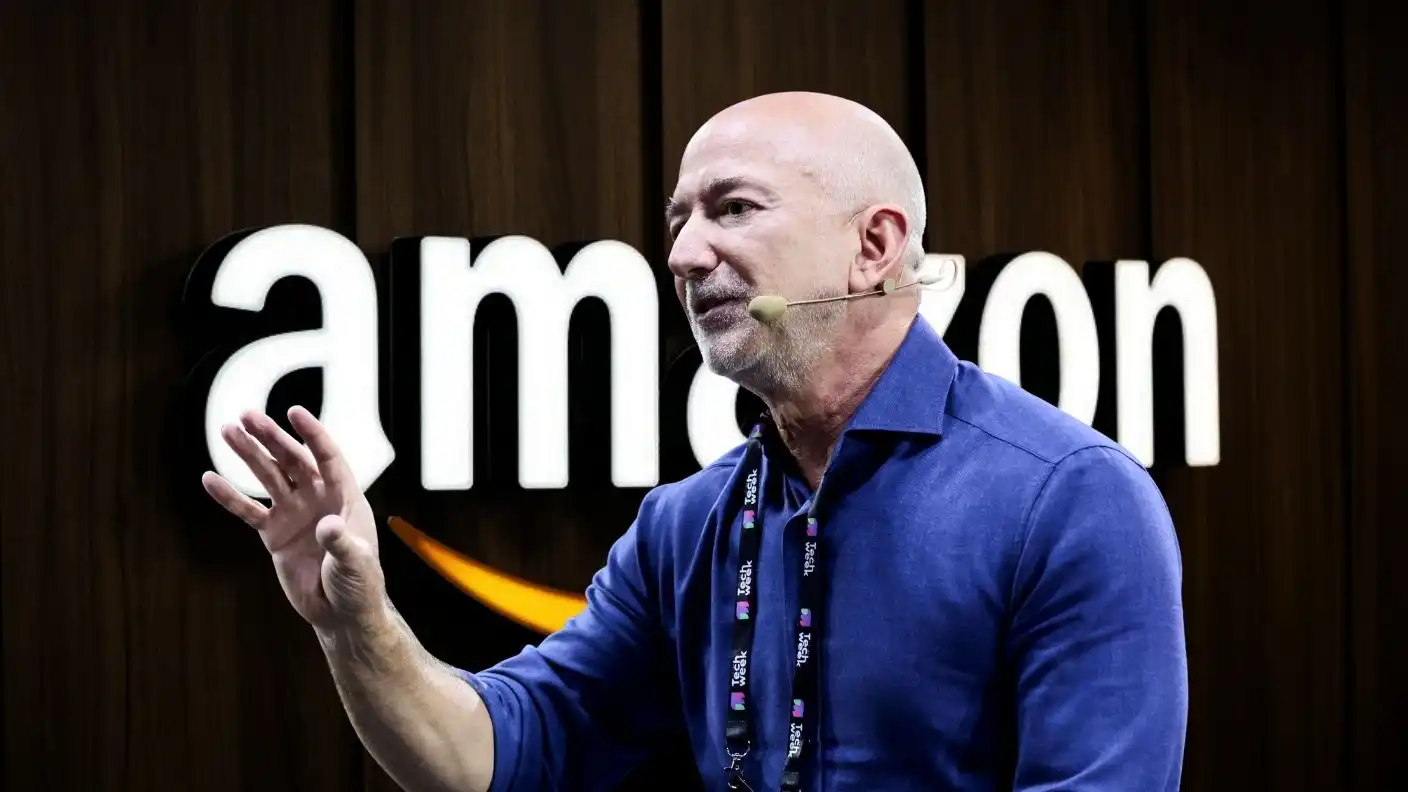
Amazon executive chairman Jeff Bezos recently shared a surprising idea to help the working class. While many politicians push to tax the rich, the fourth-wealthiest person in the world wants to flip the script. During an interview with CNBC on Wednesday, Bezos advocated for eliminating federal income taxes for lower-income Americans. He believes this simple change would give struggling families a real chance to get ahead.
Bezos drew on his own childhood to explain his stance. He grew up as the son of a Cuban immigrant and a teenage mother. His parents worked hard to pull themselves up during very difficult financial times. He wants to make sure people struggling today have that same opportunity to improve their lives and raise successful children. He thinks giving families a break on their tax bills gives them a much better chance at achieving the American dream.
The billionaire brought some simple math to the conversation. He pointed out that the top 1% of earners pay 40% of all taxes in the country. Meanwhile, the bottom half of all income earners supply only 3% of total tax revenue. Bezos gave a real-world example of a nurse living in Queens who earns $75,000 a year. He noted that this nurse pays over $12,000 a year in taxes. He strongly questioned whether taking that much money from a working-class professional makes any sense at all.
Bezos suggested a direct solution for that nurse in Queens. He wants the government to stop taking her money so she can keep an extra $1,000 every single month. She could use that cash to pay her rent, buy groceries, or handle emergency expenses. Because the bottom half of earners account for only 3% of total taxes, Bezos argued that the government can easily cover that tiny shortfall in the budget.
This idea stands in sharp contrast to current political movements. Many leaders want to squeeze more money out of wealthy individuals. New York City Mayor Zohran Mamdani recently launched a new tax on luxury second homes owned by wealthy people who do not live in the city full-time. More than half a dozen state governments also want to create brand new wealth taxes to target high earners. Bezos firmly argues that raising taxes on the wealthy does very little, actually, to help struggling households pay their daily bills.
Tax experts confirm the numbers Bezos shared during his interview. The Tax Foundation operates as a tax research think tank. According to their 2023 data, the top 1% of taxpayers paid 38.4% of all federal individual income taxes. The bottom half of taxpayers, who earned less than $53,801 that year, paid just 3.3% of the total. Bezos sees this data as proof that the government does not actually need tax money from people who are just starting and struggling to survive.
Despite these arguments, millions of Americans already avoid the federal income tax. According to the Tax Policy Center, about 76 million households paid zero federal income tax in 2025. Among those households, 70% earned less than $75,000, and 45% earned less than $40,000. These families wiped out their tax bills by using the standard deduction, the earned income tax credit, and the child tax credit to legally lower what they owed.
Lawmakers in Washington have tried to turn Bezos’s idea into law. In March, Democratic Senator Cory Booker introduced the Keep Your Pay Act. This bill proposes making the first $75,000 of income completely tax-free for households filing their taxes jointly. Booker stated that the government could easily pay for this plan by finally forcing wealthy corporations to pay their fair share. Right now, the bill sits stuck in the Senate Finance Committee with no clear path forward.
Even if the federal income tax magically disappears tomorrow, working families will not escape the tax collector. The United States tax code contains at least 97 different ways to tax citizens. Americans pay state, local, payroll, sales, and property taxes. They also pay hidden fees every time they buy gasoline, register a vehicle, secure a building permit, or stay in a hotel room.
These smaller taxes add up to a massive financial burden over time. Self, a financial technology company, estimates that the average American pays more than $520,000 in taxes during their lifetime. This jaw-dropping number consumes a full third of all the money a person earns in their life. Just buying and driving an average car like a Toyota RAV 4 costs nearly $38,889 in taxes alone over a standard lifetime.
Where a person lives drastically changes their lifetime tax bill. The financial report from Self highlights massive differences between individual states. New Jersey residents suffer the most, paying a staggering $987,117 in taxes over their lifetimes. On the other end of the spectrum, people living in West Virginia pay the least at $358,407. Whether billionaires suggest a tax break or politicians promise change, local and state governments ensure they always get their cut.