Key Points:
- SpaceX filed paperwork for a historic initial public offering targeting a record-setting $1.75 trillion valuation.
- The rocket company generated $18.67 billion in revenue last year, mostly through its Starlink satellite internet network.
- Elon Musk merged his artificial intelligence startup xAI with SpaceX to build massive data centers in outer space.
- The company plans to list shares on the Nasdaq under the ticker symbol SPCX by June 12.
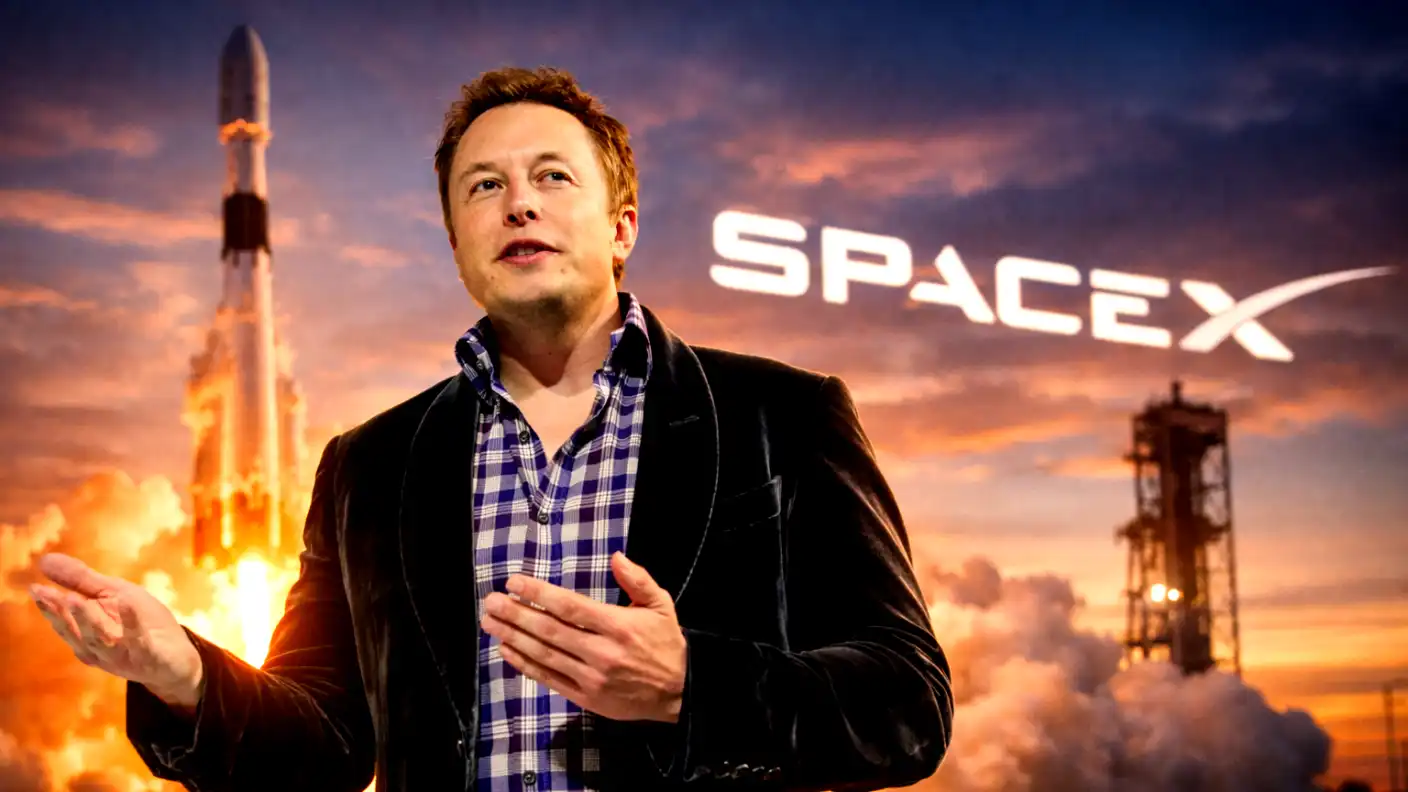
SpaceX officially opened its financial books to the public on Wednesday. The rocket company filed paperwork for its highly anticipated initial public offering. This massive financial move reveals Elon Musk’s grand ambitions to colonize Mars and build powerful artificial intelligence data centers in outer space. The upcoming stock sale will likely become the first trillion-dollar market debut in United States history.
If the sale succeeds, the public market could value SpaceX at a staggering $1.75 trillion. Achieving this massive number would shatter the previous world record set by Saudi Aramco. The oil giant debuted on the Riyadh exchange with a $1.7 trillion value back in 2019. A successful stock launch at this price point would easily make Musk the first official trillionaire in human history. SpaceX plans to raise more than $75 billion during this specific offering.
The regulatory filing finally gives regular people a look inside the company’s money machine. SpaceX generated $18.67 billion in total revenue last year. Most of that cash came directly from Starlink, the company’s massive satellite internet business. Since its founding in 2002, the company has launched roughly 10,000 Starlink satellites into orbit. This growing network now sells broadband internet connections to consumers, enterprise businesses, and government agencies worldwide.
While rockets and satellites pay the current bills, Musk sees a very different future for his space empire. The company wants to chase a potential total market worth $28.5 trillion over the next few decades. SpaceX leaders believe artificial intelligence will generate most of that future money. To achieve this, SpaceX recently merged with Musk’s artificial intelligence startup xAI. That specific deal valued the rocket builder at $1 trillion and the xAI chatbot developer at $250 billion. However, the financial paperwork shows that the new xAI unit is still losing money.
The SpaceX board of directors gave Musk total control over the company’s future. At the same time, they tied his personal compensation to extremely audacious targets. To get his full payout, Musk must successfully establish a permanent human colony on Mars. He must also build giant space data centers with massive computing capacity. The board expects these outer-space computers to consume 100 terawatts of power, which equals the electrical output of 100,000 one-gigawatt nuclear reactors.
This financial disclosure arrives during a highly critical week for the aerospace company. Engineers at the Texas launch site plan to test the massive next-generation Starship rocket later this week. Musk desperately needs this giant new rocket to work perfectly. His entire plan for lunar missions, Mars colonies, and massive Starlink expansions depends completely on the Starship vehicle safely reaching orbit and returning to Earth.
Financial analysts warn that investors might buy the stock simply because they like Elon Musk. Experts call this the halo effect. The famous chief executive officer often distracts people from the actual business fundamentals. The stock market also lacks any similar companies that investors can use as a financial benchmark. Some experts worry about the growing Musk business empire. They fear Musk might struggle to juggle SpaceX alongside his electric-vehicle company, Tesla, and his brain-chip implant business.
This historic stock offering highlights a fierce new space race. Private companies now fight intensely to slash launch costs and secure lucrative government defense contracts. For decades, state agencies like NASA and Russia’s Roscosmos dominated the stars. Today, private capital fuels the industry. Competitors like Jeff Bezos and his company Blue Origin must now scramble to catch up with the reusable rocket technology that SpaceX perfected.
The company set an aggressive timeline for the upcoming month. Leaders plan to launch an investor roadshow on June 4. They expect to begin selling shares to the public on June 11 and officially list the stock on Nasdaq by June 12. Retail investors will get a massive piece of the action. SpaceX will set aside a large portion of shares specifically for everyday people and plans to host 1,500 retail investors at a special event in June.
When the stock goes live, investors will find it under the ticker symbol SPCX. Major Wall Street banks, including Goldman Sachs, Morgan Stanley, Bank of America, Citigroup, and J.P. Morgan, will manage the massive stock sale. A successful debut for SpaceX will likely trigger a massive wave of new technology listings. Other major artificial intelligence companies, such as OpenAI and Anthropic, plan to launch their own initial public offerings later in 2026. The world will watch closely to see if the market has enough appetite for these massive valuations.