

Key Points:
- During morning trading on June 3, 2026, memory chipmaker Kioxia Holdings briefly surpassed Toyota Motor Corp. to become Japan’s second-most valuable company.
- An extraordinary 11% surge in its stock price drove Kioxia’s market capitalization past ¥45 trillion ($264.79 billion), challenging Toyota’s legacy dominance.
- The dramatic market-cap battle follows a massive tech rally that pushed the Nikkei 225 index past the historic 68,000-point mark for the first time.
- Kioxia is currently the world’s best-performing semiconductor stock of 2026, recording staggering year-to-date share price gains of over 643%.
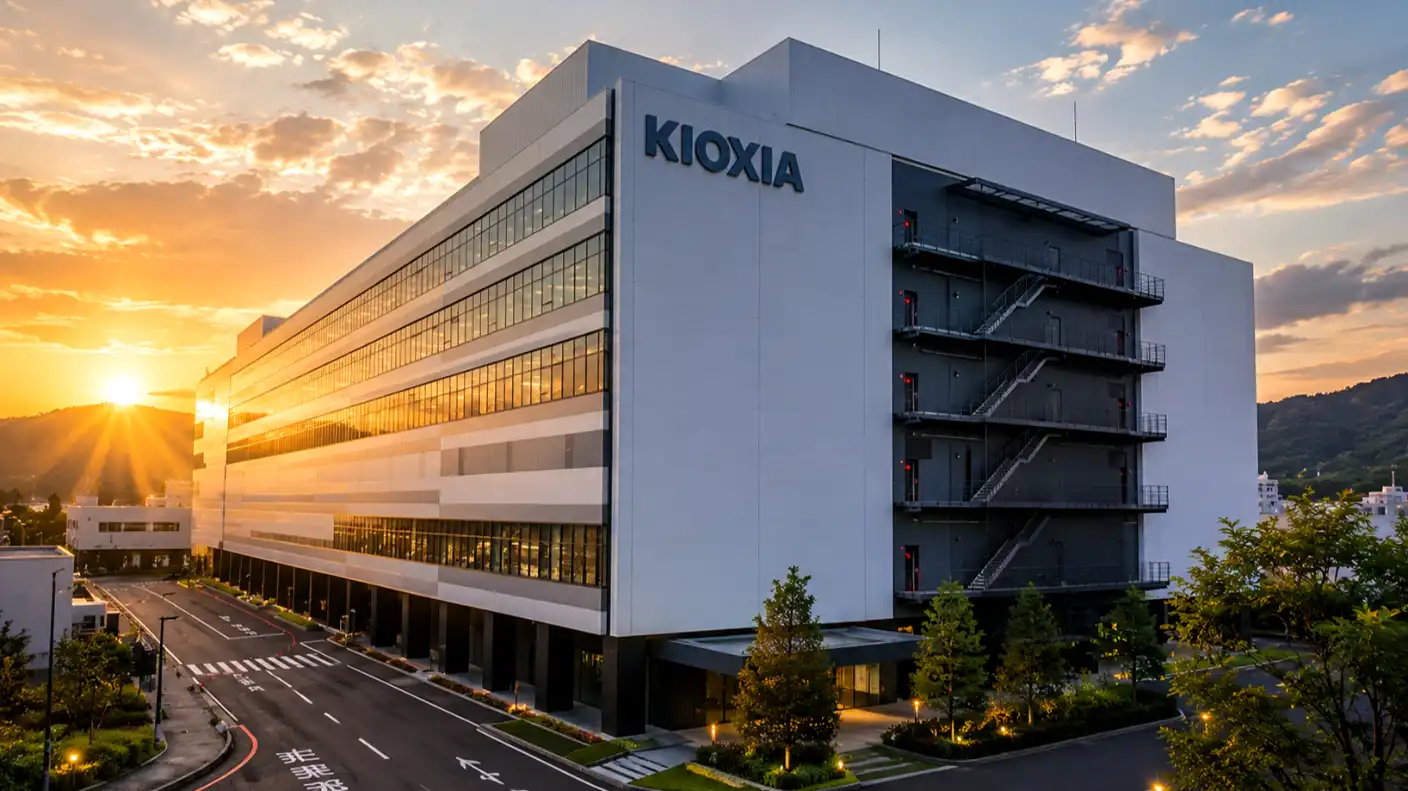
The historic, tech-driven realignment of Japan’s corporate hierarchy took a dramatic new turn on Wednesday, June 3, 2026. During early morning trading sessions on the Tokyo Stock Exchange, memory chipmaker Kioxia Holdings Corp. briefly surpassed automotive giant Toyota Motor Corp. in market capitalization. This rapid surge temporarily elevated Kioxia to Japan’s second-most valuable company, showcasing the immense power of the global artificial intelligence boom. Although a late-morning pullback allowed Toyota to reclaim its second-place slot, the dramatic battle at the top of the board officially confirms that the traditional industrial giants of “Japan Inc.” are facing a massive, irreversible technology-driven challenge.
The market moves on Wednesday morning illustrated the breathtaking velocity of the current tech rally. The Nikkei 225 index surged past the historic 68,000-point mark for the first time in history, gaining nearly 2.0% on the back of positive semiconductor earnings in the United States. Riding this wave, Kioxia’s shares jumped by as much as 11% to reach an intraday peak of 83,140 yen, pushing its total market capitalization past ¥45.42 trillion (approximately $264.79 billion). While a slight market consolidation by 11:00 a.m. pulled Kioxia’s stock down to the 79,000 yen level, letting Toyota’s ¥45.8 trillion valuation slip back into second place, the narrow margin of difference proves that the old corporate order is crumbling.
This high-velocity struggle at the top of the Tokyo Stock Exchange marks what local brokers are calling a “Warring States” era for Japanese equities. Just two days prior, on Monday, June 1, 2026, technology and investment conglomerate SoftBank Group Corp. officially overtook Toyota to become Japan’s most valuable company, ending the carmaker’s 23-year reign. With SoftBank currently holding the crown at ¥48 trillion and Kioxia snapping at Toyota’s heels at ¥45.42 trillion, Toyota—which has dominated the Japanese economy since December 2003—now finds itself squeezed into third place by two massive, highly aggressive tech champions.
What makes Kioxia’s rise particularly impressive is the rapid, vertical trajectory of its stock price. Since completing its initial public offering (IPO) on the Tokyo Stock Exchange in December 2024, the NAND flash memory manufacturer has taken just a year and a half to vault into the top three. So far in 2026, Kioxia’s shares have surged by an astronomical 643.1%, cementing its position as the single best-performing semiconductor stock in the world. This explosive rally has left global competitors like Micron Technology and Samsung Electronics far behind in share price appreciation, turning Kioxia into a darling among international portfolio managers.
Incredibly strong, record-breaking corporate earnings back this massive re-rating. For the January-to-March quarter of 2026, Kioxia reported total net revenues of 1.0029 trillion yen, representing a spectacular 189% year-on-year surge. Even more impressively, the company’s operating profit plummeted, reversing its previous losses and skyrocketing 15-fold to a record-high 596.8 billion yen. This staggering financial turnaround proves that Kioxia is successfully capitalizing on the global shortage of storage media, translating the high-speed data needs of AI data centers directly into healthy corporate cash flows.
The primary driver behind this explosive profitability is Kioxia’s absolute pricing power over the global technology sector. During the first quarter, the average selling price of NAND flash memory doubled, even as Kioxia’s actual shipment volume fell by approximately 10% sequentially. This massive pricing leverage reflects a severe, structural shortage of advanced storage systems. Because high-performance AI data centers require immense amounts of flash memory to store the massive datasets used to train large language models, tech buyers are paying unprecedented premiums to secure their supply, and no major new supply capacity is expected to come online before late 2027 at the earliest.
Furthermore, Kioxia’s financial projections for the upcoming April-to-June 2026 quarter are even more staggering, indicating that the profit engine is still accelerating. The company’s latest guidance projects quarterly revenue of 1.75 trillion yen, up 74.5% sequentially, while it expects operating profit to climb to 1.3 trillion yen, representing a massive 117% sequential jump. If the company meets these targets, it will achieve a spectacular 74% operating profit margin. This extreme profitability officially surpasses the financial performance of the world’s most successful software giants, destroying the traditional view of hardware manufacturing as a low-margin business.
To build on this historic momentum, Kioxia is preparing to launch a series of shareholder-friendly corporate initiatives. During its highly anticipated Investor Day briefing for institutional analysts, the company’s executive team plans to announce its first-ever dividend payment since its listing, along with a comprehensive stock split program. While the initial dividend represents roughly 1.5% of the company’s total capital reserve, the strategic value of this shareholder return is immense. Furthermore, industry insiders suggest that Kioxia will officially disclose the timeline for a secondary public listing on a U.S. stock exchange. If implemented together, these initiatives will dramatically broaden Kioxia’s international investor base, driving its market capitalization to even higher record levels.
Ultimately, Kioxia’s spectacular, high-stakes battle with Toyota on Wednesday, June 3, 2026, represents a defining moment for the global technology economy. By leveraging its absolute pricing power in the NAND flash market and securing a massive 643% stock price surge, the Japanese chipmaker has proved that physical storage is just as critical as software algorithms in the artificial intelligence era. As the corporate world continues to transition toward data-driven, automated systems, the balance of power on the Tokyo Stock Exchange is shifting permanently. For Kioxia, the road ahead is incredibly bright; as the primary keeper of the world’s digital memories, the company has established itself as an indispensable powerhouse of the new technological age.