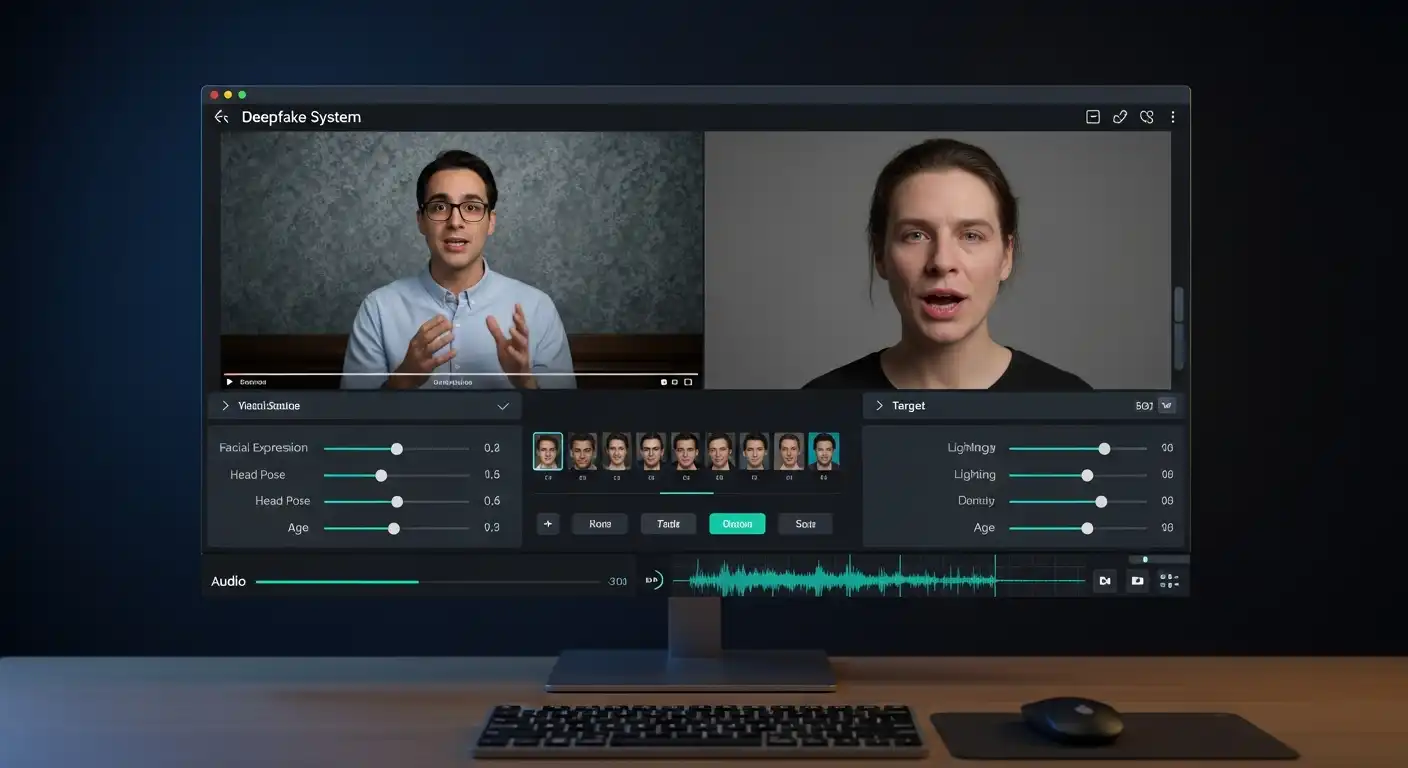
The 2026 midterm election cycle is shaping up to be the most chaotic and unpredictable digital battlefield in American political history. For years, cybersecurity experts, computer scientists, and media analysts warned of a future where artificial intelligence would completely blur the lines of reality. They predicted that malicious actors would eventually use generative software to manipulate voters, disrupt campaigns, and poison the public information environment.
Now, that future has officially arrived. Generative media has leaped forward over the past year, creating deepfakes that are not only photorealistic but increasingly surreal, bizarre, and incredibly difficult for ordinary voters to spot.
In a detailed report published by The Wall Street Journal, researchers examined how these state-of-the-art tools are actively reshaping political campaigns as we head toward the November midterm elections. Unlike the early, clunky deepfakes of previous election cycles, today’s artificial intelligence tools produce stable, high-fidelity video and audio that can easily fool non-expert viewers.
With the federal government stalled by partisan gridlock and technology companies rolling back their moderation teams, the United States is facing a massive regulatory vacuum. This analysis explores the rapid technological evolution of deepfakes, analyzes high-profile political case studies, examines the toothless federal response, and details the profound systemic risk this technology poses to the very foundation of public trust in democratic institutions.
The New Era of Synthetic Realism: Beyond the 2024 Blueprint
To appreciate why deepfakes have become such a dangerous threat in the current midterm cycle, we must look at the massive technological leaps the technology has made over the last two years. In 2024, political deepfakes were often easy for experienced observers to spot. They featured telltale physical giveaways, such as rapid flickering around the chin, weird finger counts, unnatural lighting, distorted eye reflections, or warping around the jawline.
By mid-2026, those visual anomalies will have largely disappeared from mainstream generative models.
The primary driver of this realistic leap is the transition to advanced temporal consistency video models. Historically, video-generation engines struggled to keep a person’s facial features and identity consistent from one frame to the next, resulting in a distracting, unnatural “flicker” effect.
Modern models solve this by completely separating the data representing a person’s identity from the data representing physical motion. This allows developers—and bad actors—to map any speech or action onto a target’s likeness with perfect stability, producing coherent, ultra-smooth videos that are indistinguishable from authentic recordings to the average eye.
Key Components of the 2026 Deepfake Threat
The physical buildout of the modern disinformation ecosystem relies on several highly advanced, integrated technological tools:
- Temporally Consistent Video Engines: Advanced generative models that keep facial features, lighting, and environments stable across multiple video frames, eliminating forensic giveaways like flickering.
- Three-Second Voice Cloning: High-fidelity audio models that copy a target’s vocal tone, accent, and natural breathing patterns using a tiny three-second voice sample.
- Strategic Distraction AI Memes: Flooding social feeds with highly surreal, vulgar, or bizarre AI-generated imagery of political opponents to control the news cycle and exhaust public attention.
- Invisible Disclosure Watermarks: The absolute failure of voluntary “AI-generated” labels, which are easily cropped, covered, or ignored by average social media consumers.
- Real-Time Synthetic Avatars: Next-generation AI performers capable of interacting with people dynamically, used in live robocalls, financial scams, and “ghost employee” corporate infiltration.
Case Studies: Deepfakes on the 2026 Campaign Trail
The practical deployment of these advanced systems is already causing massive disruptions on the campaign trail, with political committees and outside Super PACs using them to directly mislead voters.
The James Talarico NRSC Video
A prominent example of this technology in action occurred in the Texas Senate race. The National Republican Senatorial Committee (NRSC) released a highly realistic deepfake video of Texas state Representative James Talarico, the Democratic Senate candidate. In the video, Talarico appears to be standing in front of a camera, directly reading his own years-old controversial social media posts out loud.
While the video featured a tiny, all-caps “AI Generated” disclaimer in the bottom right-hand corner of the screen, the visual and vocal realism was so seamless that many voters missed the label entirely. They believed the politician had actually recorded the embarrassing statement himself, demonstrating how easily a minute disclaimer can be lost in a high-speed social media feed.
Strategic Distraction on Truth Social
The threat is not limited to realistic impersonations. Political actors are also using artificial intelligence to flood the zone with highly surreal, weird, and bizarre images of their opponents. On platforms like Truth Social, feeds are increasingly dominated by a cascade of AI-generated memes depicting political rivals in vulgar, humiliating, or completely fictional situations.
This tactic works as a form of “strategic distraction.” Rather than trying to convince voters of a specific policy point, bad actors use these weird deepfakes to flood the informational zone.
By turning political discourse into a chaotic, cartoonish circus, they can exhaust the public’s attention span, distract from real corporate or political scandals, and make it impossible for voters to focus on actual, substantive policy debates.
The Explosive Growth of Online Deepfakes
The surge in political deepfakes is part of a massive, exponential increase in synthetic media circulating across the global internet. Cybersecurity firm DeepStrike estimates that the total volume of deepfakes online has exploded at a terrifying rate.
The number of online deepfakes grew from roughly 500,000 in 2023 to over 8 million, representing an extraordinary annual growth rate of nearly 900%.
This automated, industrial-scale growth has moved far beyond the political arena, severely impacting corporate security and global financial markets:
- The Bombay Stock Exchange Fraud: In January, a highly realistic deepfake of Bombay Stock Exchange CEO Sundararaman Ramamurthy spread rapidly across social media, showing him giving fraudulent investment advice, demonstrating how easily synthetic media can manipulate global financial systems.
- The “Ghost Employee” Infiltration: Federal security agencies have issued warnings regarding “ghost employees”—international bad actors using real-time, deepfake AI avatars to pass remote video-call job interviews, infiltrate major U.S. technology companies, steal proprietary source code, and funnel their salaries back to hostile foreign regimes.
- Industrialized Social Engineering: Phishing attacks have become incredibly sophisticated, with scammers using cloned voices of corporate executives to authorize massive, fraudulent wire transfers from unsuspecting employees.
The Federal Regulatory Vacuum
Despite the clear and present danger that deepfakes pose to the integrity of the upcoming midterm elections, the federal regulatory response in the United States remains completely paralyzed.
The Federal Election Commission (FEC) remains hopelessly divided along partisan lines, repeatedly failing to establish clear, enforceable rules governing the use of generative AI in campaign advertising. While the Federal Communications Commission (FCC) successfully prohibited the use of AI-generated voices in automated robocalls, this restriction does not apply to digital ads, television broadcasts, or social media platforms, leaving the vast majority of the political information ecosystem completely unregulated.
Furthermore, legislative efforts in Congress remain stalled. The proposed bipartisan “NO FAKES Act”—which was designed to establish a federal intellectual property right to protect individuals’ voices and physical likenesses from unauthorized digital duplication—has been buried in committee due to intense lobbying from major technology platforms and free-speech advocates who argue the bill could restrict artistic expression.
The State-Level Patchwork Solution
In the face of federal inaction, individual state legislatures have rushed to pass their own laws to protect their elections. By mid-2026, 26 states have passed laws regulating the use of AI-generated content in political communications, representing a massive increase from the five states that had such laws in 2023. States like New Jersey, Maryland, Virginia, Tennessee, and Vermont are currently reviewing similar legislation.
However, this patchwork of inconsistent state rules makes national enforcement incredibly difficult. A political ad that is perfectly legal to broadcast in one state could carry heavy civil penalties just across the state line, creating massive confusion for campaigns and allowing bad actors to exploit the legal gaps to continue spreading disinformation with near-impunity.
The “Liar’s Dividend” and the Collapse of Shared Truth
While the potential to mislead voters is a major concern, political scientists and media literacy experts warn that the deepest, most dangerous systemic threat posed by deepfakes is not the deception itself. Instead, it is the gradual, total erosion of public trust in all information.
When the public becomes fully aware that hyperrealistic, fake videos and cloned voices are circulating everywhere, they stop trusting real media. Every piece of news, every official recording, and every video of a public figure is met with immediate, paralyzing skepticism.
This environment of universal distrust creates a powerful, highly toxic escape hatch for corrupt public figures, a phenomenon known to legal scholars as the “liar’s dividend.”
If a genuine, highly damaging video or audio recording leaks of a politician accepting a bribe, making offensive remarks behind closed doors, or committing a crime, they no longer have to defend their actions. They can simply point to the recording and claim, “That’s an AI deepfake.”
Because the public is already primed to believe that anything can be faked, this simple defense is incredibly effective, allowing corrupt actors to easily escape accountability by exploiting the general informational confusion. Ultimately, when truth itself becomes entirely elusive, democratic debate becomes impossible, as citizens can no longer agree on a shared set of basic facts.
Conclusion
The 2026 midterm campaigns have proved that the era of the deepfake election is no longer a distant warning; it is an active, highly disruptive reality. As advanced video-generation engines eliminate traditional visual anomalies and voice-cloning software achieves hyperrealistic precision, synthetic media has become almost indistinguishable from authentic recordings to the average voter.
With the Federal Election Commission paralyzed by partisan gridlock and the congressional “NO FAKES Act” stalled in committee, a chaotic regulatory vacuum persists. This allows campaigns and Super PACs to deploy deceptive, highly surreal deepfakes with absolute impunity.
While individual states are rushing to pass their own local restrictions, this regulatory patchwork cannot stop the massive, 900% annual surge in online deepfakes. As the line between reality and simulation dissolves, voters must develop rigorous digital hygiene to survive this chaotic informational environment, recognizing that in the modern political arena, you can no longer trust your own eyes and ears to find the truth.