Key Points:
- Lucid plans to reduce its growing inventory of unsold luxury electric vehicles.
- First-quarter revenue reached $282.5 million, missing Wall Street estimates of $440.4 million.
- A seat supplier problem severely delayed deliveries of the highly anticipated Gravity SUV.
- Customer orders in North America surged 144% from February to March amid rising gas prices.
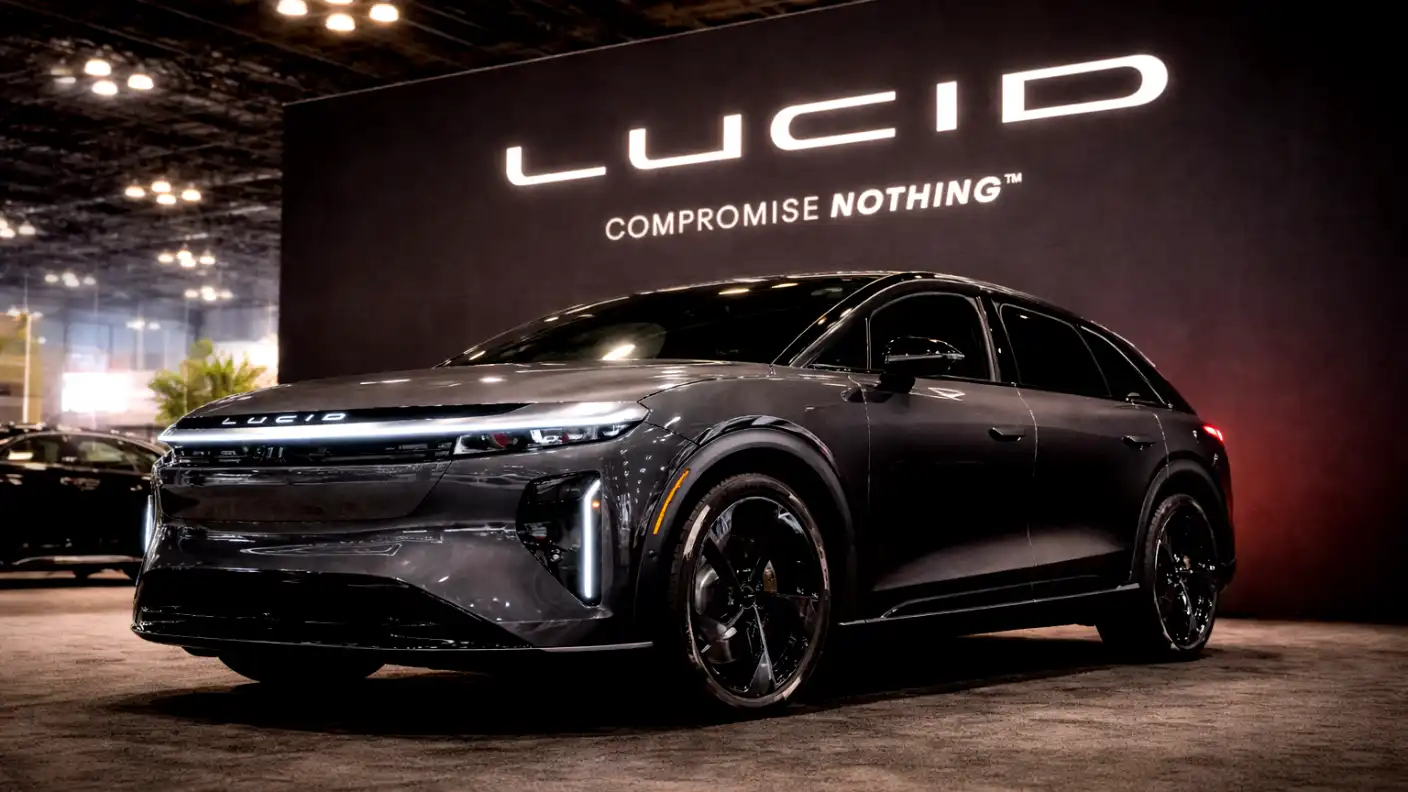
Lucid Group announced on Tuesday that it will adjust its manufacturing plans to better align with current customer demand for its luxury electric vehicles. The automaker wants to reduce a growing stockpile of unsold cars sitting on its lots. In the auto industry, fixing elevated inventory usually means a company must slow down or completely stop the assembly lines.
Despite the excess inventory, a company spokesman told CNBC that Lucid has no immediate plans to pause operations at its only American manufacturing plant located in Arizona. However, the representative refused to confirm if the automaker still expects to build between 25,000 and 27,000 vehicles this year. This silence on previous production targets suggests the company might quietly lower its overall output in the coming months.
A closer look at the delivery numbers shows exactly why Lucid needs to adjust its strategy. The company has built roughly 3,200 more cars than it has sold to customers since the start of 2024. Last year alone, the automaker reported a surplus of about 2,000 units. The trend worsened in the first quarter of 2026, when Lucid produced 5,500 vehicles but delivered the keys to only 3,093 buyers. That left another 2,400 cars sitting without owners.
Lucid Chief Financial Officer Taoufiq Boussaid addressed the growing stockpile in a public statement. He explained that the company finished the quarter with high inventory levels. Still, management expects to turn those unsold cars into actual revenue and cash as delivery rates return to normal. He stressed that leadership will focus heavily on strict business execution. This includes reducing structural costs, spending money carefully, and improving the business’s financial efficiency as it scales up.
These strategic shifts come right after Lucid released disappointing financial results for the first quarter of 2026. The final numbers matched the early warning data the company shared a month ago, but they still fell far short of what Wall Street investors expected.
Analysts had predicted the luxury carmaker would lose $2.64 per share. Instead, Lucid posted a much wider loss of $3.46 per share. The revenue side of the business also failed to impress the market. The company brought in $282.5 million for the quarter, missing the steep $440.4 million target set by financial experts.
While the company managed to grow its revenue by about 20% compared to the same period last year, it still missed the mark by a wide margin. Financial analysts expected an 87.4% surge in year-over-year revenue growth. The big gap between expectations and reality highlights the ongoing struggles Lucid faces in a highly competitive auto market.
Production hurdles also hurt the bottom line. Company officials revealed that a major problem with a seat supplier caused severe delays during the quarter. This specific supply chain failure ruined the delivery schedule for the Lucid Gravity, a highly anticipated electric SUV that the company desperately needs to succeed.
Beyond its internal problems, Lucid must navigate a chaotic national market for electric vehicles. Consumer demand took a heavy hit last year when the Trump administration ended a popular consumer incentive program. Buyers previously used that program to claim up to $7,500 in financial perks when purchasing an electric car. The sudden end of that discount pushed many potential shoppers out of the market.
However, the global geopolitical landscape recently handed the electric vehicle industry an unexpected boost. Several rival automakers noted that the ongoing war in Iran caused gas prices to spike nationwide. These expensive trips to the gas pump pushed regular drivers to start looking at electric cars again.
Lucid is already seeing some benefit from this renewed interest. The automaker reported that its North American order intake rocketed up by 144% between February and March. If the company can fix its supplier issues and clear out the old inventory, that sudden surge in spring orders could help get the luxury brand back on track.