
Key Points:
- SpaceX launched its massive 408-foot-tall Starship Version 3 (V3) rocket on its 12th test flight from Texas.
- The spacecraft completed a suborbital path across the globe before successfully splashing down and exploding in the Indian Ocean.
- During the flight, Starship deployed 22 mock satellites, including two equipped with cameras to capture heat shield reentry data.
- NASA will use the upgraded Starship V3 to land astronauts on the Moon during the upcoming Artemis IV mission.
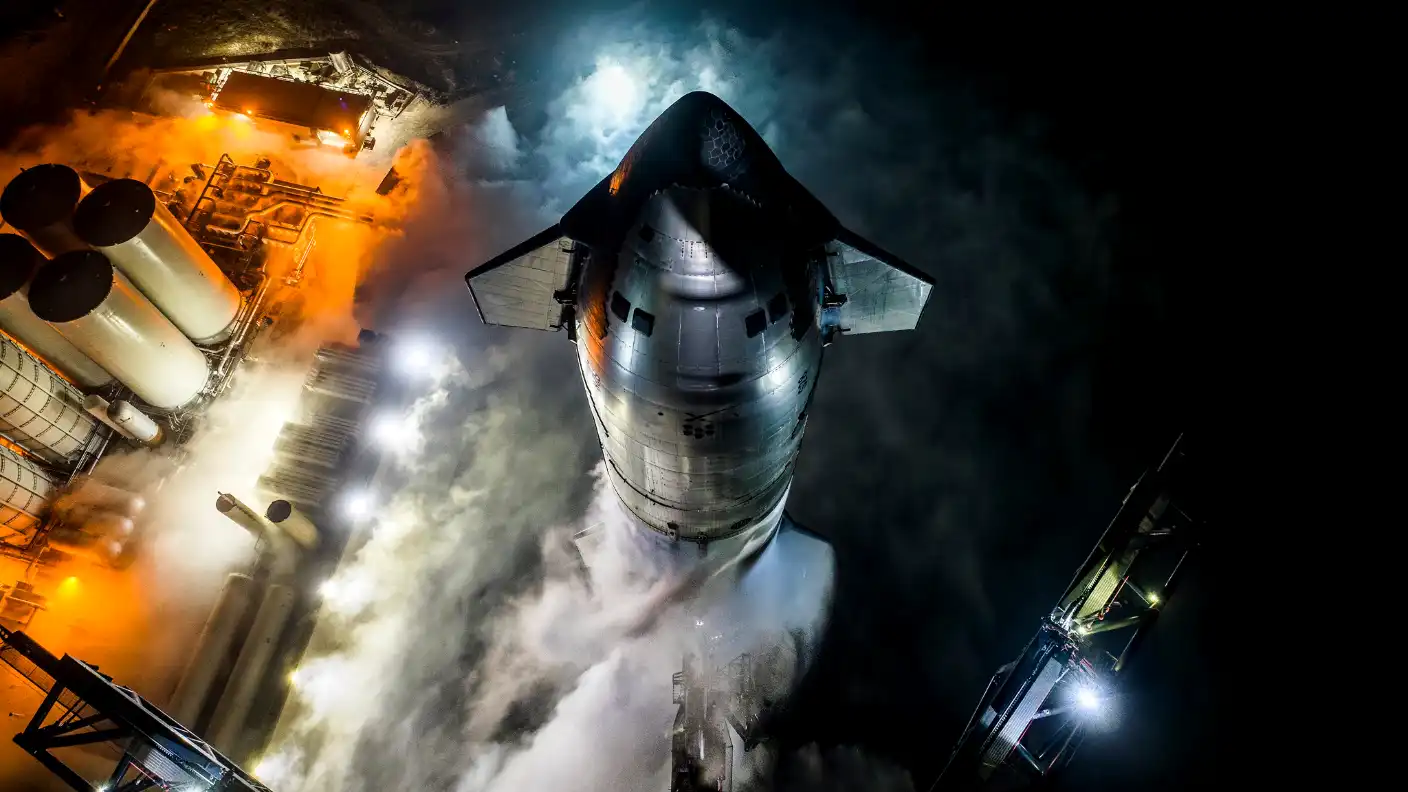
SpaceX successfully launched its massive Starship V3 on its 12th test flight on Friday, May 22, 2026. The high-stakes mission ended in a dramatic, controlled splashdown followed by a planned fiery explosion in the middle of the Indian Ocean. Despite the dramatic fireball at the end of the flight, SpaceX declared the test an absolute triumph, as the vehicle successfully gathered critical flight and atmospheric reentry data.
The giant rocket blasted off at 6:30 PM EDT from the newly designed Pad 2 at the Starbase facility in South Texas. The towering 408-foot-tall vehicle debuted SpaceX’s highly anticipated Version 3 design. Engineers built this upgraded rocket to carry heavy payloads, with the ultimate goal of transporting cargo and humans to the Moon, Mars, and destinations beyond.
Powered by 33 next-generation Raptor 3 engines, the Super Heavy booster lifted off the pad with immense thrust. After successfully separating from the Starship upper stage, the booster failed to complete its planned boost-back burn. It fell uncontrolled into the Gulf of Mexico, rather than achieving a precision return. However, SpaceX had already decided not to attempt a tower catch for this specific flight, focusing instead on test parameters in space.
The upper-stage spacecraft, Ship 39, continued its suborbital trajectory across the globe. Although one of its engines malfunctioned during the initial burn, leaving the vehicle slightly off its ideal orbit, SpaceX spokespersons confirmed that the flight path remained well within analyzed safety margins. The spacecraft cruised through space before preparing for a high-risk reentry into Earth’s atmosphere.
During its coast through space, Starship deployed 22 mock Starlink satellites, which the company called simulators. In a unique experiment, two of these simulators deployed small cameras to capture high-definition images of Starship’s upgraded heat shield during reentry. To aid the tracking cameras, engineers deliberately removed a single thermal tile and painted the surrounding area white to serve as a clear optical target.
Despite losing an engine earlier in the flight, Ship 39 successfully performed a complex upright flip maneuver during its descent over the Indian Ocean. It reignited its remaining thrusters to slow its speed for a controlled water landing. Moments after making contact with the water, the vehicle erupted into a massive, planned fireball, sending thick smoke and flames into the sky.
Despite the final explosion, SpaceX officials and founder Elon Musk declared the mission an overwhelming success. Musk took to X to congratulate the team, writing that they “scored a goal for humanity.” The successful test of the V3 architecture marks a crucial milestone for NASA, which plans to use Starship to land astronauts near the lunar south pole for its upcoming Artemis IV mission.
The technical milestone also arrives at a critical moment for SpaceX’s business operations. The private aerospace firm currently captures over 80% of all global commercial rocket launches. The successful flight of the V3 megarocket will likely bolster investor confidence ahead of a potential initial public offering (IPO) that financial analysts predict could value the company at upwards of $200 billion. SpaceX intends to rapidly iterate on this new architecture, planning to launch several more test flights before the end of 2026.