Key Points:
- Meta Platforms Inc. has contracted with data center developer Crusoe to secure approximately 1.6 gigawatts of artificial intelligence computing capacity.
- The computational power will be distributed across two primary Crusoe facilities located in Childress, Texas, and Warrenton, Missouri.
- A single gigawatt can power up to 750,000 U.S. households, bringing the total capacity of this deal to an equivalent of powering up to 1.2 million homes.
- This contract follows Meta’s broader commitment to invest up to $600 billion through 2028 on physical AI and data center infrastructure.
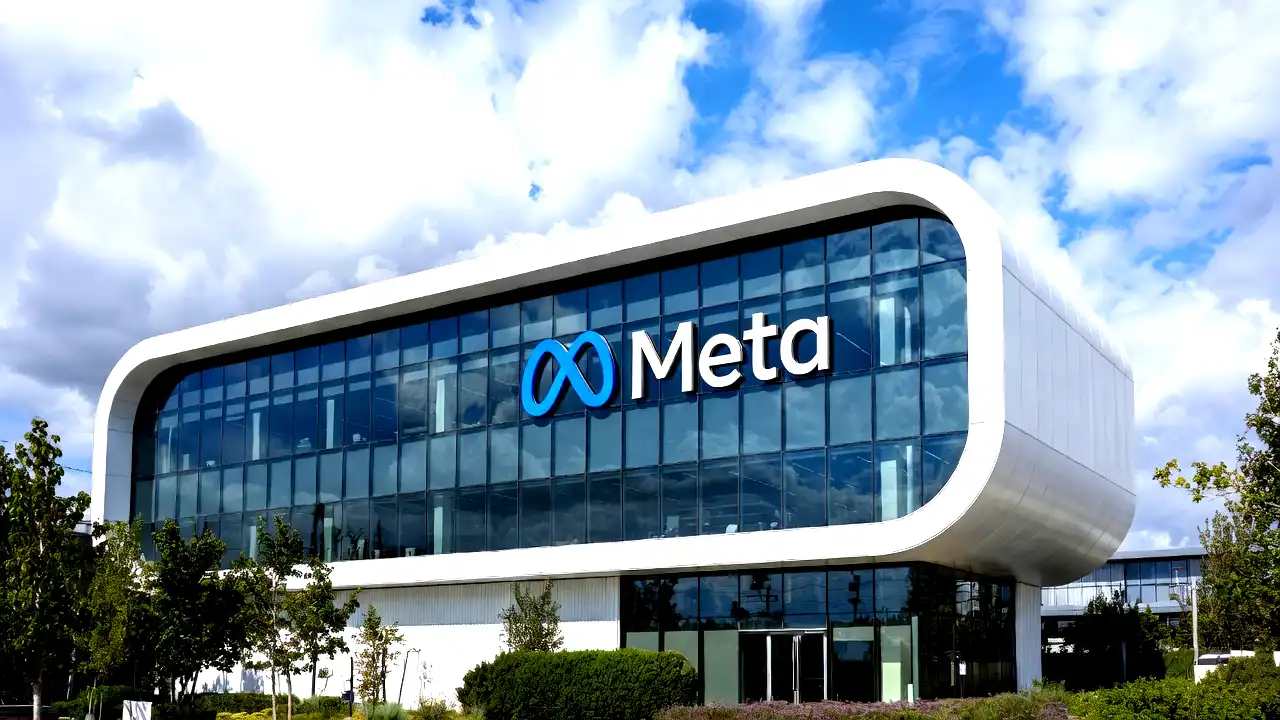
Meta Platforms Inc. has secured a massive new supply of artificial intelligence computing power to fuel its aggressive technological expansion. The social media company has entered into a binding contract with data center developer Crusoe to purchase approximately 1.6 gigawatts of computing capacity. According to people familiar with the private discussions, the computational power will be split across two of Crusoe’s premier facilities located in Childress, Texas, and Warrenton, Missouri. The deal represents one of the largest private infrastructure agreements of the year, highlighting the blistering speed at which technology giants are consolidating power grids to support next-generation software models.
The sheer scale of 1.6 gigawatts of electrical capacity is difficult to overstate in the context of commercial utility grids. In traditional power terms, one gigawatt of electricity is enough to continuously power up to 750,000 average American households. This means the combined capacity of Meta’s new contract is equivalent to powering up to 1.2 million homes simultaneously, highlighting the massive energy footprint required to run complex generative algorithms and AI workloads. While the specific financial terms and precise delivery timelines of the agreement remain undisclosed, the transaction cements Meta’s position as a dominant force in the global infrastructure market.
Founded in 2018, Denver-based startup Crusoe has rapidly carved out a highly profitable niche by specializing in vertically integrated, energy-first AI infrastructure. Unlike traditional data center developers who treat power sourcing and facility construction as separate, sequential processes, Crusoe co-develops them from the very beginning. The firm manufactures long-lead electrical components in its own domestic factories and utilizes prefabricated modular structures to build out massive “AI factories” at high speed. This energy-first approach has allowed Crusoe to build a massive contracted pipeline of 4.9 gigawatts of AI infrastructure, with a development pipeline exceeding 40 gigawatts.
This is not Crusoe’s first high-profile partnership with a Silicon Valley hyperscaler. Earlier this year, in March, the energy-focused data center firm announced a landmark agreement with Microsoft Corporation, which leased 900 megawatts of capacity from Crusoe’s massive campus in Texas. Additionally, Crusoe has secured $7 billion in loans alongside investment firms to construct a massive data center complex in Texas to support OpenAI’s technical roadmap. By securing Meta as its latest anchor tenant, the startup has proven that its sustainable, off-grid, and on-grid power solutions are highly attractive to the world’s most demanding technology companies.
For Meta, the partnership forms a key part of its broader strategy to diversify its sources of computing capacity. The parent company of Facebook and Instagram has committed to investing up to $600 billion in physical AI infrastructure and data centers through 2028. This eye-watering expenditure has drawn intense scrutiny from Wall Street investors, who are eager to see tangible commercial returns on these massive investments. To prove the viability of its AI strategy, Meta recently launched its first subscription-based AI chatbot service, attempting to convert its immense computing power into a reliable stream of recurring software revenue.
While contracting with third-party developers like Crusoe, Meta is also building several massive, proprietary megacampuses to secure its processing independence. The company’s largest single internal project is the Hyperion data center in Richland Parish, Louisiana. Spanning nearly 4,000 acres, Hyperion is designed to deliver 2 gigawatts of capacity, with the potential to scale up to 5 gigawatts when fully built out. The social media giant is also developing the 740-acre Prometheus campus in Ohio, which is engineered to become one of the largest data centers on Earth. These massive projects are supported by billions of dollars in new natural gas and renewable energy commitments.
Securing the massive amounts of electricity needed to run these facilities has forced tech companies to pioneer new power-sourcing strategies. Because traditional utility grids face a multi-year backlog of interconnection queues, operators are increasingly turning to behind-the-meter generation and battery energy storage systems. These off-grid and on-grid storage solutions help operators manage peak-demand periods, improve grid flexibility, and secure reliable backup power. Following this trend, Google recently announced a 300-megawatt battery storage project in Minnesota, while Meta has continued to deploy off-grid modular gas units to power its test facilities.
However, the technology sector’s aggressive push to monopolize regional energy grids has triggered a fierce public backlash. Local communities are growing increasingly vocal in their opposition to massive data center construction, raising serious concerns about how these facilities drive up household utility bills and consume millions of gallons of local drinking water. This public anxiety recently reached a peak in Seattle, where city officials enacted a strict, one-year moratorium on new large-scale data center construction. To improve transparency, Meta recently disclosed its global data center water withdrawals, revealing that its facilities used 2.5 billion gallons of water in 2025.
As the global AI infrastructure race continues to accelerate, the companies that can successfully secure stable, low-carbon power will dictate the future of the digital economy. If Meta can successfully integrate Crusoe’s 1.6 gigawatts of capacity without falling victim to supply chain bottlenecks, it will give the company a massive advantage in training its next-generation Llama model series. For now, the entire tech sector will monitor how effectively these massive private computing hubs can scale. The ongoing silicon rush proves that in the modern digital age, having the best algorithms is meaningless without the raw physical power to run them.