Key Points
- Scientists turned a quantum phenomenon known as superradiance into a useful tool.
- They developed a system that generates stable microwave signals without external power.
- The “messy” internal interactions within the system are what actually fuel the signal.
- The experiment used tiny atomic defects embedded in a diamond.
For years, scientists have known that when quantum particles work together, they can create a powerful signal. But this effect, called superradiance, usually caused a major problem: it made the particles lose their energy way too fast. This was a big headache for anyone trying to build stable quantum technology.
But a new study has completely flipped that idea on its head. Researchers at universities in Vienna and Okinawa have developed a method that uses superradiance to generate a self-sustaining, long-lasting microwave signal. In other words, they built a quantum system that powers itself, a discovery that could be huge for future technology.
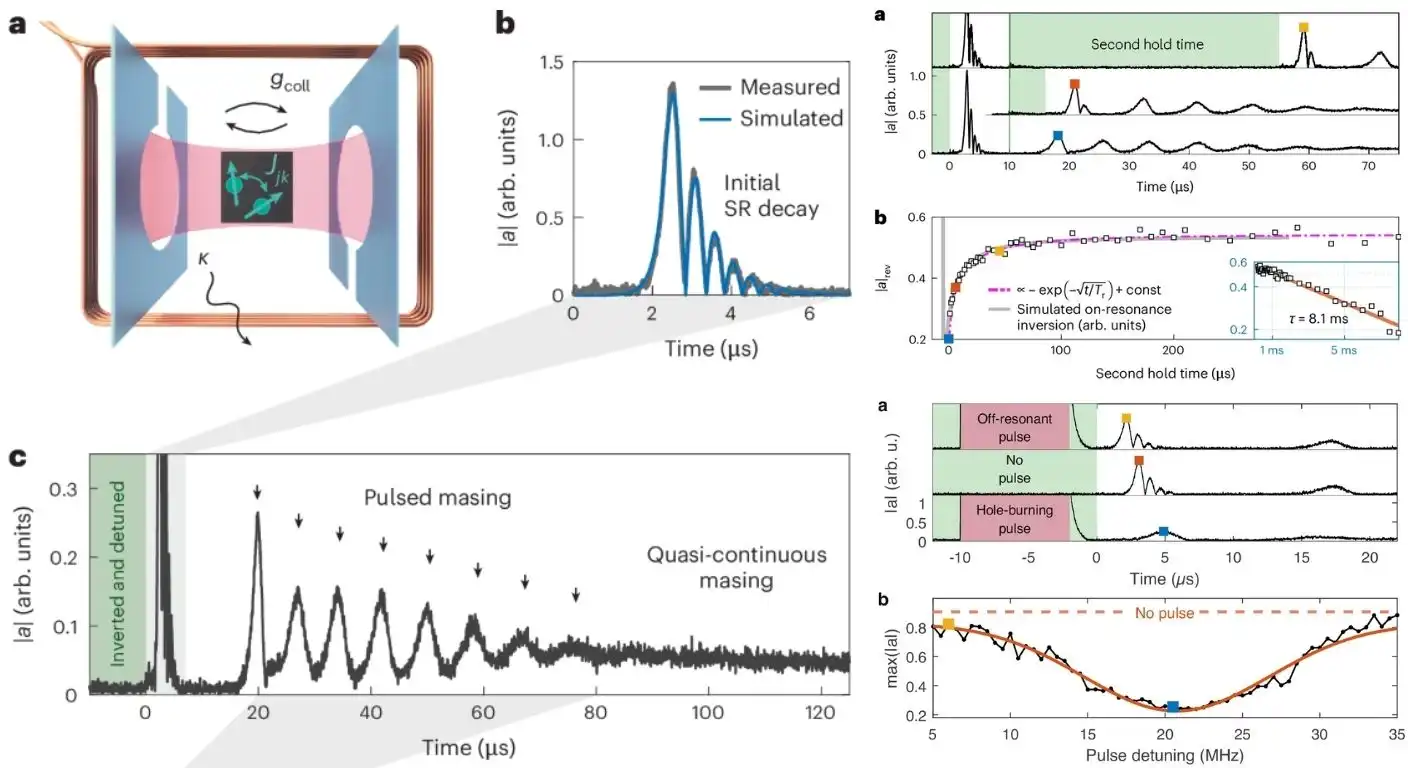
The team used atomic defects in a diamond, which act as quantum magnets. They expected to see a brief burst of energy, but then something unexpected occurred.
The system started producing a steady train of very precise microwave pulses, all on its own. It turns out the “messy” interactions between the quantum magnets were actually fueling the signal. “Essentially, the system drives itself,” explained one of the researchers. The very disorder that usually destroys quantum effects was now the source of its power.
This breakthrough isn’t just a cool lab experiment; it has real-world potential. These stable, self-generated microwave signals could underpin a new generation of ultra-precise clocks, improved GPS and navigation systems, and faster communication links. It could also improve quantum sensors used for applications such as medical imaging and environmental monitoring.
One of the lead scientists, Professor Kae Nemoto, said the discovery “changes how we think about the quantum world.” The team demonstrated that the very forces thought to destroy quantum behavior can be used to create it. This new understanding opens up a whole new toolbox for engineers designing the next wave of quantum technologies.
Source: Nature Physics (2026).