Key Points
- Researchers have discovered a new way that powdery mildew fungus outsmarts wheat’s immune system.
- The fungus uses a “decoy” protein to prevent its main attack protein from being recognized by the wheat’s resistance genes.
- This second decoy protein is itself recognized by a different resistance gene.
- By combining both resistance genes, scientists could trap the fungus in an “evolutionary dead end.”
Wheat is one of the world’s most important crops, but it’s under constant attack from a fungus called powdery mildew. While farmers can use fungicides to control it, a more sustainable solution is to grow naturally resistant wheat varieties. The problem is that the fungus is highly adaptive and quickly evolves to overcome any new resistance.
Now, a team of researchers at the University of Zurich has identified one of the fungus’s most surprising strategies. They discovered a new mechanism that enables powdery mildew to evade wheat’s immune system, a finding that could lead to the development of more durable, resistant crops.
Here’s how it works: the fungus produces hundreds of tiny proteins, called “effectors,” that it injects into the wheat’s cells to help it get a foothold. Wheat, in turn, has its own “resistance proteins” that can recognize some of these effectors and trigger an immune response to stop the infection.
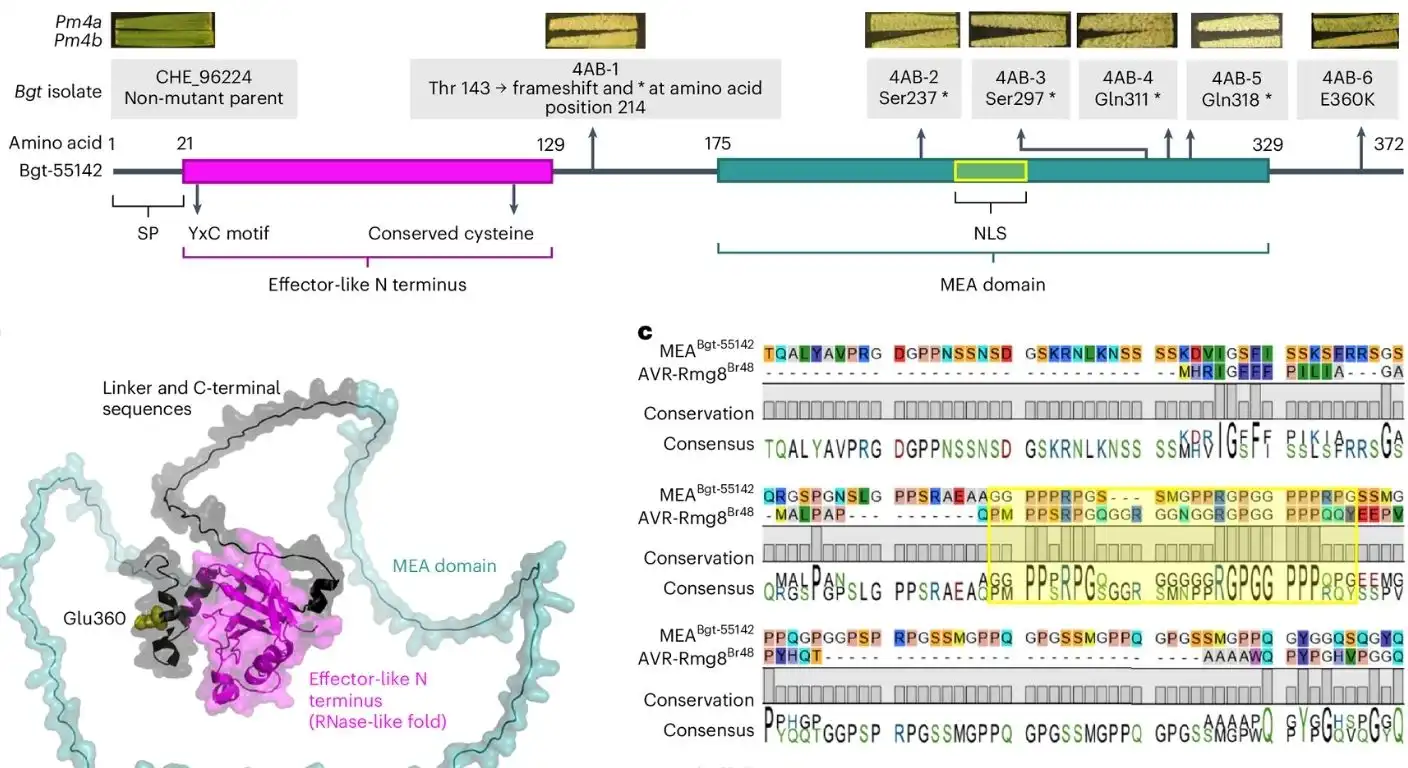
The research team identified a new powdery mildew effector that is recognized by a known wheat resistance protein. But here’s the clever part: the fungus has a second effector that acts as a decoy, preventing the first one from being recognized. This is like a spy having a partner who creates a distraction so they can sneak past the guards.
What’s even more interesting is that this second, decoy effector is itself recognized by a different resistance protein in the wheat. This opens the possibility of creating a new wheat variety that has both resistance proteins. This would essentially trap the fungus in an “evolutionary dead end,” where it can’t escape the plant’s immune response.
“Because we now know these mechanisms… we can take more effective action to prevent powdery mildew from breaking through wheat’s resistance,” said the professor who led the research. While the first laboratory experiments are promising, the real test will be to see if this new, highly resistant wheat can stand up to the fungus in the field.
Source: Nature Plants (2026).