

Key Points:
- A new study tests an electrical shark deterrent device during line fishing.
- The device targets shark “depredation”—when sharks eat fish caught on lines.
- In trials, the device reduced the chance of a shark taking the catch by 63%.
- The deterrent works by overwhelming the shark’s electrical senses.
A new study has delivered good news for fishers frustrated by sharks stealing their catch. Researchers have proven that an electrical shark deterrent can significantly reduce the number of fish snatched off fishing lines, a problem known as depredation. This world-first discovery, led by Dr. Jonathan Mitchell from the University of Western Australia, was recently published in the journal Marine and Freshwater Research.
Shark depredation is a massive headache for the fishing industry. Dr. Mitchell explained that having a prized catch eaten before it reaches the boat is incredibly frustrating. For commercial fishers, the problem goes beyond annoyance; it cuts directly into their profits. They lose the fish they intended to sell and waste valuable time, fuel, and fishing gear dealing with the sharks.
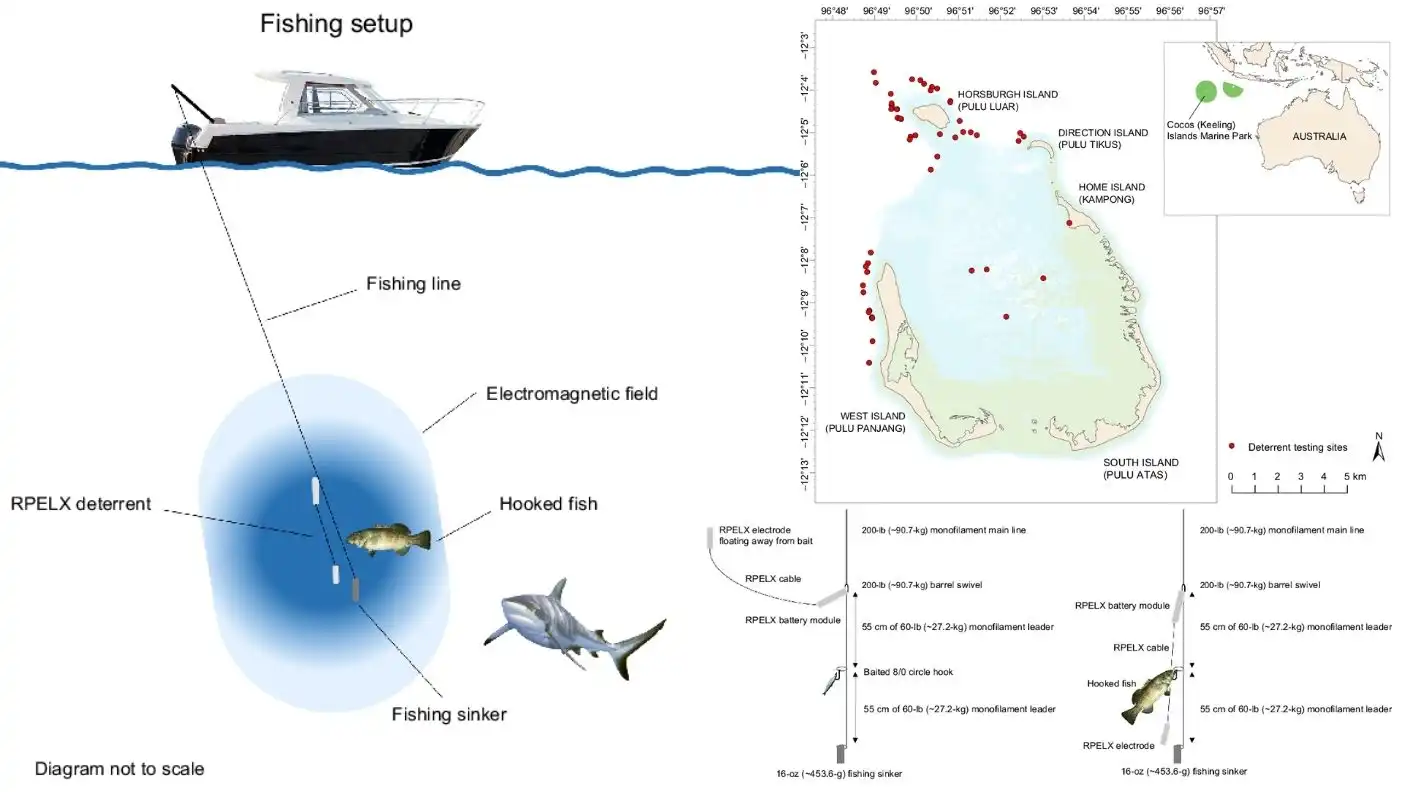
The study tested a specific electrical deterrent device called the RPELX. This gadget is similar to the personal deterrents used by surfers and divers, but it is specially designed for line fishing. Fishers attach the device to their line about 50 centimeters above the hook.
As they reel in their catch, the device creates a powerful electrical field in the water. This field overwhelms the sensitive electrosensory system that sharks use to hunt, driving them away from the hooked fish.
Researchers put the device to the test during 51 fishing sessions around the Cocos (Keeling) Islands, a remote Australian territory in the Indian Ocean known for its high population of gray reef sharks.
The results were impressive. During the trials, fishers caught 262 fish. The data showed that using the deterrent reduced the probability of a shark taking the catch by 63%. It also helped reduce the accidental catching of sharks and the loss of expensive fishing gear.
While the device is highly effective, Dr. Mitchell noted that fishers should also change their habits to avoid sharks. He recommended moving locations frequently, fishing away from other boats, and using electric reels to haul fish in faster. He also suggested using lures instead of bait and avoiding dumping fish waste in the water to keep the area free of enticing odors. By combining these methods with the new electrical deterrent, fishers can enjoy much higher success rates.
Source: Marine and Freshwater Research (2026).






