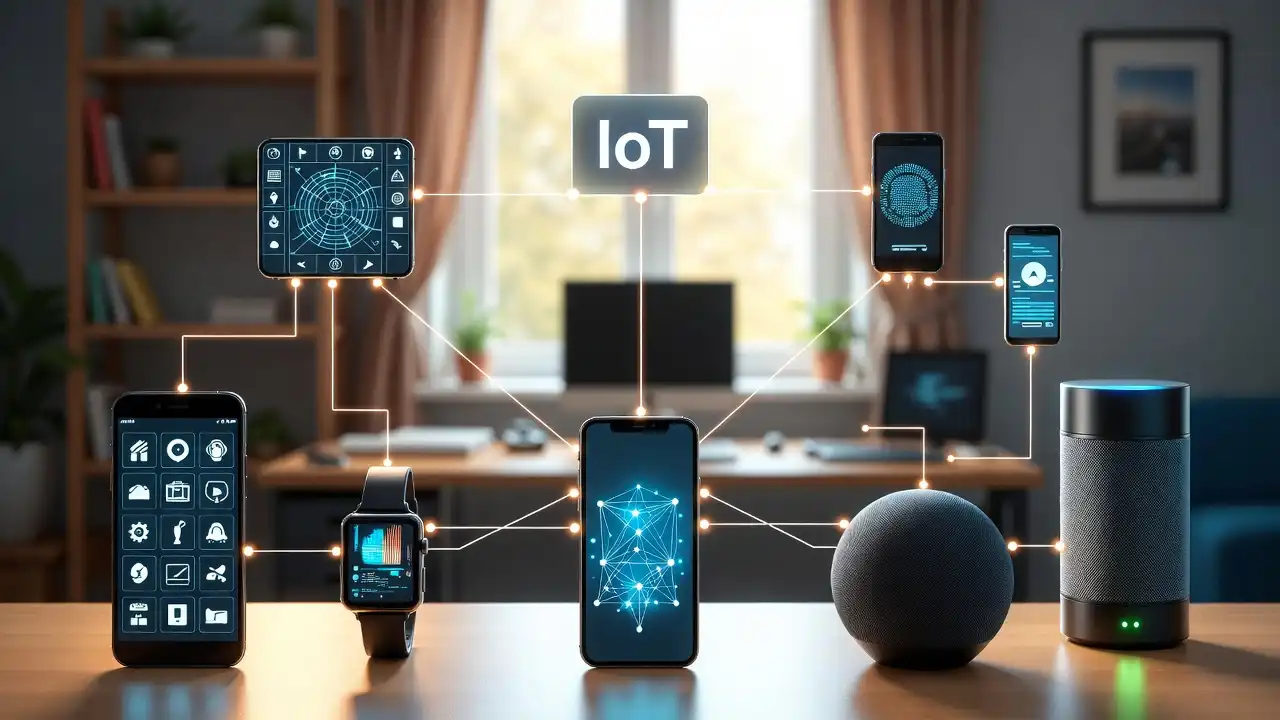
We once viewed the home as a silent shelter. We locked our doors, turned off our lights, and went to sleep, completely disconnected from the world outside. Today, that old definition feels entirely outdated. In our modern, hyper-connected era, the walls of our homes breathe digital life. Every appliance, every lightbulb, and every security sensor now joins a massive, invisible network known as the Internet of Things, or IoT. This technology does not just sit there; it actively anticipates our needs, manages our energy use, and protects our families. We moved from owning a house to living inside an intelligent partner.
The End of Manual Household Labor
Think about the sheer number of tiny, boring chores we performed every single day. We manually adjusted thermostats, flipped dozens of light switches, checked locks on every door, and monitored water pipes for leaks. We wasted precious hours of our lives managing the physical maintenance of our own living spaces. The IoT-driven lifestyle ends this drudgery. Smart homes now handle the background work automatically. A smart thermostat learns your preferred morning temperature and adjusts the climate long before you wake up. These tiny, automated tasks may seem small, but they free up hours, giving us the chance to focus on what actually matters.
Energy Efficiency as a Default Setting
Energy waste used to cost us a fortune and put a heavy strain on the planet. We left lights burning in empty rooms and kept our air conditioners running while we were at work. The smart home changes this dynamic by making conservation the default state. Smart lighting systems detect when you leave a room and cut the power instantly. Smart energy monitors track the consumption of every plugged-in device, showing you exactly what eats your electricity. By managing our energy through a digital lens, we stop wasting money. We build homes that act as active, efficient partners in our effort to live a cleaner, more sustainable life.
A New Layer of Physical Security
The concept of a “locked door” has evolved. We no longer rely on a simple piece of metal to keep our homes safe. Smart security systems now monitor every inch of our property. If a delivery person arrives, your video doorbell sends a live alert to your phone. If a window sensor detects an unauthorized opening while you are at work, the system triggers a loud alarm and instantly alerts the local authorities. We trade the anxiety of the unknown for the clarity of live data. We know exactly what happens in our homes, even when we stand a thousand miles away.
The Invisible Health Monitor
We treat our homes as passive places to rest, but the IoT lifestyle turns them into active health clinics. Smart mirrors and bathroom scales now track your vital signs every time you use them. They check your heart rate, your weight, and your hydration levels without you ever needing to visit a doctor’s office. If your health metrics show an unusual pattern—such as a sudden drop in sleep quality or a change in your activity level—the system alerts you to see a professional before a small problem becomes a major illness. We finally stop waiting for a crisis to check our well-being.
The Challenge of Digital Fragility
We must face the uncomfortable truth that a smart home creates a new kind of digital fragility. When your house relies on the internet to function, a simple router crash can turn your high-tech fortress into a confusing, locked-down box. If the cloud servers that run your appliances go offline, you suddenly cannot turn on your lights or open your smart locks. We have to design our smart homes to work even when the internet dies. We need “local-first” systems that prioritize the owner’s control over the cloud connection. A home should never require an internet signal just to open a front door.
Privacy in the Middle of the Network
The biggest hurdle for the smart home remains the question of privacy. Every single device we add to our home network essentially acts as a tiny microphone or a tracking camera for the company that built it. We see stories of smart speakers accidentally recording private conversations or smart appliances sending usage data to aggressive marketers. We have to demand “privacy by design” from every single manufacturer. We need systems that process our data locally, right inside our homes, rather than shipping it off to a giant, vulnerable server in another country. Your home should remain your castle, not a data-mining operation for a foreign corporation.
The Need for Universal Harmony
We currently face a confusing mess of different standards. A lightbulb from one brand refuses to talk to a smart plug from another. This “walled garden” approach frustrates every single user. The future of the smart home requires a universal language. We need every single IoT device to use the same protocol, enabling seamless connections across brands. When everything works together in a single, unified ecosystem, the smart home finally lives up to its promise. We must push the industry to stop competing on closed systems and start competing on how well they help us live better lives.
Designing for Every Human Need
We must avoid building smart homes that only work for tech-savvy, wealthy users. If a smart lock requires a perfect smartphone and a high-speed data plan to function, we accidentally lock out the elderly, the disabled, and the less fortunate. The IoT lifestyle must be inclusive by default. We need simple, physical overrides for every automated system. We need voice commands for those who cannot see, and we need simplified controls for those who do not understand complex digital interfaces. A home that is not accessible to everyone is a failure.
Conclusion
The smart home is not a distant sci-fi dream; it is our current reality. By automating the daily chores, securing our physical space, and keeping a watchful eye on our health, these systems make our lives significantly smoother. We must remain mindful of the privacy risks and the fragility of our connections, but the potential benefit is undeniable. We are building homes that finally work for us, managing our energy and our safety so we can focus on the people we love. The home of the future isn’t just smart; it is supportive, attentive, and deeply human.