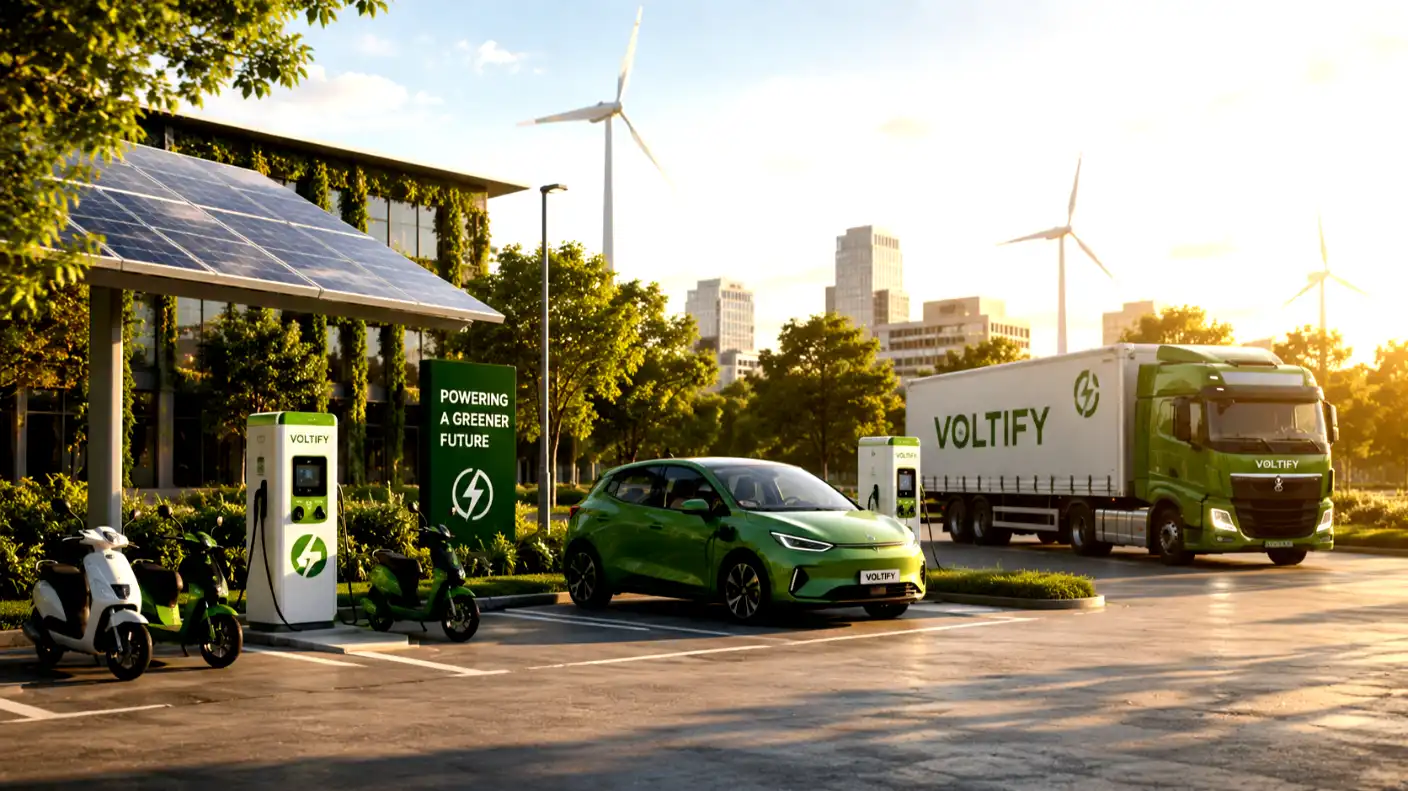
For the last two centuries, the story of human progress has been a story of combustion. We burned fossil fuels to power our industries, illuminate our cities, and connect our world, unleashing an era of unprecedented prosperity. This progress, however, came with a Faustian bargain, a debt to our planet that is now coming due with terrifying interest. We have built our modern world on a linear, extractive, and ultimately unsustainable model, pushing our planetary life-support systems to the very brink. The climate crisis is no longer a distant forecast; it is the lived reality of our time.
But as we stand at the critical juncture, a new story is being written. This is not a story of retreat, but of reinvention. We are witnessing the dawn of a new industrial revolution, one powered not by combustion but by computation, not by extraction but by regeneration. This is the age of Sustainable Technology and Eco-Friendly Innovation. It is a profound, systemic shift in which the principles of sustainability are no longer peripheral concerns or moral obligations, but the central driving force of economic growth, competitive advantage, and technological innovation itself. From AI-optimized smart grids and carbon-negative concrete to a global food system powered by precision agriculture, the tools to build a sustainable future are not just on the horizon; they are here, they are being deployed at scale. This definitive guide will explore every facet of this green revolution, from the core technological pillars to the sector-by-sector transformation and the strategic imperatives for a world in transition.
The Tipping Point of Sustainable Technology
The groundswell of support for sustainable technology has been building for decades, but the mid-2020s represent a powerful and undeniable tipping point. The conversation has moved from the corridors of activist groups and scientific conferences to the boardrooms of the world’s largest corporations and the halls of government. This is not a gradual evolution; it is a rapid, non-linear acceleration driven by a powerful confluence of forces.
The Unignorable Reality of Climate Change
The scientific consensus is unequivocal, the tangible impacts of a warming planet will be a part of the daily news cycle. Extreme weather events—from record-breaking heatwaves and devastating wildfires to more powerful hurricanes and unprecedented flooding—are no longer abstract threats. They are real, recurring events that are inflicting trillions of dollars in economic damage and disrupting lives and supply chains worldwide. This lived reality has created an overwhelming sense of urgency, a powerful catalyst for action.
The Economic Imperative: From Cost Center to Profit Driver
For decades, sustainability was often viewed by businesses as a “cost center,” a compliance burden, or a public relations exercise. That paradigm has been completely inverted. In the economy, sustainability has become a powerful driver of profitability, efficiency, and innovation.
The economics of green technology have fundamentally shifted, creating a compelling business case for sustainability. Companies are no longer asking “what is the cost of going green?” but “what is the cost of being left behind?”
- The Plummeting Cost of Renewables: The cost of solar and wind power has fallen so dramatically that they are now the cheapest sources of new electricity generation in most parts of the world, making the economic case for decarbonizing the energy grid overwhelming.
- Resource Efficiency as a Competitive Advantage: In a world of volatile supply chains and rising commodity prices, companies that can do more with less—through energy efficiency, water conservation, and waste reduction—are more resilient and more profitable.
- Innovation and New Market Creation: The transition to a green economy is creating the largest new markets of the 21st century —from electric vehicles and battery storage to alternative proteins and carbon capture technology —unleashing a wave of venture capital investment and entrepreneurial activity.
The Regulatory Sledgehammer: Global Mandates Force Action
Governments and international bodies are no longer just encouraging climate action; they are mandating it. A new generation of ambitious, legally binding regulations is creating a clear and non-negotiable set of rules for the global economy.
This regulatory certainty is giving businesses the confidence to make the long-term investments needed for the green transition. Compliance is the floor, not the ceiling, for corporate ambition.
- The Carbon Pricing Push: A growing number of jurisdictions are implementing carbon taxes or emissions trading systems (ETS), putting a direct price on pollution and making fossil fuels more expensive, thereby making clean alternatives more competitive.
- Mandatory Climate Disclosures: Regulations are increasingly requiring companies to publicly disclose their climate-related risks and their strategies for transitioning to a low-carbon economy, forcing sustainability onto the C-suite and board-level agenda.
- Bans on Single-Use Plastics and Planned Obsolescence: Governments are taking a harder line on waste, with widespread bans on single-use plastics and the emergence of “Right to Repair” legislation that challenges the linear “take-make-waste” model.
The Power of Consumer and Investor Activism
The final and perhaps most powerful driver is a profound shift in societal values. Consumers, particularly younger generations, are increasingly making purchasing decisions based on a brand’s environmental and ethical credentials. At the same time, the world’s largest investors are recognizing that climate risk is investment risk.
This two-pronged pressure from consumers and capital is forcing companies to treat sustainability as a core component of their brand identity and business strategy. A poor environmental record is no longer just a PR problem; it is a direct threat to a company’s market share and access to capital.
- The Rise of the Conscious Consumer: A growing segment of the population is willing to pay a premium for sustainable products and will actively boycott brands that are seen as environmentally irresponsible.
- The ESG Investing Revolution: Environmental, Social, and Governance (ESG) criteria have become a mainstream framework for investment analysis. Trillions of dollars of investment capital are now being allocated based on a company’s ESG performance, giving companies with strong sustainability strategies a significant advantage in the capital markets.
The Core Pillars of Eco-Friendly Innovation
The sustainable technology revolution is not built on a single breakthrough, but on a set of powerful, interconnected pillars of innovation. These four pillars represent the foundational technological and philosophical shifts that are enabling the transition to a greener, more resilient, and more circular global economy.
Pillar 1: The Decarbonization of Energy
This is the absolute bedrock of the entire green transition. The vast majority of greenhouse gas emissions come from the burning of fossil fuels for energy. The complete decarbonization of our global energy system is therefore the single most critical task we face. The path to achieving this is clearer than ever, built on a trinity of key technologies.
Pillar 2: The Circular Economy Revolution
This represents a complete paradigm shift away from the linear “take, make, dispose” model that has defined our industrial economy for two centuries. The circular economy is a regenerative model where waste is designed out, materials are kept in use for as long as possible, and natural systems are regenerated.
Pillar 3: The Intelligence Layer: AI and Data as Sustainability’s Brain
The complexity of managing our planet’s resources and optimizing our industrial systems for sustainability is far beyond the capacity of the human mind alone. Artificial intelligence and big data are providing the “intelligence layer” that is making the green transition possible, turning a complex web of systems into an optimized, intelligent whole.
Pillar 4: The Materials Science Renaissance
The physical building blocks of our world are being reinvented. A new generation of materials scientists and chemists is developing novel materials that are sourced sustainably, require less energy to produce, and can be safely returned to the biosphere or the technosphere at the end of their life.
A Sector-by-Sector Deep Dive: Sustainable Technology in Action
The true impact of this revolution is best seen in how these pillars are being applied to transform every major sector of the global economy. Sustainable technology will no longer be a siloed industry; it will be a horizontal force reshaping everything from how we grow our food to how we build our cities.
The Energy Sector: The Intelligent, Decentralized Grid
The old, centralized, one-way power grid is being replaced by a “smart grid” that is intelligent, decentralized, and multi-directional. This new energy operating system is the essential foundation for a world powered by renewables.
This transformation is turning the grid from a simple power delivery system into a dynamic, data-driven platform for energy optimization. It enables a level of efficiency and resilience previously unimaginable.
- AI for Grid Management and Renewable Forecasting: The biggest challenge of solar and wind power is their intermittency. AI is the key to managing this. AI models can analyze weather data, satellite imagery, and historical performance to produce highly accurate forecasts of renewable energy generation. This allows grid operators to proactively balance supply and demand, ensuring a stable and reliable flow of power.
- Advanced Battery Storage: The perfect partner to intermittent renewables is energy storage. The cost of lithium-ion batteries has plummeted, leading to the deployment of grid-scale battery storage projects worldwide. These massive batteries can store excess solar and wind energy when it is abundant and then release it back to the grid when it is needed, effectively turning a variable resource into a firm, dispatchable one.
- The Rise of Green Hydrogen: For long-duration storage and for decarbonizing hard-to-abate sectors like heavy industry and shipping, green hydrogen is emerging as a critical solution. It is produced by electrolyzing water with renewable electricity (a process called electrolysis). This clean hydrogen can then be stored and used as a fuel, producing only water as a byproduct.
Transportation and Mobility: The Electric, Autonomous, and Shared Future
The transportation sector is the second-largest source of global greenhouse gas emissions. The shift away from the internal combustion engine is one of the most visible and rapid parts of the green transition.
The future of mobility is a multifaceted system that goes beyond cleaner vehicles to a more efficient, intelligent transportation network. This is the convergence of electrification, connectivity, and new models of ownership.
- The Electric Vehicle (EV) Revolution: The EV revolution will be in full swing. Rapid advances in battery technology are leading to EVs with longer ranges, faster charging times, and lower costs, bringing them to price parity with gasoline cars in many markets. A massive global build-out of public charging infrastructure supports this.
- Sustainable Aviation and Shipping: Decarbonizing aviation and shipping is a much harder challenge. The focus is on two key areas: Sustainable Aviation Fuels (SAFs), which are biofuels or synthetic fuels produced from renewable sources, and the early development of hydrogen- and ammonia-powered ships for long-haul maritime routes.
- Smart Logistics and Supply Chain Optimization: The movement of goods is a major source of emissions. AI-powered logistics platforms are optimizing shipping routes in real time to reduce fuel consumption, enabling more efficient “last-mile” delivery services, and helping companies shift freight from trucks to more efficient rail and sea transport.
Manufacturing and Industry: The Rise of the Green Smart Factory
The industrial sector is a massive consumer of energy and raw materials. The principles of Industry 4.0 (the fusion of digital and physical manufacturing) are being harnessed to create a new generation of “green smart factories” that are hyper-efficient and generate minimal waste.
This is about using digital technology to dematerialize and decarbonize the entire production process. The goal is a closed-loop, zero-waste, and carbon-neutral manufacturing system.
- The Energy-Efficient Smart Factory: A dense network of IoT sensors monitors every machine, process, and system in real time. An AI-powered energy management system analyzes this data to optimize energy use, predict maintenance needs (preventing inefficient operation), and shift energy-intensive processes to times when renewable energy is abundant and cheap.
- Additive Manufacturing (3D Printing) for Waste Reduction: Traditional “subtractive” manufacturing, where you start with a block of material and cut away what you don’t need, is incredibly wasteful. Additive manufacturing, or 3D Printing, builds a product layer by layer, using only the exact amount of material needed. This can reduce material waste by up to 90% and enable the creation of lightweight, optimized designs that are impossible to produce with traditional methods.
- Industrial Carbon Capture, Utilization, and Storage (CCUS): For heavy industries where emissions are difficult to eliminate (like cement and steel production), CCUS is a critical technology. A new generation of more efficient, cost-effective carbon capture technologies will be deployed to capture CO2 at the source. This captured CO2 can then be stored permanently underground (storage) or used as a feedstock to produce new products such as concrete, chemicals, or synthetic fuels (utilization).
Agriculture and Food Systems: The Birth of “AgriTech 2.0”
Our global food system is a major contributor to greenhouse gas emissions, deforestation, and water pollution. A new wave of “AgriTech” is transforming agriculture from a resource-intensive art into a precise, data-driven science.
The goal is to produce more food, with higher nutritional value, using less land, less water, and fewer chemical inputs. This is a revolution that is happening from the open field to the indoor vertical farm.
- Precision Agriculture: The heart of the AgriTech revolution. It uses a combination of technologies to make farming hyper-efficient. GPS-guided autonomous tractors can plant seeds and apply fertilizer with centimeter-level accuracy. Drones equipped with multispectral cameras can monitor crop health, and IoT soil sensors can provide real-time data on moisture and nutrient levels. This allows farmers to apply exactly what the crop needs, exactly where it is needed, drastically reducing the overuse of water, fertilizer, and pesticides.
- Controlled Environment Agriculture (CEA) and Vertical Farming: In vertical farms, crops are grown indoors in vertically stacked layers, often in urban environments. This model uses advanced LED lighting and hydroponic or aeroponic systems to create the perfect growing environment. CEA uses up to 95% less water than traditional agriculture, eliminates the need for pesticides, and drastically reduces “food miles” by growing produce right next to the population centers that consume it.
- The Alternative Protein Revolution: The livestock industry has an enormous environmental footprint. The market for alternative proteins is exploding. This includes plant-based meats that are becoming increasingly indistinguishable from the real thing, as well as emerging fields such as precision fermentation (using microorganisms to produce high-value proteins like whey and casein without a cow) and cultivated meat (growing real meat from animal cells in a bioreactor).
The Built Environment: Smart Cities and Green Construction
Our cities and the buildings within them are responsible for a massive share of global energy consumption and emissions. The concept of the “smart city” is evolving to become synonymous with the “sustainable city,” using digital technology to create urban environments that are more livable, efficient, and in harmony with nature.
The future of our cities is being redesigned from the building materials up to the city-wide operating system. This is about creating a built environment that is regenerative, not extractive.
- Sustainable and Carbon-Negative Building Materials: Cement production is a major source of CO2 emissions. A new generation of “green concrete” is gaining traction. This includes concrete that uses captured CO2 during curing (effectively locking away carbon) and the revival of sustainable materials like mass timber, which can replace steel and concrete in large buildings and sequester carbon for the life of the structure.
- Intelligent Building Management Systems: Modern commercial and residential buildings are becoming intelligent ecosystems. A smart Building Management System (BMS) uses AI and a network of IoT sensors to continuously optimize the building’s energy use, controlling the HVAC, lighting, and even the window shades in response to real-time occupancy, weather conditions, and signals from the smart grid.
- Intelligent Urban Planning and Mobility: Smart city platforms are using big data and AI to make cities run more efficiently. This includes AI-powered traffic management systems that reduce congestion and idling, smart waste management systems that optimize collection routes, and the integration of public transit with shared mobility options (such as e-bikes and e-scooters) to create a seamless, low-carbon urban transportation network.
The Double-Edged Sword: The Environmental Footprint of Tech Itself (“Green IT”)
It is the great paradox of our time: the digital technologies that are the key to solving our environmental crisis are themselves significant consumers of energy and resources. A core part of the sustainable technology movement is turning this lens inward and focusing on making the technology industry itself more sustainable.
The Rise of the Green Cloud
Data centers—the massive factories that power the cloud —are colossal consumers of electricity. The world’s largest cloud providers are now in a race to become the greenest.
- Major cloud providers like Google, Microsoft, and Amazon will be powering their data centers with 100% renewable energy through a combination of on-site generation and large-scale power purchase agreements.
- They are also pioneering new, hyper-efficient data center designs that use advanced cooling techniques (such as liquid cooling and even underwater data centers) to reduce energy consumption drastically.
Conclusion
This is a moment of profound consequence and of profound opportunity. The linear, extractive, and unsustainable industrial model that has defined our world for two centuries has reached its inevitable end. We are now in the midst of a great transition—a systemic shift towards a new paradigm where the goals of economic progress and ecological stewardship are no longer in conflict but are the same.
This is the promise of Sustainable Technology. It is the application of our greatest tool—human ingenuity—to our greatest challenge. From the intelligent, decarbonized energy grids that will power our future to the circular economies that will eliminate the very concept of waste, the building blocks of a sustainable world are being assembled before our very eyes. The journey is far from over. It will require unprecedented levels of global cooperation, massive investment, and a deep-seated cultural shift in how we value and interact with our planet. But the trajectory is set. We are moving from an age when technology dominated nature to a new, symbiotic age where technology works with nature, creating a future that is not just smarter but wiser.