Key Points:
- AMD and Intel are experiencing massive demand for traditional central processing units as modern technology requires more workflow management.
- AMD stock jumped 15% after reporting a 57% increase in data center revenue for the same period last year.
- Financial analysts at Bernstein doubled their stock price target for AMD, raising it from $265 up to $525.
- The top 10 hardware companies added roughly $3 trillion in market value since March 30 as the industry expands.
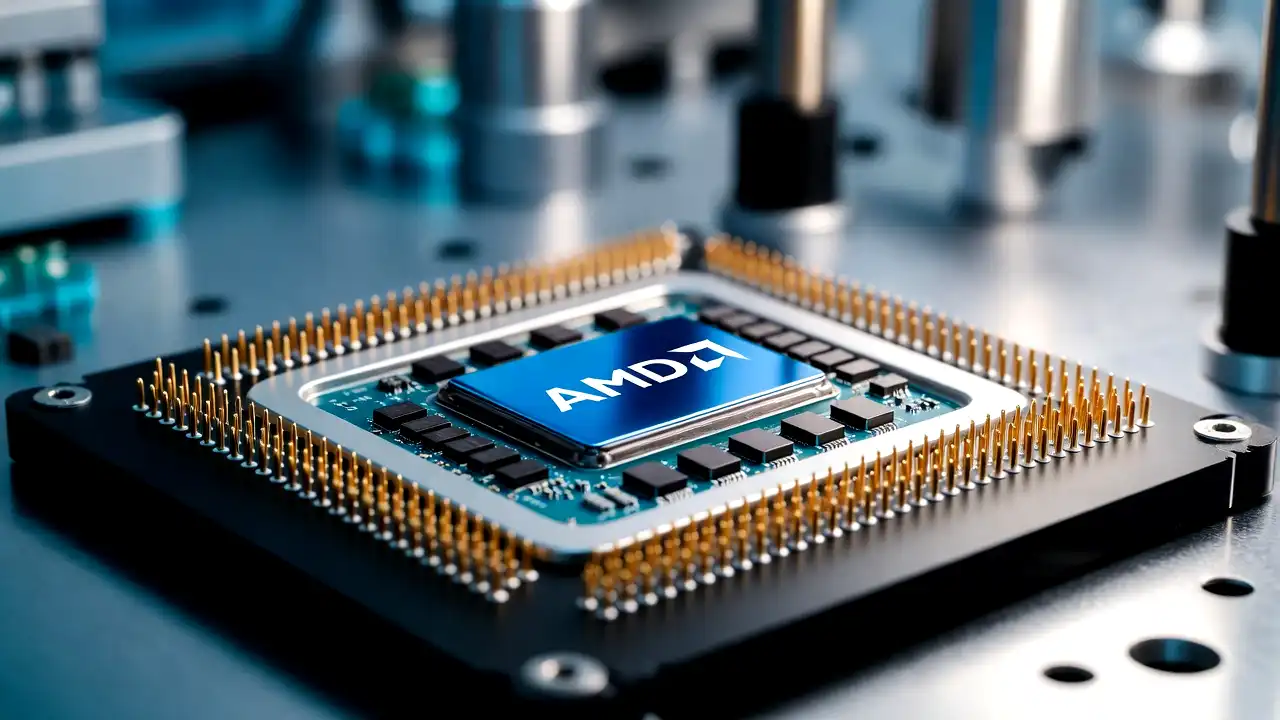
The artificial intelligence boom is breathing new life into old-school computer chips. For the past year, Wall Street focused almost entirely on high-powered graphics processors. Now, traditional hardware makers like AMD and Intel are seeing a massive surge in fresh demand. Their central processing units, the standard chips that run everyday software, are suddenly flying off the shelves as technology companies build larger data centers.
A major shift in how artificial intelligence operates drives this sudden hardware comeback. Graphics processing units still handle the heavy mathematical calculations required to train smart computer models. However, the technology is moving past simply answering basic text prompts on a screen. Modern artificial intelligence programs now act as independent software agents that need to take real physical actions within a computer system.
These smart agents must use software tools, move digital files, open applications, and complete multi-step tasks. Graphics chips cannot manage these complex daily workflows alone. To coordinate all this activity across a complete computer network, technology companies desperately need standard central processing units. This specific traditional hardware manages the workflow itself rather than just crunching raw mathematical data.
Financial markets noticed this hardware shift immediately. AMD stock jumped about 15% during early Wednesday trading. This massive spike gave the chipmaker its best trading day in roughly seven months. The stock price surged after the company easily beat Wall Street earnings expectations and provided a highly optimistic financial outlook for the rest of the calendar year.
The data center division provided the absolute biggest boost for AMD. Revenue from this specific business unit skyrocketed 57% compared to the same period one year ago. Company executives stated that strong demand for both new artificial intelligence accelerators and traditional server processors drove this massive revenue jump.
Wall Street analysts quickly updated their financial models to reflect this changing market landscape. Analysts at Wedbush directly pointed out the shifting hardware trends in a note to their investors. They wrote that standard computer processors completely stole the headlines during the latest earnings season. The firm noted that AMD saw its server processor sales accelerate rapidly in the first quarter and expects sales growth to accelerate even more in the second quarter.
Financial experts at Bernstein added another major vote of confidence for the chipmaker on Wednesday. The financial firm upgraded AMD stock to an Outperform rating for the very first time since early 2023. They also took the aggressive step of doubling their official price target for the company, raising it from $265 to $525. Bernstein analysts told their wealthy clients that the artificial intelligence story for AMD looks incredibly real right now.
Intel told its investors a very similar story just a few weeks earlier. The legacy technology company watched its own stock price surge following a strong earnings report in late April. Intel executives provided a better-than-expected financial outlook and highlighted steadily improving customer demand across its massive data center business.
The broader takeaway for financial markets is that building massive data centers no longer revolves around a single type of computer chip. For much of the recent technology boom, investors bought Nvidia stock and ignored almost everything else. Today, building a modern digital brain requires much more physical hardware. A functional system needs standard processors, massive memory banks, digital storage drives, networking cables, and heavy metal server racks to make the entire setup work.
This broader hardware trade already shows up clearly on the financial scoreboard. Investors are investing across the entire semiconductor supply chain. The 10 biggest chip-related winners in the stock market added roughly $3 trillion in total market value since March 30. Companies like Nvidia, Broadcom, Taiwan Semiconductor Manufacturing, Micron, Intel, and AMD all sit near the very top of this massive spring market rebound.
As the technology industry broadens its financial focus to encompass the entire hardware rack, Wall Street looks ahead to the next major market test. Nvidia will report its quarterly earnings on May 20. The entire financial sector wants to see if the undisputed king of graphics chips confirms that major corporate customers are indeed buying up the rest of the server hardware to support their massive digital projects.