Key Points:
- President Donald Trump and Chinese President Xi Jinping wrapped up a 2-day state visit in Beijing with tea and a working lunch.
- Xi delivered a stern warning to the American delegation, stating that mishandling the Taiwan issue could create a very dangerous situation.
- China agreed to purchase 200 Boeing commercial jets, though the number disappointed investors who expected an order of 500 airplanes.
- The 2 leaders discussed reopening the Strait of Hormuz and ending the ongoing war in Iran to stabilize global oil prices.
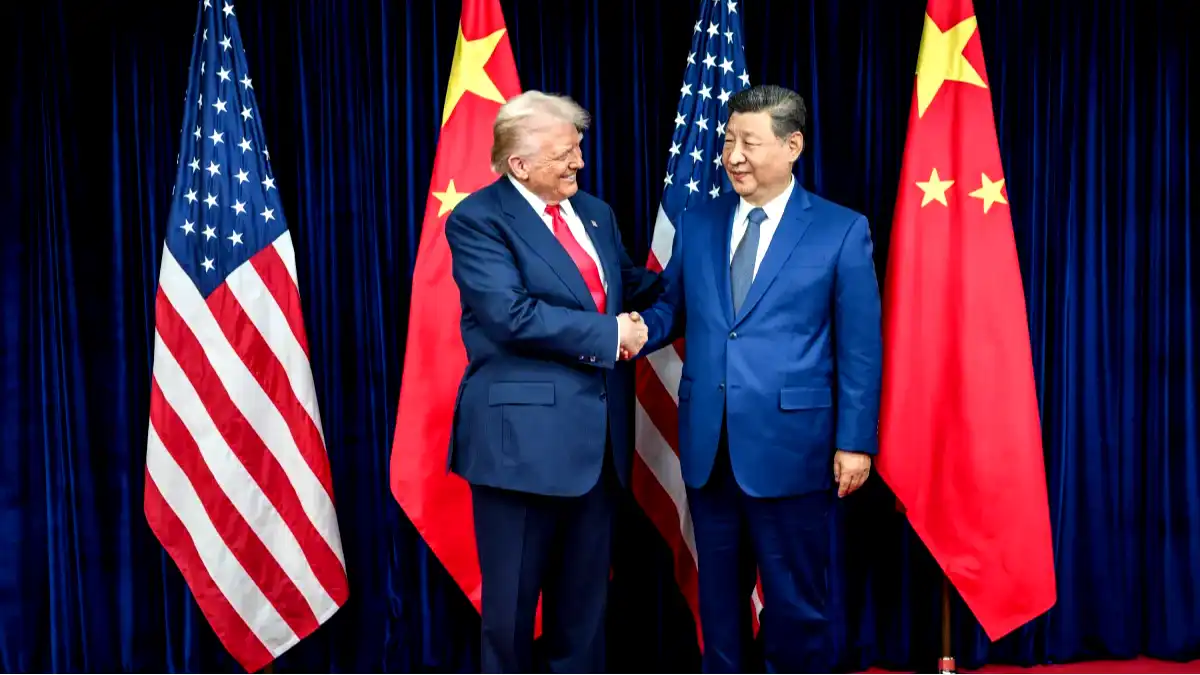
President Donald Trump and Chinese President Xi Jinping plan to conclude their 2-day state visit in Beijing this Friday. The 2 global leaders will share tea and a working lunch before Trump flies back to the United States. This trip marks the first time a sitting American president has visited China since Trump’s initial trip in 2017. Trump traveled to Asia hoping to secure tangible economic victories to boost his approval ratings ahead of the upcoming midterm elections.
Despite the friendly public appearances, the meetings featured moments of intense political friction. During a private, closed-door meeting that lasted more than 2 hours, Xi issued a stark warning regarding Taiwan. The Chinese foreign ministry reported that Xi told the American delegation that mishandling the Taiwan issue could push relations between the 2 superpowers into a very dangerous place. China claims the democratically governed island as its own territory and refuses to rule out using military force to gain total control.
The island sits just 50 miles off the Chinese coast and remains the biggest flashpoint in the relationship between Washington and Beijing. United States law requires the American government to provide Taiwan with the weapons it needs to defend itself. United States Secretary of State Marco Rubio, who traveled with Trump, addressed the tense conversation during an interview with NBC News. Rubio noted that Chinese officials always bring up Taiwan during these diplomatic meetings. He stated that the American team simply clarifies their existing position and moves on to other topics, adding that current American policy remains completely unchanged.
Beyond the political warnings, the summit focused heavily on maintaining a fragile economic truce. Back in October, the 2 leaders struck a deal where Trump suspended triple-digit tariffs on Chinese imports. In exchange, Xi stopped choking off the global supply of vital rare earth minerals. Trump arrived in Beijing this week with a slightly weaker negotiating hand. Recent court rulings severely limited his legal ability to impose new tariffs at will, forcing him to rely more heavily on traditional diplomacy.
Trade negotiations did yield a breakthrough for the American aerospace industry. During an interview with Fox News, Trump announced that China agreed to order 200 new commercial jets from Boeing. This massive deal marks the first time China has purchased American-made commercial airplanes in nearly 10 years. However, the financial markets reacted poorly to the news. Investors originally expected China to buy 500 or more aircraft. Because the final number fell far short of those expectations, Boeing’s stock dropped more than 4% shortly after the president made the announcement.
The ongoing conflict in the Middle East also dominated the discussions. Trump actively urged China to use its diplomatic leverage to convince Iran to sign a peace agreement with Washington. The prolonged war remains highly unpopular with American voters and continues to drive up everyday living costs in the United States. Trump desperately needs to end the conflict to protect his political standing at home before voters head to the polls.
Both leaders shared a strong mutual desire to reopen the Strait of Hormuz. During normal times, roughly 20% of the global oil and natural gas supply travels through this critical waterway off the coast of Iran. The White House released a summary of the talks, highlighting this shared economic goal. The summary also noted that Xi showed genuine interest in buying large quantities of American oil. Purchasing American energy would help China reduce its heavy reliance on unpredictable Middle East fuel supplies.
When the leaders stepped out of the negotiating rooms, they engaged in lavish public spectacles. Trump appeared completely at ease as he posed for photos with Xi at the Temple of Heaven, a famous World Heritage site. He ignored shouted questions from reporters about the Taiwan discussions and instead focused on the grandeur of the event. Earlier in the day, Trump attended a massive welcoming ceremony at the Great Hall of the People. The event featured a formal military honor guard and throngs of children waving bright flowers and national flags. Trump proudly declared that people might remember this gathering as the biggest summit ever.
Chinese officials also worked hard to project an image of unity and cooperation. At an opulent state banquet, Xi called the relationship between China and the United States the most important partnership in the entire world. He told the audience of diplomats and business leaders that both nations must make the relationship work and never mess it up.
The groundwork for these positive public statements happened during intense preparatory meetings earlier in the week. The Chinese foreign ministry confirmed that trade teams from both countries reached balanced and positive outcomes on Wednesday. United States Treasury Secretary Scott Bessent led those preliminary talks for the American side. Before the Boeing deal went public, Bessent expressed strong optimism about establishing new mechanisms to support future bilateral trade and financial investment between the 2 rival nations.