Key Points:
- US officials insist a month-old ceasefire with Iran remains active despite recent missile strikes and naval clashes.
- The US military launched Project Freedom to escort some of the 1,550 stranded commercial ships through the Strait of Hormuz.
- Iran fired about 20 projectiles at the United Arab Emirates, injuring 3 people at an oil terminal in Fujairah.
- Iranian President Masoud Pezeshkian called American demands impossible while the US maintains a strict naval blockade.
The United States military downplayed the chance of a full-scale war with Iran on Tuesday. General Dan Caine, chairman of the Joint Chiefs of Staff, told reporters at the Pentagon that recent Iranian attacks on vessels in the Persian Gulf and the United Arab Emirates did not break a month-old ceasefire. Defense Secretary Pete Hegseth stood beside Caine and confirmed the truce remains active. Both leaders stressed that American forces stand ready to resume combat if necessary, but they urged other nations to step in and help.
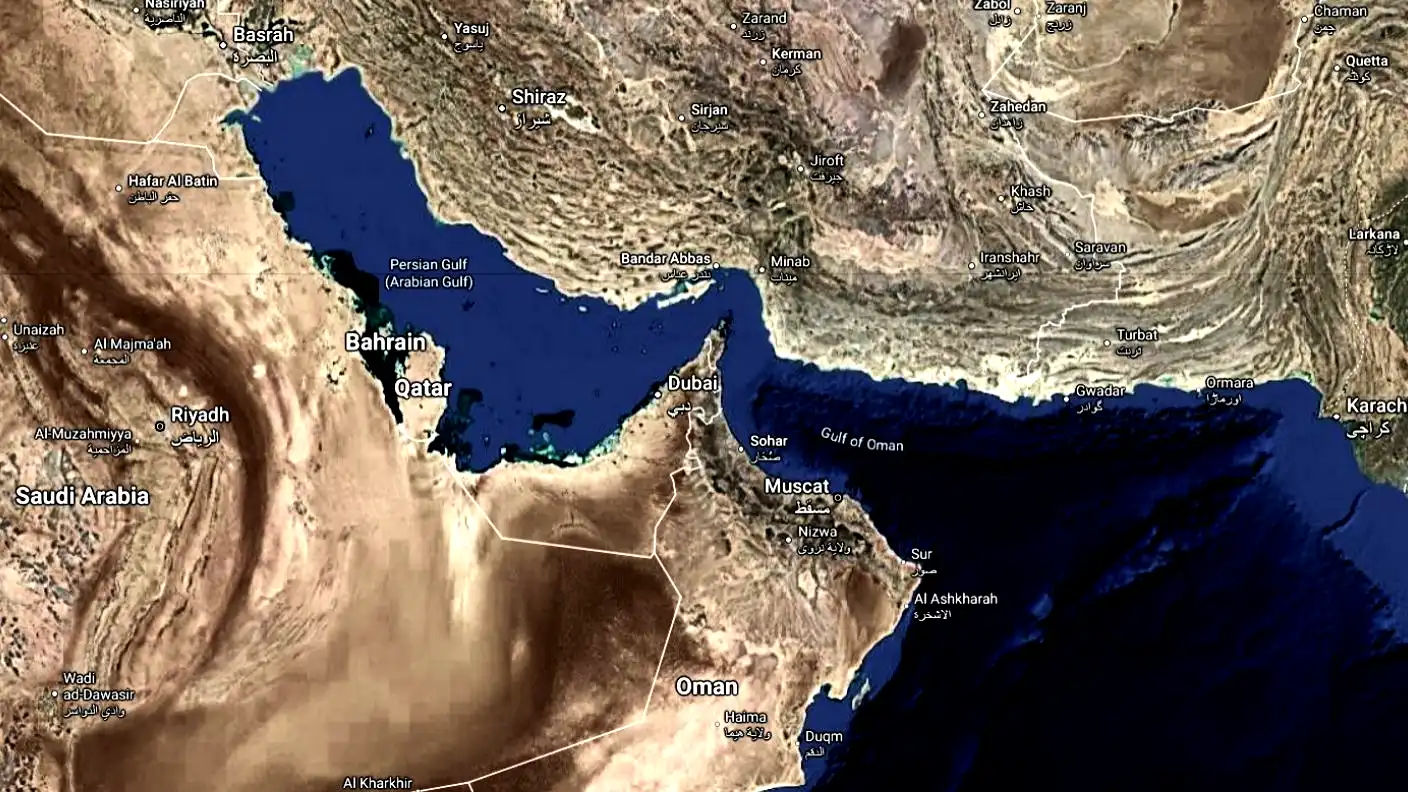
Violence broke out on Monday, right after President Donald Trump announced an operation named Project Freedom. Trump described the mission as a humanitarian effort designed to guide neutral ships out of the dangerous Persian Gulf. The American military successfully helped at least two merchant vessels pass through the Strait of Hormuz, fighting off Iranian attacks along the way. At the same time, two American warships sailed directly into the Gulf to secure the waters.
General Caine revealed the massive scale of the shipping crisis. Right now, more than 1,550 commercial vessels and about 22,000 sailors sit trapped inside the Persian Gulf. They cannot leave safely because Iran continually threatens any ship that tries to move through the narrow waterway without explicit permission.
Iran backed up its threats with direct military action on Monday. Iranian forces struck a South Korean bulk carrier and attacked an empty tanker owned by the Abu Dhabi National Oil Company. Authorities reported no injuries on either of those two ships. Following the attacks, Tehran announced a brand new rule for the region. State-run Press TV reported that any vessel wanting to cross the Strait of Hormuz must now receive an official email from Iran approving.
The conflict quickly spilled over into neighboring countries. On Monday, Iran fired roughly 20 projectiles at the United Arab Emirates. The UAE military successfully intercepted almost all the incoming missiles and drones. However, one strike managed to hit an oil terminal partially owned by the Vitol Group in the port city of Fujairah. The explosion injured 3 Indian workers at the facility.
The missile attacks sent panic through major Arab cities. Authorities blasted missile alerts to residents in Dubai and Abu Dhabi. To protect children, the local government ordered all schools to switch to remote learning for the remainder of the week. This event marked the very first attack on the UAE since the ceasefire agreement began nearly a month ago.
While the US escorts commercial ships, it refuses to back down on its economic punishments. Defense Secretary Hegseth clarified that Project Freedom operates as a temporary, defensive mission. He promised that the strict US naval blockade against Iranian ports remains in full effect. The United States uses this blockade to choke off Iranian oil exports. American leaders hope the massive economic pressure will force Tehran to make major concessions.
Iranian leaders flatly reject this strategy. President Masoud Pezeshkian spoke with Iraqi prime minister-designate Ali al-Zaidi and called the American approach completely ridiculous. Pezeshkian said the United States expects Iran to simply submit to unilateral demands while enduring a maximum pressure campaign. He declared that such an equation is absolutely impossible. Tehran insists the US must end the naval blockade before any new peace talks can begin.
Foreign Minister Abbas Araghchi took to the social media platform X to condemn the American escort mission. He labeled the US move Project Deadlock and called it a direct violation of the ceasefire. Araghchi warned the United States and the UAE against getting dragged back into a military quagmire by ill-wishers. He did note, however, that separate peace talks mediated by Pakistan are actually making some progress.
Energy markets reacted wildly to the military clashes and diplomatic arguments. Brent crude oil prices jumped almost 6% on Monday when the shooting started. The market calmed down slightly on Tuesday after the Pentagon reassured the public about the ceasefire. Oil prices declined about 3.6%, bringing the cost of a barrel just under $111.
Financial experts worry about the long-term impact of the standoff. Becca Wasser, an analyst with Bloomberg Economics, said Project Freedom clearly aims to break the shipping logjam that currently casts a dark shadow over the global economy. She warned that the escort mission carries significant risks of further escalation, citing Monday’s violent outbreak as proof of the extreme danger.