Key Points:
- US stock markets pushed higher on Tuesday, driven by a strong tech sector and falling crude oil prices.
- Global oil benchmarks dropped nearly 4% as the US government clarified its defensive strategy in the Strait of Hormuz.
- American job openings dipped slightly to 6.866 million in March, but the total hiring rate bounced to 3.5%.
- Intel shares skyrocketed 14% after reports surfaced of potential talks with tech giant Apple about processor production.
US stock markets marched higher on Tuesday afternoon. Investors felt a wave of relief after Washington officials used calming language to address a recent spike in military tensions with Iran. The technology and materials sectors led the charge, combined with a surprisingly strong corporate earnings season. At 1:45 PM (ET), the S&P 500 climbed 0.86% to reach 7,262.42, while the tech-heavy Nasdaq 100 jumped 1.34% to 28,023.51. The Dow Jones Industrial Average held steady near 49,248.74 with a gain 0.62%.
Michael O’Rourke, chief market strategist at Jones Trading, explained the market dynamics. He noted that stocks showed strength since early morning trading because the fragile ceasefire with Iran appeared to hold. He pointed out that oil prices dropped by more than 3%, encouraging investors to buy more stocks. The memory and storage companies pushed the entire semiconductor and hardware group sharply higher. This upward momentum in the technology sector accounted for about 70% of the overall gains in the S&P 500 on Tuesday. However, the financial sector showed some weakness after the startup Anthropic announced several new artificial intelligence tools that threaten traditional data service providers.
The geopolitical situation in the Middle East caused serious panic over the weekend. President Donald Trump announced a massive military effort called Project Freedom. The operation aims to reopen stalled shipping traffic moving through the Strait of Hormuz. Iran effectively shut down this vital waterway, which handles a fifth of the global oil supply, leading to the largest supply disruption in history. Iran responded to the announcement by firing missiles at US destroyers, claiming a direct hit. The US Central Command completely dismissed the claim, stating that no military ships were damaged and that two merchant vessels passed through the strait safely.
Violence also spread to neighboring countries. The United Arab Emirates reported intercepting missile and drone attacks from Iran on Monday. These strikes caused a massive fire at the Fujairah Oil Industry Zone, a crucial trading and storage hub. To calm the nervous markets, US officials clarified their goals on Tuesday. Secretary of War Pete Hegseth told reporters that Project Freedom operates as a purely defensive, temporary mission. He stressed that American forces just want to protect innocent commercial shipping and have no desire to start a larger fight or enter Iranian airspace.
Hegseth confirmed that the military secured a safe lane for commercial ships to float through the area. He also stated the ceasefire with Iran remains active. President Trump offered his own perspective on the situation. When reporters asked what specific actions would violate the ceasefire, Trump gave a vague warning but added that Iran wants to make a deal. During a Monday interview, the president suggested the conflict might stretch on for another three weeks, even though he previously claimed the United States had already won the war.
Iranian officials offered their own positive signals to de-escalate the tension. Foreign Minister Abbas Araghchi mentioned that talks mediated by Pakistan are making real progress. He warned the United States and the United Arab Emirates against getting dragged back into a military quagmire. Meanwhile, Iranian parliament speaker Mohammad Bagher Ghalibaf accused the US of violating the ceasefire by imposing a naval blockade, calling the new shipping plan Project Deadlock.
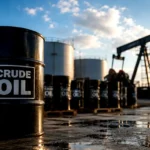
Despite the harsh words, the calming actions on the water caused oil prices to tumble. Brent crude futures, dropping in July, fell 3.9% to $110.02 a barrel. West Texas Intermediate crude dropped 4.4% to $101.71 a barrel. Shipping giant Maersk gave the market a major boost when it announced that a US-flagged vehicle carrier successfully exited the Gulf through the Strait with the help of the American military.
Away from the Middle East, traders analyzed fresh economic data regarding the American labor market. The Bureau of Labor Statistics released its latest job openings report. US job openings reached 6.866 million in March. This number beat the consensus estimate of 6.850 million but was down from the 6.922 million openings recorded in February. Economists debated whether the cooling job openings signaled a slowing labor market.
Actual hiring numbers told a much brighter story. The total number of hires in March climbed to 5.554 million, pushing the national hiring rate up to 3.5%. Economists celebrated this big bounce back, calling it the highest hiring rate in almost two years. Separately, the Institute for Supply Management reported that the services sector expanded in April with a score of 53.6. Surprisingly, the prices paid by service organizations for materials stayed flat at 70.7, completely ignoring the recent spike in oil prices.
Corporate earnings season kept traders busy. Companies in the S&P 500 expect to post an aggregate profit growth of 28% for the first quarter compared to a year ago. AMD is set to report earnings after the close, with traders eager to see how the company competes with Nvidia. Data analytics firm Palantir beat its quarterly estimates but saw its shares drop nearly 7% after it warned of rising expenses in 2026. Shopify stock slumped nearly 15% despite beating estimates. Finally, Intel shares exploded upward by 14% after news broke that Apple discussed producing main processors with the chipmaker.