

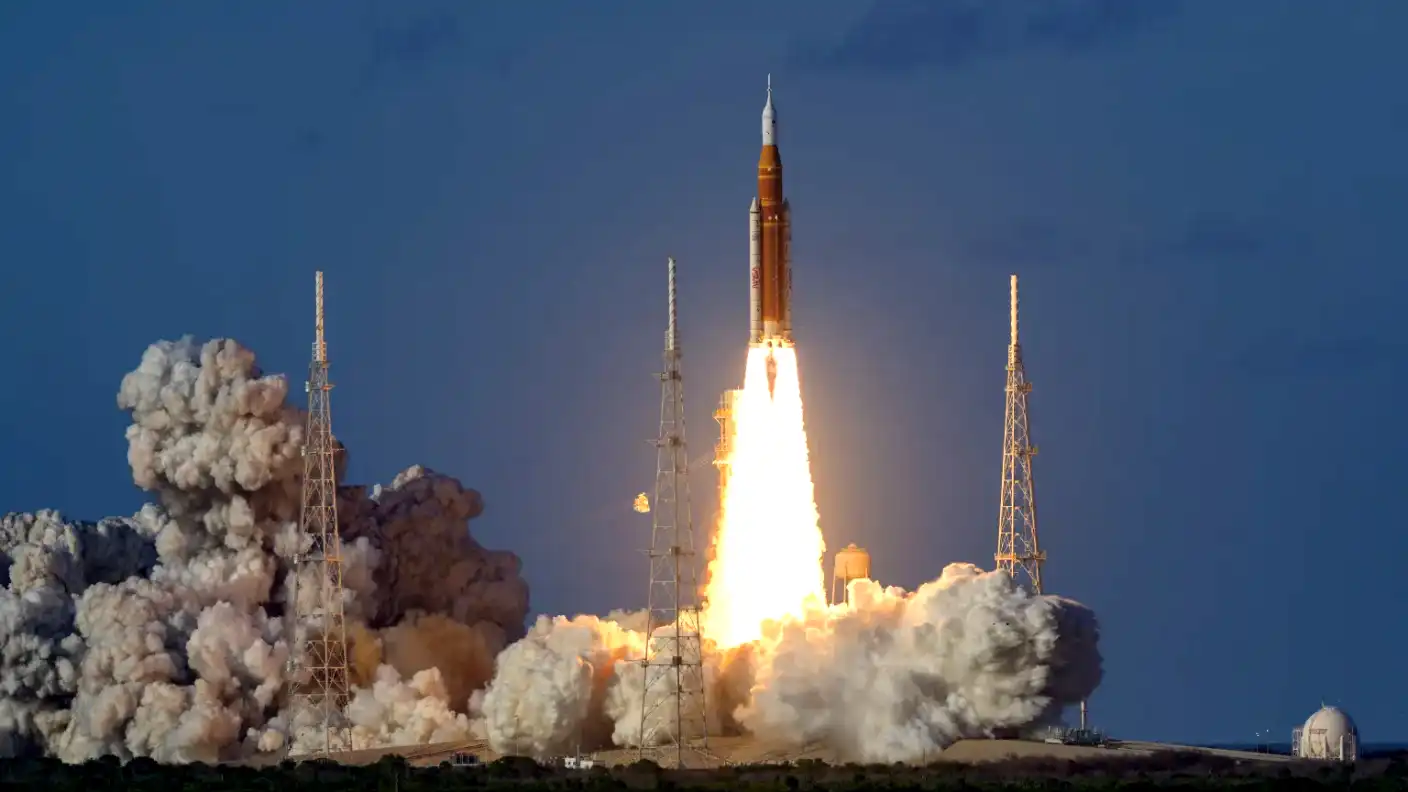
Key Points:
- NASA’s Artemis II crew successfully fired their engines to break out of Earth orbit and travel nearly 250,000 miles to the moon.
- The mission marks the first time humans have headed toward the moon since the Apollo 17 flight in December 1972.
- The historic crew features the first woman, the first Black astronaut, and the first non-American citizen to undertake a lunar journey.
- Despite minor plumbing and heating issues, the crew remains on track to break distance records before returning to Earth on April 10.
The Artemis II astronauts fired their spacecraft engines on Thursday night. This massive blast pushed them out of Earth’s orbit and sent them hurtling toward the moon. The engine ignition happened exactly 25 hours after their initial liftoff. Now, three Americans and one Canadian astronaut are officially on their way to travel nearly 250,000 miles through deep space.
This engine firing marks a major milestone for space exploration. Humanity has not sent a crew to the moon since the Apollo 17 mission launched on December 7, 1972. For decades, astronauts flew only in shallow orbits around our home planet. NASA officials reported that the preliminary data looks great and the engine burn went perfectly.
Canadian astronaut Jeremy Hansen shared his excitement with Mission Control. He told the team on the ground that humanity has once again shown what we can achieve. He added that the hopes of people back home carry the crew forward. Hansen also mentioned that the four astronauts spent their time glued to the windows, staring out at a view he called phenomenal.
Before giving the green light for the lunar departure, NASA kept the crew close to home for a full day. The team needed to test the life-support systems inside the Orion capsule to ensure everything worked properly. This Artemis II test flight serves as the opening act for a much larger program. NASA invests over $4.0 billion per launch into this effort, aiming to build a permanent moon base and establish sustained lunar living conditions.
Commander Reid Wiseman pilots the spacecraft alongside Victor Glover, Christina Koch, and Hansen. They will fly past the moon, execute a massive U-turn, and head straight back home without landing. During this trip, they will break the Apollo 13 distance record set in 1970. The crew will travel farther from Earth than any humans in history. They also expect to hit record-breaking speeds when they reenter the atmosphere on April 10.
This crew already made history just by strapping into their seats. Victor Glover becomes the first Black astronaut to travel to the moon. Christina Koch is the first woman to make the journey. Jeremy Hansen holds the title of the first non-American citizen to fly a lunar mission. During the Apollo era, all 24 lunar travelers were white men.
To get the crew ready for the big engine burn, Mission Control woke them with upbeat music. Glover radioed down and told the ground teams they felt ready to go. The massive engine accelerated the Orion capsule to 24,000 miles per hour. This incredible speed pushed the craft out of Earth’s gravitational pull. Koch told Mission Control that by burning the engines toward the moon, the crew does not leave Earth, but rather chooses it.
The next major event happens on Monday during the lunar flyby. The Orion capsule will zoom 4,000 miles beyond the moon before turning around. This path gives the crew an unprecedented view of the far side of the moon. As a special bonus, the crew will experience a total solar eclipse when the moon temporarily blocks the sun from their window.
While the flight looked smooth, the crew did overcome a few minor problems. A space toilet malfunctioned shortly after the crew reached orbit on Wednesday evening. Mission Control gave Koch some plumbing advice, and she fixed the issue. Before the fix, the crew had to use backup urine storage bags. The cabin also grew very cold early in the flight. Temperatures dropped enough to force the astronauts to unpack long-sleeved shirts before controllers fixed the heater.
Those backup bags actually came in handy later on Thursday. A small valve issue popped up with the main water dispenser. NASA ordered the crew to fill the empty bags with extra drinking water, just in case the valve failed. The astronauts used straws and syringes to pump more than 2.0 gallons of water into the pouches. With plenty of water stored and the engines fired, the crew now coast toward their historic lunar encounter.






