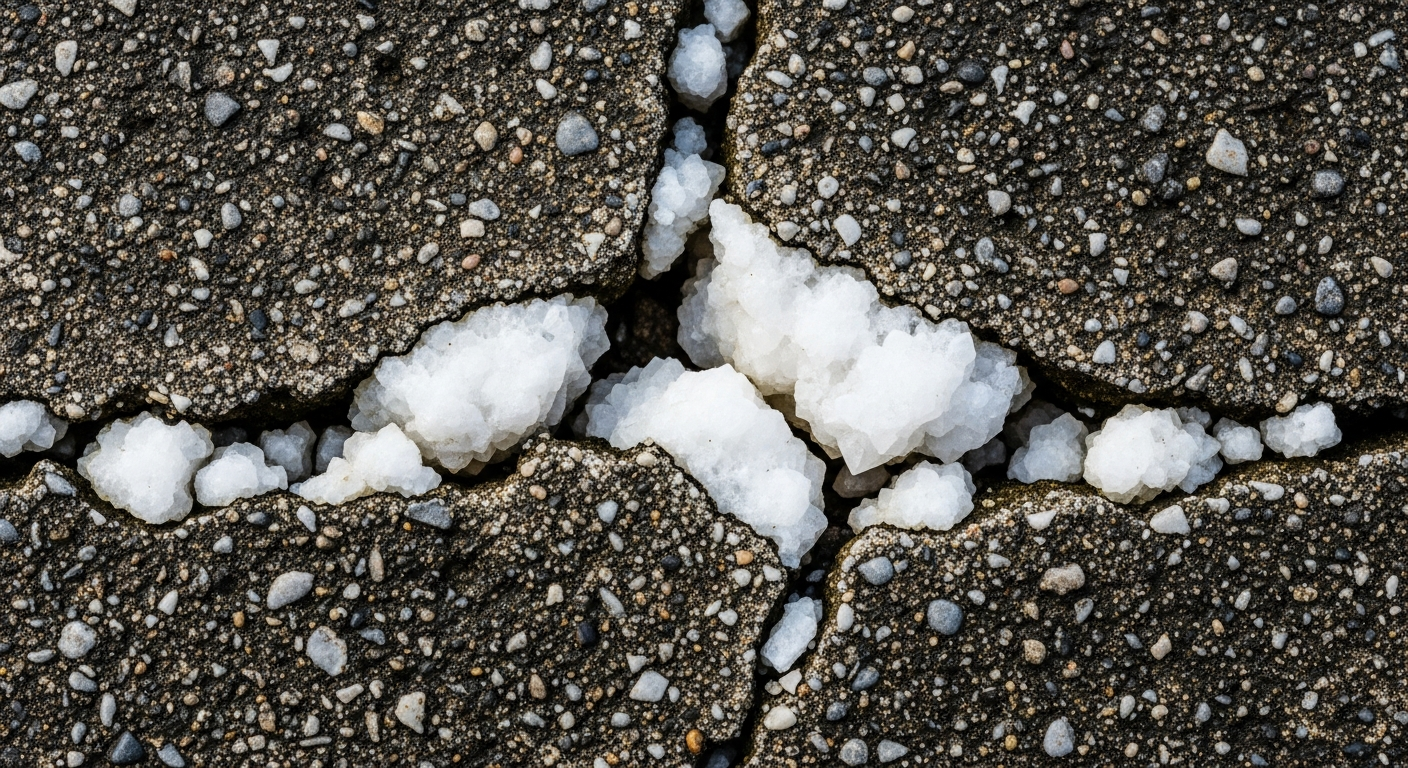
Concrete is the second most consumed substance on Earth, surpassed only by water. It is the literal foundation of modern civilization, forming our bridges, skyscrapers, dams, and roads. However, despite its strength, concrete has a fatal flaw: it cracks. Under tension, thermal expansion, or simple wear and tear, microscopic fractures appear. Over time, water seeps into these cracks, corroding the steel reinforcement bars inside. This “concrete cancer” leads to structural failure, costing the global economy billions of dollars in repairs and maintenance each year.
But what if concrete could heal itself, just like human skin heals a cut?
This is not science fiction; it is Bio-Concrete. By embedding dormant bacteria into the cement mix, scientists have created a “living” material that wakes up when damaged, produces limestone to fill the cracks, and then goes back to sleep. This revolutionary technology promises to extend the lifespan of infrastructure, reduce carbon emissions, and redefine the way we build the world.
This comprehensive guide explores the science behind bio-concrete, its mechanism of action, the environmental impact, and the challenges facing its mass adoption.
The Problem with Traditional Concrete
To understand the genius of bio-concrete, we must first look at the limitations of standard concrete. Concrete is fantastic under compression (being squashed), but terrible under tension (being pulled apart). To solve this, we reinforce it with steel bars (rebar).
However, tiny cracks are inevitable. While a hairline crack isn’t dangerous on its own, it acts as a highway for water, oxygen, and salts (like chlorides from road de-icing or sea spray). When these elements reach the steel rebar, it rusts. Rust expands, putting immense internal pressure on the concrete until it spalls (breaks off).
Fixing this is expensive and difficult. We currently use epoxy fillers or mortars, but these are temporary patches. We treat the symptom, not the disease.
The Biological Solution: How Bacteria Heal Concrete
Microbiologist Henk Jonkers pioneered the concept of bio-concrete at Delft University of Technology in the Netherlands. The idea was to leverage the natural metabolic processes of specific bacteria to produce a mineral filler.
The Ingredients of Life
Bio-concrete contains the standard ingredients (cement, sand, aggregate, water) plus a special “healing agent.” This agent consists of two parts encapsulated in biodegradable clay pellets:
- Bacterial Spores: Specifically, strains of the genus Bacillus (like Bacillus pseudofirmus or Bacillus cohnii). These bacteria are “extremophiles.” They can survive in the highly alkaline environment of concrete (pH 13) and can remain dormant as spores for up to 200 years without food or water.
- Nutrients: A food source for the bacteria, typically calcium lactate.
The Mechanism of Action
The healing process is an elegant biological reaction triggered by the damage itself.
- The Crack Forms: Stress causes a crack to open in the concrete.
- Water Enters: Rain or moisture seeps into the crack.
- Activation: The water dissolves the biodegradable shell of the clay pellets, waking up the dormant bacterial spores.
- Feeding Time: The bacteria begin to consume the calcium lactate nutrient.
- Limestone Production: As the bacteria metabolize the food, they consume oxygen (preventing rebar corrosion) and excrete Calcite (limestone) as a waste product.
- Sealing: The limestone builds up, filling the crack. Once the crack is sealed, moisture is cut off, and the bacteria return to a dormant spore state, ready to wake up again if a new crack forms.
This process can seal cracks up to 0.8mm wide in a matter of weeks.
The Environmental Imperative
The construction industry is a massive polluter. Cement production alone is responsible for approximately 8% of global CO2 emissions. That is more than the aviation and shipping industries combined.
Extending Lifespan Reduces Carbon
The primary environmental benefit of bio-concrete is longevity. If a bridge lasts 100 years instead of 50, we essentially halve the carbon footprint associated with that structure. We don’t have to demolish it, make new cement, transport it, and rebuild it.
Reducing Maintenance
Maintenance is carbon-intensive. The trucks, the drills, the epoxy chemicals—all have an environmental cost. By making the infrastructure self-maintaining, we drastically lower the lifecycle emissions of our built environment.
Applications: Where is Bio-Concrete Used?
Bio-concrete is moving from the lab to the real world. Its unique properties make it ideal for specific, high-value applications.
Water-Retaining Structures
Dams, canals, basements, and water tanks are prime candidates. In these structures, a crack is a leak that can be catastrophic. Bio-concrete ensures watertightness without constant human inspection.
Marine Infrastructure
Sea walls and piers are exposed to the harshest conditions. Saltwater corrosion destroys rebar rapidly. Bio-concrete not only seals cracks but also consumes oxygen, creating an anaerobic environment that naturally protects the steel from rusting.
Inaccessible Locations
Repairing a crack in a nuclear power plant containment wall or a tunnel deep underground is dangerous and expensive. Self-healing materials are perfect for “fix-and-forget” scenarios where human maintenance is impossible.
Existing Building Retrofit
You don’t always need to pour new concrete. A “Bio-Mortar” or liquid spray containing the bacteria can be applied to existing cracks in old buildings. The bacteria seep in and heal the damage from the inside out, preserving historical structures.
The Challenges: Cost and Scalability
If bio-concrete is so amazing, why aren’t all our roads made of it? As with all new technologies, there are hurdles to mass adoption.
The Price Tag
Currently, bio-concrete is significantly more expensive than traditional concrete—often double the price per cubic meter. The cost of cultivating the specialized bacteria and the calcium lactate nutrient drives up the price.
However, proponents argue that looking at the upfront cost is shortsighted. If you factor in the “Lifecycle Cost”—zero repairs for 50 years—bio-concrete becomes cheaper in the long run.
Technical Limitations
While bio-concrete offers remarkable self-healing capabilities, it still faces several technical constraints that currently limit its widespread adoption.
- Crack Width: It only works on micro-cracks (up to roughly 0.8mm or 1mm). If a massive structural failure occurs and a 1-inch gap opens, the bacteria cannot fill it. It is a preventative measure, not a magic glue for broken buildings.
- Survival Rate: While Bacillus spores are tough, they are not immortal. The crushing forces of mixing and pouring concrete can kill a percentage of them. Scientists are constantly refining encapsulation methods (such as hydrogels or expanded clay particles) to protect bacteria during construction.
The Future: Vascular Systems and Fungi
The field of self-healing materials is evolving rapidly. Researchers are looking beyond bacteria.
Vascular Networks
Inspired by the human circulatory system, researchers are experimenting with embedding networks of hollow tubes inside concrete. When a crack breaks a tube, a healing agent (chemical or biological) is pumped to the site of the injury from a central reservoir. This allows for repeated healing of the same spot indefinitely.
Fungal Concrete
Fungi (mycelium) grow faster than bacteria and form vast networks. Research is underway to use fungal spores that bloom calcium carbonate. Fungi can potentially bridge larger cracks than bacteria can due to their filamentous growth.
Conclusion
We are entering the era of “Living Buildings.” For centuries, we viewed nature as something to be cleared away to make room for construction. Bio-concrete represents a paradigm shift, inviting biology back into our cities to help sustain them.
It is a perfect synergy: the rock-hard strength of industrial chemistry combined with the resilience and regenerative power of biological life. While cost remains a barrier today, as production scales and cement carbon taxes rise, bio-concrete is poised to become the standard for critical infrastructure. We are moving toward a future where our cities are not just static monuments of stone, but living entities that protect themselves.