
Key Points:
- Beijing has threatened the EU with “anti-discrimination” and “supply-chain security” investigations over proposed import restrictions.
- The threat came via state broadcaster CCTV as EU commissioners met to debate capping heavily subsidized Chinese imports.
- European leaders argue China’s massive industrial dominance is the direct result of decades of unfair state subsidies.
- The EU’s goods trade deficit with China reached an unsustainable €360 billion ($388 billion) in 2025.
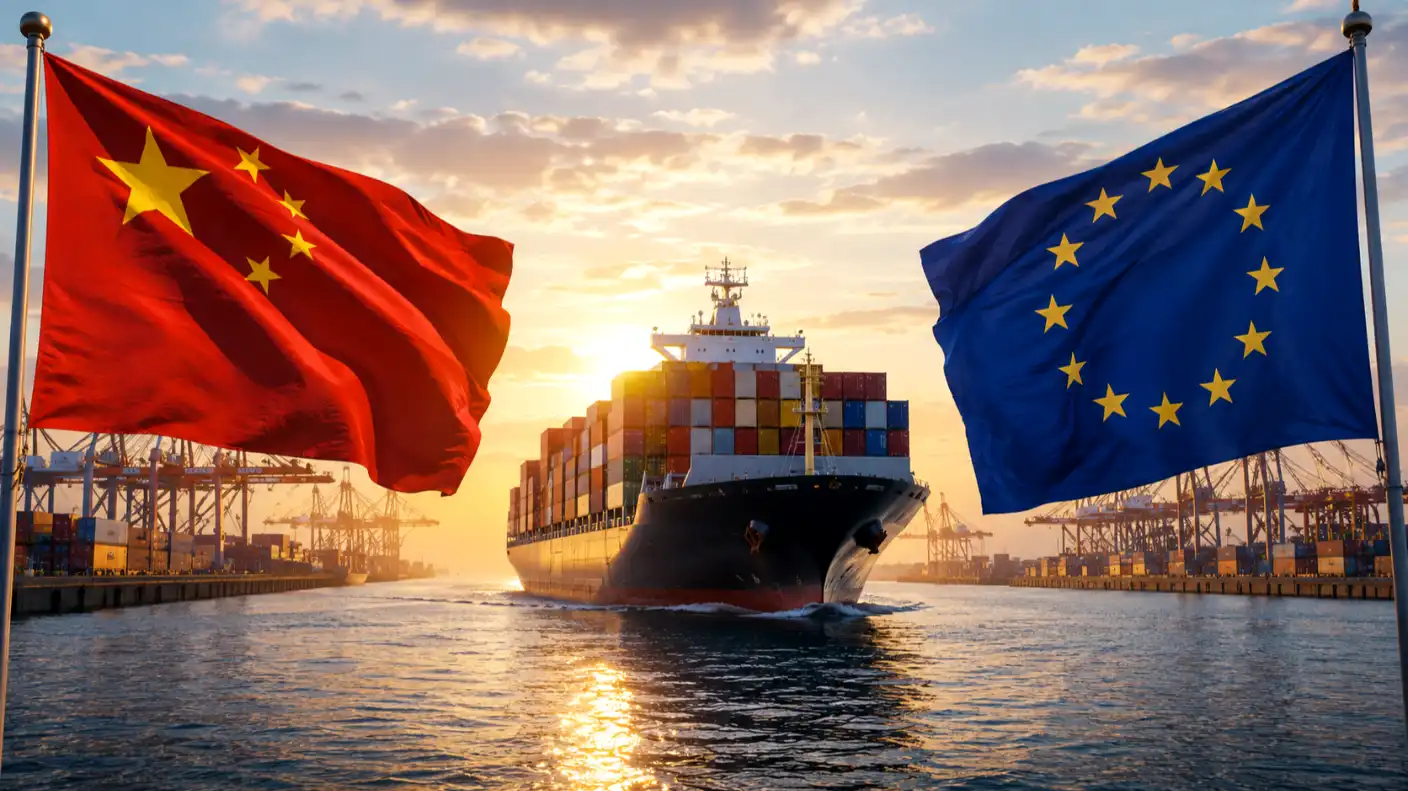
Beijing has officially threatened to launch retaliatory trade probes against the European Union, delivering a sharp warning shot to Brussels. The escalating rhetoric comes as the 27-member bloc prepares to debate sweeping new import restrictions on Chinese products. According to state-run media, Chinese authorities could initiate aggressive “anti-discrimination” and “supply-chain security” investigations if the EU pushes forward with its planned “overcapacity instrument.”
This turned-up rhetoric from Beijing coincided with closely watched, high-level meetings of European commissioners on Friday, May 29, 2026. The Brussels summit aimed to align the bloc’s thinking and draft policies to shield European manufacturers from what officials have dubbed “China shock 2.0.” European leaders are increasingly concerned that a massive influx of heavily subsidized Chinese industrial goods—sometimes priced up to 40% cheaper than local products—could crush European competitiveness and wipe out local manufacturing jobs.
To prevent this regional industrial decline, European planners are designing a comprehensive “overcapacity instrument” to act as a powerful trade defense. The proposed tool would empower Brussels to impose sector-wide tariffs and place strict caps on imports. By targeting Chinese state-subsidized exports in key industrial sectors—such as electric vehicles, solar panels, and wind turbine components—the EU hopes to protect its domestic clean-tech manufacturers from being entirely priced out of their own markets.
However, Beijing has made it clear that it will not passively accept these unilateral restrictions. Through Yuyuantantian, a prominent social media channel run by Chinese state broadcaster CCTV, authorities warned that the EU’s economic and trade policies toward China are moving down a “radical, protectionist path.” The channel pointed to multiple restrictive measures launched by Brussels this year, including the Industrial Accelerator Act, which aims to compel European chemical and machinery companies to diversify their supply chains away from Chinese sources.
The state broadcaster’s warnings matched the official diplomatic line from Beijing. During a press briefing on Thursday, Chinese Foreign Ministry spokesperson Mao Ning urged the European Union to view its economic relationship with China objectively and honor its commitment to free trade. Mao argued that whether the EU uses terms like “de-risking,” “reducing reliance,” or “addressing trade imbalances,” these policies remain protectionist in nature. She warned that import quotas and tariffs will only raise costs for European businesses, hurt consumers, and weaken Europe’s long-term industrial competitiveness.
The escalating dispute has exposed a massive structural imbalance that has been building for years. According to Eurostat data, the European Union’s goods trade deficit with China reached an unsustainable €360 billion (approximately $388 billion) in 2025. European Industry Chief Stephane Sejourne told ministers in Brussels that China’s current industrial dominance is not accidental, but is the direct result of decades of massive state subsidies and non-reciprocal market access, creating an uneven playing field.
European commissioners are deeply concerned that this widening trade gap is creating the conditions for a “China shock 2.0,” mirroring the decline of U.S. Rust Belt towns after Beijing joined the World Trade Organization 25 years ago. To prevent a similar wave of factory closures, EU trade commissioner Maroš Šefčovič has advocated for more robust, proactive trade defenses. The proposed measures could force EU firms to diversify their supply chains, potentially incurring over $1 billion in restructuring costs for the European corporate sector.
As trade friction intensifies, the China-EU economic relationship faces a highly volatile outlook. The topic will dominate the upcoming EU leaders’ summit on June 18-19. It will also feature prominently on the agenda of the Group of Seven (G7) wealthy nations during their mid-June summit. With both sides preparing for a potential trade war that could drag down bilateral commerce by 1.5% or more, finding a delicate balance between protecting domestic industrial capacity and maintaining global trade cooperation will remain the defining challenge for global policy planners in the second half of 2026.