
Key Points:
- Hong Kong has overtaken Switzerland to become the world’s largest cross-border wealth management center for the first time.
- The city ended 2025 with $2.95 trillion in cross-border assets under management, recording a 10.7% year-on-year increase.
- Massive capital inflows from the Chinese mainland, a revived IPO market, and strong equity performance drove the historic growth.
- Boston Consulting Group projects Hong Kong’s offshore wealth will expand at an annual rate of 9% through 2030, widening its lead.
In a historic shift for the global financial services industry, Hong Kong has officially overtaken Switzerland to become the world’s largest cross-border wealth management center. According to the Boston Consulting Group’s (BCG) Global Wealth Report 2026, the Asian financial hub claimed the top spot for the first time in history. The achievement represents a monumental transition of global wealth-management dominance from West to East, reflecting the rapid economic integration of the Asia-Pacific region and the rising prominence of Chinese capital markets.
The latest data show that Hong Kong ended 2025 with a record $2.95 trillion in cross-border assets under management (AUM). This outstanding figure represents a robust 10.7% year-on-year increase, highlighting the city’s resilient recovery after years of geopolitical and public health challenges. Meanwhile, Switzerland slid into second place, managing approximately $2.94 trillion in offshore assets. The thin, multi-billion-dollar gap between the two financial capitals marks the official end of Switzerland’s centuries-old reign as the premier global haven for international wealth.
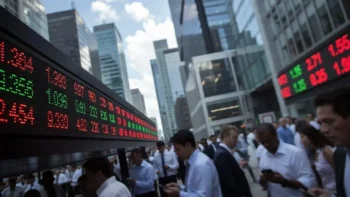
BCG analysts attributed Hong Kong’s historic rise to several compounding macroeconomic and technological factors. Primarily, the city has benefited from massive, accelerating capital inflows from the Chinese mainland, which currently constitute the absolute bulk of Hong Kong’s offshore wealth. Furthermore, a highly successful, tech-driven recovery in the local initial public offering (IPO) market and strong equity performance throughout 2025 have injected fresh liquidity into the city’s financial ecosystem, attracting wealthy international investors back to its trading floors.
The milestone has drawn high-profile praise from local government officials, who view the achievement as validation of their long-term developmental policies. Hong Kong Financial Secretary Paul Chan Mo-po stated that the global ranking fully affirms Hong Kong’s position as a premier asset and wealth management hub. Chan emphasized that China’s national “15th Five-Year Plan” explicitly supports the city in strengthening its international financial role. He pledged that local authorities would continue to leverage their unique regional advantages to attract more ultra-high-net-worth (UHNW) individuals and family offices.
To secure this wealth-led growth, Hong Kong is aggressively modernizing its family office and wealth-tech infrastructure. The government has introduced attractive tax concessions, simplified residency programs, and deployed advanced digital platforms to streamline the setup of single-family and multi-family offices. By integrating artificial intelligence, automated compliance auditing, and secure blockchain networks into its banking system, Hong Kong is transforming traditional asset management into a highly efficient, tech-forward ecosystem that appeals to young, tech-savvy billionaires.
This eastern migration of capital aligns with broader shifts in the global wealth landscape. Over the past year, traditional European financial centers have faced severe economic headwinds, with the ongoing Middle East conflict pushing energy costs higher, driving up local inflation, and dragging down regional gross domestic product (GDP) growth by an estimated 1.5% or more. This geopolitical volatility, combined with the rising compliance costs of post-Brexit regulations, has prompted global investors to diversify their portfolios by relocating their offshore assets to stable, high-growth Asian hubs.
The scale of Hong Kong’s wealth sector is already absorbing massive international capital, putting pressure on rival regional centers. To remain competitive with Singapore—which has also experienced an extraordinary wealth boom, with its assets under management surpassing $145 billion—Hong Kong is continually upgrading its financial products. This intense regional competition has driven major tech-driven investment platforms to spend billions of dollars, with some allocating over $1 billion annually, to upgrade their digital wealth portals and secure high-volume transaction capabilities.
Looking ahead, Boston Consulting Group projects that Hong Kong will steadily widen its lead over Switzerland and other global competitors. The report predicts that Hong Kong’s cross-border wealth will expand at a highly confident, compound annual growth rate of 9% through 2030. This sustained growth will ensure that the territory remains the undisputed primary gateway for global investors looking to access China’s massive domestic market, while establishing a highly resilient financial shield for the local economy.
As the global financial landscape continues to reshape itself throughout 2026, Hong Kong’s transition from a cross-border wealth center to the number-one spot marks a profound turning point. By successfully pairing its unique “one country, two systems” framework with next-generation wealth-tech innovations and robust regulatory compliance, the city has built an unassailable financial fortress. Until Western markets can successfully stabilize their economies and lower inflation, the global cross-border wealth supercycle will continue to favor the East, ensuring that Hong Kong remains the premier destination for the world’s most valuable capital.