
Key Points:
- Wedbush analyst Dan Ives projected a potential Tesla-SpaceX merger by 2027 to consolidate Elon Musk’s technology and AI empire.
- Incorporating a $1.8 trillion SpaceX into Tesla would trigger massive share dilution, significantly devaluing existing Tesla stock.
- Tesla shareholders would absorb SpaceX’s heavy capital expenditures and deep net losses, which reached $4.94 billion in 2025.
- Merging the firms raises severe corporate governance concerns, as Musk holds an absolute 85.1% voting power in SpaceX.
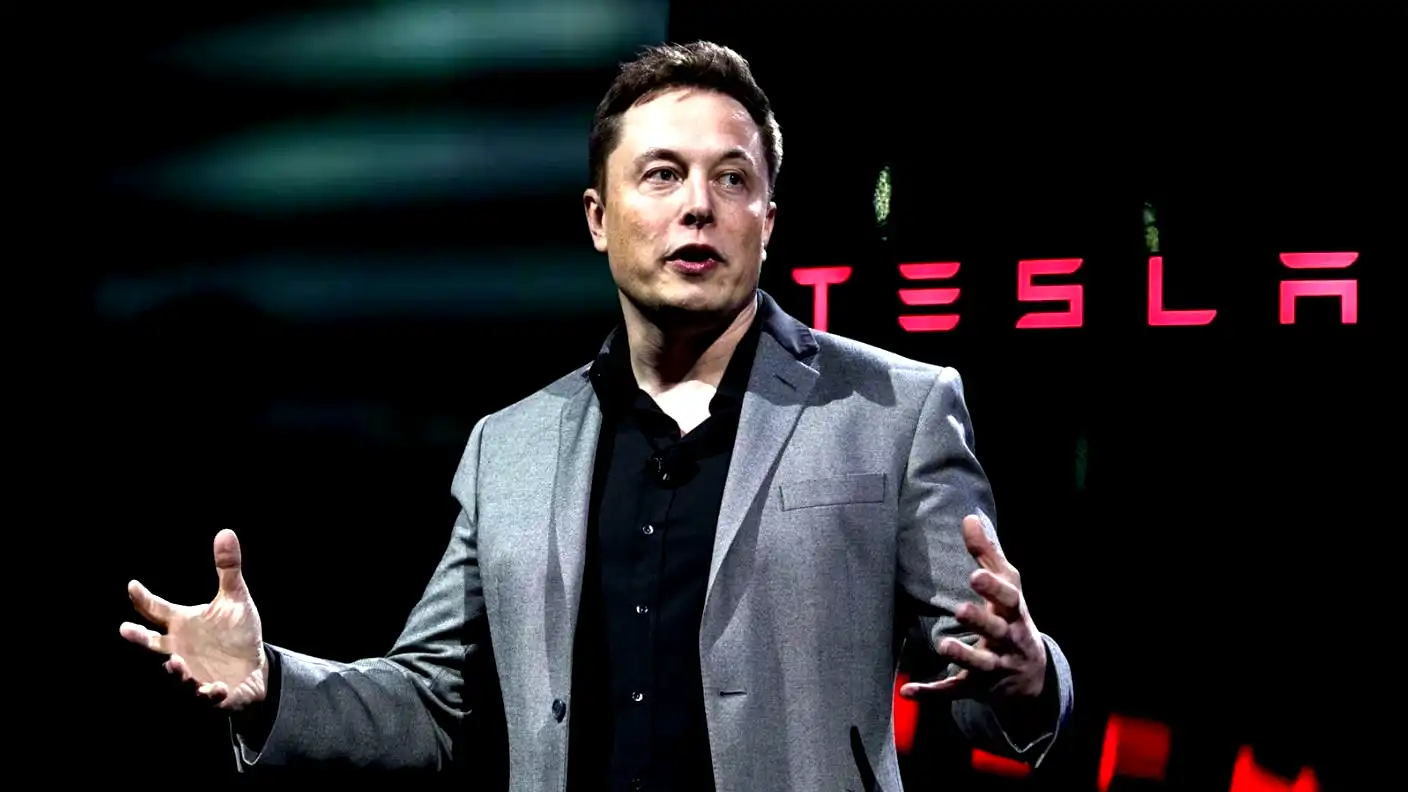
Rumors of a potential merger between electric vehicle leader Tesla and aerospace giant SpaceX have sent ripples through Wall Street. Still, financial analysts warn that such a deal poses a massive threat to everyday investors. The debate gained steam after prominent Wedbush Securities analyst Dan Ives projected that Elon Musk could seek to merge his two flagship empires by 2027 to consolidate his industrial, automotive, and artificial intelligence ventures. While tech bulls argue that the union would create a highly integrated technology behemoth, a detailed financial review reveals a dangerous risk of a Tesla-SpaceX merger that could leave Tesla shareholders holding the bag for Musk’s expensive cosmic and AI ambitions.
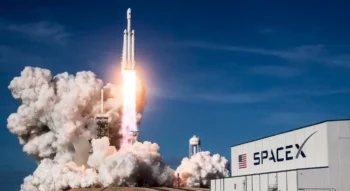
The most immediate threat facing Tesla shareholders is the sheer scale of the financial dilution such a merger would trigger. SpaceX is currently preparing for a blockbuster public listing on the Nasdaq, scheduled for June 12, 2026, targeting a massive $1.8 trillion valuation. In contrast, a global slowdown in the electric vehicle market and rising competition have pressured Tesla’s valuation, causing its market cap to settle around $600 billion. Merging a $600 billion automotive company with a $1.8 trillion aerospace giant would require a massive issuance of new Tesla shares, severely diluting and devaluing the equity of existing Tesla stockholders.
Beyond share dilution, Tesla investors would have to absorb SpaceX’s massive capital expenditures and deep financial losses. While SpaceX has revolutionized rocket launches and satellite broadband, its recently unsealed S-1 prospectus revealed that the business remains highly unprofitable on a GAAP basis. Despite generating $18.67 billion in revenue in 2025, SpaceX recorded a massive net loss of $4.94 billion for the year due to aggressive spending on advanced infrastructure and its February 2026 merger with Musk’s startup, xAI. In contrast, Tesla has spent years building a highly profitable, cash-generative automotive manufacturing business, which would suddenly have to subsidize these deep aerospace deficits.
This financial strain is already accelerating as the global artificial intelligence race intensifies. During the first quarter of 2026 alone, SpaceX directed a staggering $7.7 billion—approximately 76% of its entire capital deployment—toward AI infrastructure and the development of unproven “orbital data centers.” Managing this level of capital expenditure requires billions of dollars of continuous funding, which SpaceX is increasingly financing through expensive corporate debt rather than free cash flow. If Tesla merges with SpaceX, Tesla’s balance sheet would have to support these massive, multibillion-dollar AI capital expenditures, leaving less money for vehicle R&D or factory expansions.
Merging the two companies also raises severe, non-negotiable corporate governance concerns. Through a complex, dual-class share structure at SpaceX, Elon Musk currently holds an astonishing 85.1% of the combined voting power, despite owning only a fraction of the physical shares. This absolute control allows Musk to align resources across his various businesses without facing standard board checks or investor interference. In contrast, Tesla operates under strict public market scrutiny, where activist shareholders regularly challenge Musk’s compensation packages and multi-company focus. Merging the firms could allow Musk to dismantle these vital shareholder checks, consolidating his absolute control over the joint enterprise.
From an operational perspective, many independent analysts argue that combining a mass-market consumer automotive manufacturer with a highly capital-intensive aerospace and satellite communications company is completely lacking in industrial logic. While supporters argue that the merger would create synergies in automated robotics, thermal shielding, and on-board software, these minor engineering overlaps do not justify a multi-billion-dollar corporate marriage. Critics argue that the deal would function primarily as a bailout mechanism, allowing Musk to use Tesla’s liquid, public cash reserves to prop up his speculative, cash-burning private ventures.
This potential corporate distraction comes at a highly sensitive time for Tesla’s core business. The global electric vehicle market is currently experiencing a prolonged cooling in growth, with consumer adoption slowing by over 15% in major regions, dragging down total U.S. EV market share by an estimated 1.5%. This macroeconomic pressure has forced rival legacy automakers to scale back their electrification plans, with Toyota recently halting its premium Lexus LF-ZC EV project. To defend its global market share, Tesla must focus its full attention on launching its own affordable, next-generation vehicle platforms rather than managing the complex, unrelated logistics of a satellite broadband network.
As the June 12, 2026, public listing under the ticker SPCX approaches, investors face a difficult, high-stakes decision. Buyers must decide whether they are purchasing the profitable, highly successful launch and Starlink satellite business that exists today, or the highly speculative AI-and-Mars empire that Elon Musk hopes to build. If the company cannot successfully prove the commercial viability of its orbital data centers or its massive AI infrastructure, the $1.75 trillion valuation target could quickly face a painful reality check, resulting in a potential 15% or more correction in its stock price.