
Key Points:
- SpaceX filed its public S-1 prospectus for a historic Nasdaq listing, targeting a valuation of at least $1.8 trillion and aiming to raise to $75 billion.
- Founder Elon Musk will retain 79% of the voting power through a dual-class share structure, despite owning only about 42% of the equity.
- The “controlled company” designation allows SpaceX to bypass major Nasdaq governance rules, leaving public shareholders with virtually no voting influence.
- Major indexes like the S&P 500 and Nasdaq-100 changed their rules to fast-track SpaceX, forcing index funds to buy its shares automatically.
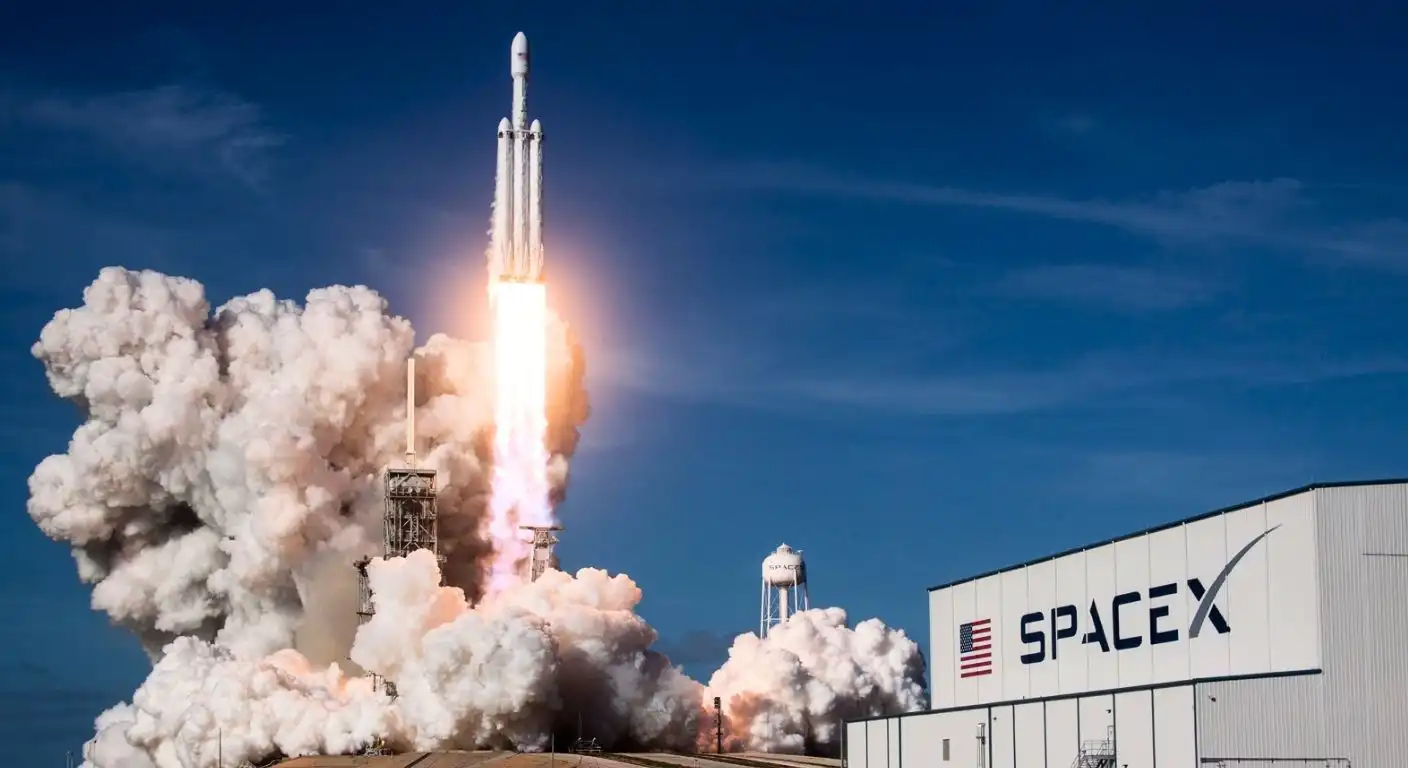
SpaceX is gearing up for what could become the largest initial public offering (IPO) in financial history. The rocket and satellite internet giant, which recently positioned itself as an artificial intelligence infrastructure player, is targeting a valuation of at least $1.8 trillion. The company aims to raise as much as $75 billion in its Nasdaq public listing, which it plans to debut on June 12, 2026. While retail investors and major asset managers eagerly anticipate the offering, corporate governance experts are sounding the alarm. They warn that the proposed SpaceX IPO structure systematically strips away almost every traditional protection that public stock buyers rely on to keep corporate managers in check.
The core of the controversy lies in the company’s aggressive dual-class share structure. According to the S-1 filing that SpaceX submitted to the Securities and Exchange Commission, the company will offer Class A shares to the public with just 1 vote per share. Meanwhile, Elon Musk and a tight circle of insiders will hold Class B shares, which carry 10 votes each. This setup ensures that Musk will control roughly 79% of the company’s total voting power, even though he owns only about 42% of the equity. Consequently, public investors who buy into the IPO will have zero influence over corporate decisions, regardless of how much capital they collectively contribute.
This extreme concentration of power allows SpaceX to qualify as a “controlled company” under Nasdaq listing rules. As a result, the firm explicitly intends to claim exemptions from standard corporate governance requirements. For example, SpaceX will not need a board of directors composed of a majority of independent members. It will also not require an independent committee to decide executive pay. This framework effectively ensures that Musk cannot be fired from his multiple roles as chief executive officer, chief technical officer, and chairman of the board. Investors must simply trust his decisions, as there is no voting mechanism to challenge his authority if things go wrong.
SpaceX further weakened shareholder protections by shifting its state of incorporation from Delaware to Texas. Texas business courts offer a much more management-friendly environment with fewer legal guardrails for minority investors. This geographic shift makes it extremely difficult for public shareholders to sue the board or hold executives accountable for breach of fiduciary duties. In Delaware, courts frequently protect small investors from self-dealing by major founders. In Texas, the legal landscape gives Musk a much freer hand to run the company without worrying about investor lawsuits.
This lack of oversight becomes particularly problematic when analyzing the deep conflicts of interest within Musk’s broader business empire. In February 2026, SpaceX completed an all-stock merger with Musk’s startup, xAI, valuing the artificial intelligence firm at $250 billion. This transaction turned SpaceX into a massive AI conglomerate overnight, claiming a total addressable market of $28.5 trillion through space-based computing and orbital data centers. However, the S-1 reveals that SpaceX also took on a $20 billion bridge loan at 4.58% interest to clean up expensive junk debt tied to Musk’s other ventures, including X (formerly Twitter). The board that approved these multi-billion-dollar deals consists mostly of Musk’s close personal friends and family members, raising serious questions about whose interests they are actually protecting.
The financial disclosures in the prospectus show that this lack of governance comes at a volatile time for the company. While SpaceX’s revenue grew significantly from $14 billion in 2024 to $18.7 billion in 2025, the company’s bottom line took a massive hit. Due to the massive costs of integrating xAI and building out expensive orbital AI infrastructure, SpaceX swung from a net profit of $791 million in 2024 to a staggering net loss of $4.94 billion in 2025. In the first quarter of 2026 alone, the company recorded a net loss of $4.28 billion. Normally, such massive losses would force a board to demand strict financial discipline, but Musk’s absolute voting control makes any outside intervention impossible.
Despite these severe governance concerns, public investors might not have a choice in whether they buy SpaceX stock. Major stock index providers have recently changed their methodologies to accommodate this historic listing. The S&P 500 and the Nasdaq-100 both introduced “fast-entry” mechanisms that allow mega-cap IPOs to be added to their indexes after just 15 days of trading. Once SpaceX meets these benchmarks, thousands of passive mutual funds and exchange-traded funds (ETFs) will automatically buy the stock. Millions of everyday citizens will unknowingly acquire exposure to this weak-governance company through their retirement portfolios and 401(k) accounts.
This forced index inclusion drew sharp criticism from major institutional investors who manage public money. Public pension fund managers from New York and California recently sent a joint letter to the SEC expressing deep concern over the SpaceX IPO structure. They labeled the filing the most management-favorable governance structure ever brought to the US public market at this scale. The funds argue that letting a $1.8 trillion company list without standard shareholder protections sets a dangerous precedent that could permanently erode investor confidence in American capital markets.
The upcoming listing of SpaceX is a clear watershed moment for Wall Street. If the IPO succeeds in its targeted $75 billion capital raise, it will prove that public markets are willing to abandon corporate governance guardrails entirely in exchange for a stake in high-growth technology. Other major private tech companies, such as OpenAI and Anthropic, are already planning similar mega-IPOs for later in 2026. By setting this precedent, SpaceX is rewriting the rules of corporate power, showing that if a founder is famous enough and a technology is exciting enough, the traditional guardrails of corporate governance no longer apply.