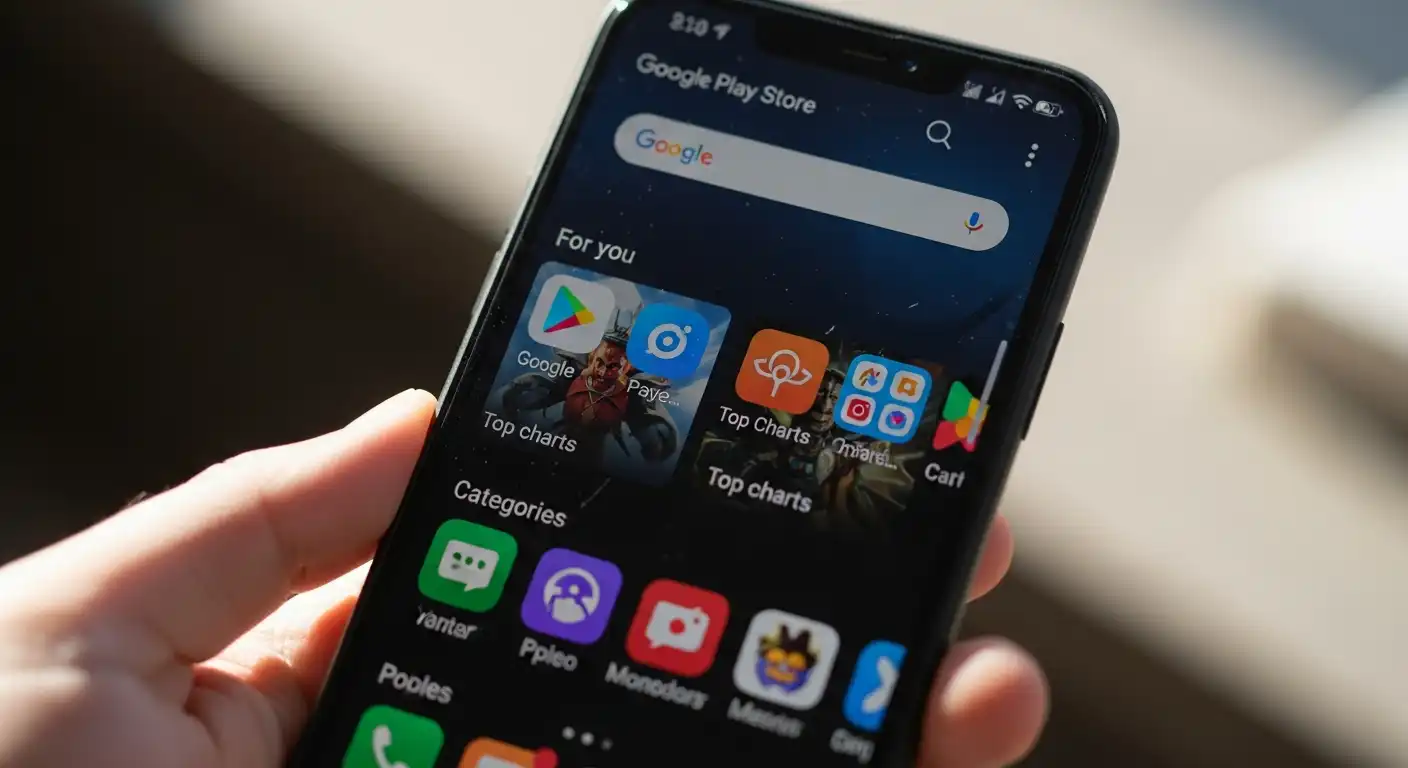
For over a billion Android users, the Google Play Store is the front door to the digital world. It’s presented as a safe, curated market—an official garden where we can pick the apps we need. We trust it implicitly. We tap “Install” without a second thought, assuming that if an app is on the store, Google must have vetted it. But this trust is dangerously misplaced. The reality is that the Play Store is less of a garden and more of a chaotic jungle, teeming with scams, malware, and data-hungry parasites.
The Open Door Policy for Scammers
The core of the problem lies in Google’s philosophy. Unlike Apple’s “walled garden” approach, which involves a stringent, human-led review process for every app, the Play Store is fundamentally more open. This is great for developers, as it allows for rapid innovation and easy access. But it’s also a golden ticket for bad actors; they know that Google’s review process is largely automated, making it easy to disguise malicious code inside a seemingly harmless flashlight or photo-editing app. They can get their dangerous software onto the phones of thousands before anyone notices.
A Losing Game of Whack-a-Mole
Google will rightly point out that it removes billions of malicious apps every year. That sounds impressive, but it’s a statistic that reveals the problem’s not the solution. Their security model is reactive, not proactive. It’s a constant, losing game of whack-a-mole. A scam app can be uploaded, promoted, and downloaded by 50,000 people before it gets flagged and removed. By then, the damage is done. The scammers have collected their data or their money, and they simply re-upload a slightly different version of the same app a week later to start the cycle all over again.
The Deception of Permissions
We’ve all become numb to the “Allow Access” pop-ups. We need the app to work, so we just click “Allow” without thinking. Malicious app developers exploit this habit perfectly. They create a simple game that, for some reason, needs access to your contacts, your microphone, and your location. Or it’s a QR code scanner that demands the right to read all your files. Users grant these permissions, unknowingly giving the app the keys to their entire digital life. The Play Store’s permission system puts the burden of security on the user, who is the least equipped to make a proper judgment.
Lost in a Sea of Fakes and Clones
Try searching for a popular, legitimate app on the Play Store. You’ll often find the real one surrounded by a dozen low-quality clones and outright fakes. These knock-offs are usually riddled with aggressive ads (adware) or designed to trick you into signing up for expensive, useless subscriptions (fleeceware). This flood of garbage not only makes it hard to find what you’re looking for, but it also erodes trust. The official store for the world’s biggest operating system feels more like a chaotic, unregulated flea market than a premium software hub.
The Burden is on You
In the end, the Google Play Store’s biggest failure is its shifting of responsibility. It provides the illusion of security while offloading the real work of staying safe onto the user. We are expected to be cybersecurity experts, to scrutinize every permission, to spot fake reviews, and to identify clone apps. This is an unreasonable and unsustainable expectation. While it’s the biggest app store on the planet, it is far from the safest. It’s a massive, indispensable digital supermarket, but one where you have to check every label for poison yourself.