Key Points:
- OpenAI expects its enterprise software business to generate 50 percent of its total revenue by the end of the year.
- The company is building a unified desktop superapp codenamed “Aria” to transition from chatbots to autonomous agents.
- Apple has partnered with Google, paying $1 billion annually to rebuild Siri on a custom Gemini model.
- While startup labs focus on corporate workspace contracts, tech giants leverage hardware to dominate consumer touchpoints.
The artificial intelligence landscape has begun to split into two highly distinct economic battlegrounds. While OpenAI and its chief rival, Anthropic, are aggressively shifting their focus to the lucrative enterprise software and workplace automation markets, consumer-facing giants Apple and Google are moving quickly to corner the massive consumer AI ecosystem. This strategic divergence defines a new phase of the technology race: specialized startup labs are racing to automate corporate workflows and boardrooms, while established hardware and software platform giants are embedding AI directly into the daily habits of billions of smartphone users.
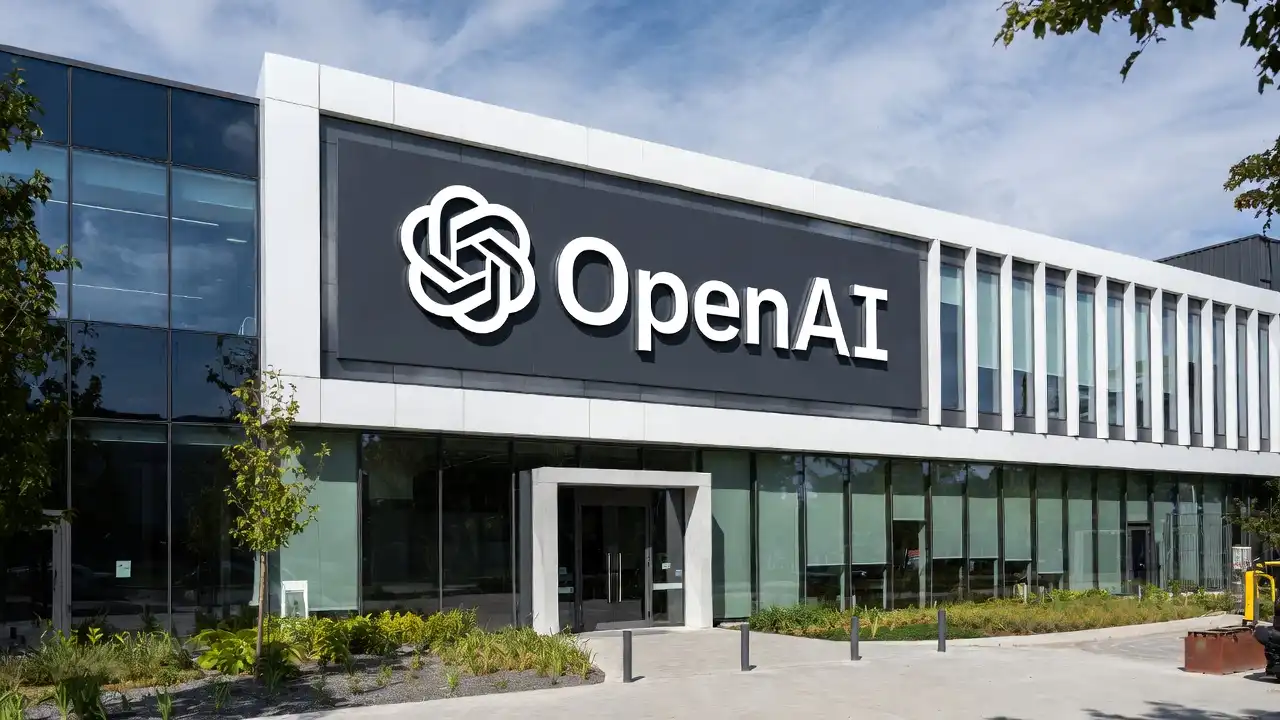
Following its recent confidential public listing filing, OpenAI is leaning heavily into enterprise software to justify the massive computing expenditures that have driven up its operating costs. Denise Dresser, OpenAI’s Chief Revenue Officer, recently confirmed that enterprise customers currently contribute 40% of the firm’s total revenue, with internal projections expecting that figure to rise to 50% by the end of the year. The company already boasts more than 1 million business customers, including retail giants like Target, which use custom enterprise integrations to automate supply chain logistics and assist corporate office staff.
To secure its position as the default corporate workspace, OpenAI is preparing a massive product overhaul codenamed “Aria.” The project aims to fuse ChatGPT, its specialized coding tool Codex, and its Atlas web browser into a single, unified desktop superapp. By shifting the platform from a simple conversational chatbot to an autonomous agent capable of executing complex, multi-step workflows, OpenAI wants to replace traditional enterprise productivity tools. Co-founder Greg Brockman and applications chief Fidji Simo are directly steering the project to capture corporate budgets.
To support this aggressive enterprise push, OpenAI is actively poaching top-tier corporate talent from the world’s largest technology companies. The startup recently hired a slew of high-profile executives, including ServiceNow’s former global chief marketing officer, a Google Cloud worldwide partner programs leader, and the director of Meta’s Superintelligence Labs. This targeted hiring spree is designed to build a world-class enterprise sales and support division capable of competing with legacy software giants and securing direct multi-million-dollar deployment contracts.
While OpenAI targets corporate IT departments, Apple and Google have forged a historic, multi-billion-dollar alliance to dominate consumer AI touchpoints. During its recent Worldwide Developers Conference, Apple confirmed a massive partnership to rebuild its virtual assistant, Siri, on a custom Google Gemini model. Under the agreement, Apple will pay Google approximately $1 billion per year to provide the advanced conversational intelligence layer for its Apple Intelligence features, completely sidestepping the need to develop its own expensive, energy-hungry frontier model in-house.
Industry analysts view Apple’s reliance on Google’s Gemini as a pragmatic but expensive strategic pivot. Despite employing thousands of machine learning engineers and spending years building proprietary foundational models, internal testing showed that Apple’s own prototype lagged behind ChatGPT in accuracy. Rather than continuing to delay, Apple opted to leverage Google’s 1.2-trillion-parameter model inside its secure Private Cloud Compute infrastructure. This hybrid strategy allows Apple to retain absolute control over the consumer hardware and user interface while outsourcing the underlying compute-heavy intelligence.
For Google, the partnership with Apple represents a major victory, solidifying Gemini as the undisputed engine of consumer AI. By securing deep integrations on both Apple’s iOS and its own Android platform, Google’s AI models are now embedded on the vast majority of all active smartphones worldwide. This ubiquitous distribution gives Google a massive advantage in collecting real-world consumer data and training its models on daily human interactions, while quietly placing pressure on pure-play software startups that lack their own hardware platforms.
The resulting tech landscape has effectively split into two distinct economic models. On one side, OpenAI and Anthropic are locked in an intense battle for corporate software subscriptions, building autonomous agents designed to replace manual white-collar labor. On the other side, Apple and Google are utilizing their unmatched hardware and mobile software distribution to ensure that consumer AI remains integrated into standard messaging, photo, and voice interfaces. As both sectors mature, the division will determine whether the ultimate value of the AI era lies in automated enterprise efficiency or ubiquitous consumer convenience.