

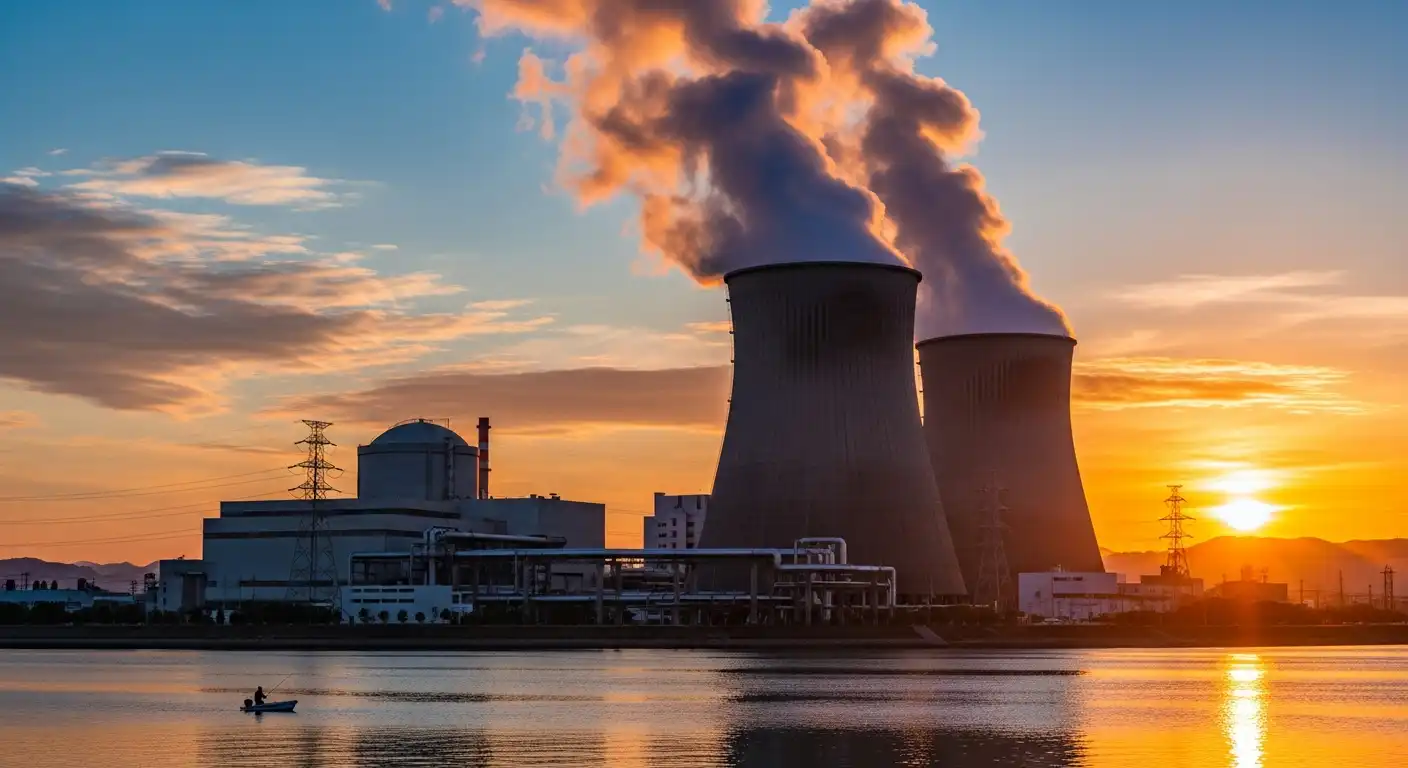
President Donald Trump hosted top executive officers from major utility companies, advanced nuclear reactor developers, and Big Tech hyperscalers at the White House for a high-level summit focused on accelerating the commercial deployment of next-generation nuclear power. The historic gathering brought together corporate leaders from Constellation Energy, TerraPower, Westinghouse Electric, Oklo, NuScale Power, Kairos Power, X-energy, Amazon, Microsoft, and Google. The summit marked a pivotal milestone in national energy policy, establishing a unified federal strategy to fast-track reactor construction, overhaul nuclear licensing, and supply gigawatts of zero-carbon baseload electricity to power the nation’s expanding artificial intelligence infrastructure.
During the summit, administration officials outlined executive actions designed to streamline the Nuclear Regulatory Commission, cutting licensing review timelines from 7 years down to 24 months. The policy push aligns directly with federal ambitions to triple domestic nuclear energy capacity by 2050, adding 200 gigawatts of nuclear generation to the American power grid. Administration strategists emphasized that securing abundant, uninterruptible electrical power is an urgent national security priority necessary to maintain American leadership in artificial intelligence and advanced technology manufacturing.
The White House meeting highlights a convergence of commercial interests between technology giants and the nuclear power sector. Technology hyperscalers face skyrocketing electricity demand driven by liquid-cooled data center clusters housing hundreds of thousands of specialized processing chips. Because solar and wind generation fluctuate based on weather patterns, technology executives are turning to nuclear energy as the only proven zero-carbon source capable of supplying continuous 24/7/365 baseload power directly to high-density computing facilities.
TechGolly provides an in-depth analysis of the White House nuclear summit, evaluating Nuclear Regulatory Commission licensing reforms, Small Modular Reactor technologies, hyperscaler power purchase agreements, uranium fuel supply chain investments, legacy plant restarts, and the broader economic outlook for advanced nuclear energy.
Unpacking the White House Nuclear Policy and NRC Licensing Overhaul
The cornerstone of the White House policy initiative is a fundamental structural reform of the Nuclear Regulatory Commission. For decades, nuclear industry executives criticized the regulatory agency for maintaining slow, bureaucratic approval processes originally designed for massive, field-constructed light-water reactors in the 1970s. Historical application reviews routinely required 5 to 7 years and cost developers over $100 million in regulatory fees before a single cubic yard of concrete could be poured.
To eliminate these administrative delays, the federal policy directive mandates that the Nuclear Regulatory Commission establish standardized, risk-informed review pathways for advanced non-light-water reactors. Under the streamlined framework, the agency must issue final licensing decisions within 18 to 24 months for pre-certified reactor designs. The regulatory overhaul leverages provisions from bipartisan federal legislation, including the ADVANCE Act, which reduces regulatory application fees for advanced nuclear developers and directs the agency to evaluate reactor safety using modern computational modeling rather than repetitive physical testing.
Federal energy officials stressed that streamlining regulatory reviews does not compromise nuclear safety standards. Instead, modernizing regulatory frameworks allows safety inspectors to focus on standardized, factory-fabricated components rather than evaluating custom, one-off construction sites. Standardizing reactor designs enables manufacturing firms to mass-produce reactor modules in central factories, shipping completed units to job sites via standard rail cars or heavy transport barges.
Achieving the national target of adding 200 gigawatts of new nuclear power by 2050 will require deploying hundreds of modular reactors across North America. Federal agencies are identifying ideal construction sites, prioritizing former coal-fired power plants that already possess high-voltage transmission interconnects, cooling water infrastructure, and experienced industrial workforces eager to transition into nuclear operating roles.
The Hyperscaler Nuclear Rush: Microsoft, Amazon, and Google Off-take Deals
The White House summit underscored the central role played by technology hyperscalers in financing the nuclear revival. Technology conglomerates are committing over $200 billion annually in global capital expenditures to construct artificial intelligence infrastructure. However, connecting gigawatt-scale data center campuses to regional utility grids has become increasingly difficult due to localized power shortages and grid congestion.
To guarantee electrical power availability, technology companies are bypassing public utility queues by signing direct, long-term Power Purchase Agreements with nuclear operators. In a historic corporate energy deal, Constellation Energy contracted to restart the 835-megawatt Three Mile Island Unit 1 reactor—renamed the Crane Clean Energy Center—under a 20-year off-take agreement with Microsoft. The deal will deliver 100% of the plant’s electricity directly to power Microsoft data centers across the Mid-Atlantic region.
Simultaneously, Amazon Web Services acquired a 960-megawatt nuclear-powered data center campus in Pennsylvania located adjacent to Talen Energy’s Susquehanna nuclear station. The acquisition allows Amazon to connect its server halls directly behind the utility meter, drawing clean nuclear power without burdening local municipal distribution lines.
Google joined the nuclear movement by signing a corporate agreement with Kairos Power to construct a fleet of advanced molten-salt reactors delivering 500 megawatts of clean power by 2035. These multi-billion-dollar corporate commitments provide reactor developers with guaranteed long-term revenue streams, satisfying institutional bank underwriting requirements and unlocking private debt capital for greenfield reactor construction.
Advanced Reactor Technologies: SMRs, Sodium Coolants, and Microreactors
A central focus of the White House discussions was the technical diversification of advanced nuclear designs. Unlike traditional light-water reactors that utilize high-pressure water coolants and massive concrete containment domes, advanced reactors utilize novel coolants—including liquid sodium, molten fluoride salts, and high-temperature helium gas—operating at low atmospheric pressures.
TerraPower, founded by Bill Gates, is constructing its flagship Natrium demonstration plant in Kemmerer, Wyoming. The 345-megawatt sodium-cooled fast reactor operates at low pressure, eliminating the need for massive high-pressure containment structures. The facility incorporates a liquid molten salt energy storage system capable of boosting electrical output to 500 megawatts for up to five hours, allowing the plant to integrate seamlessly with fluctuating renewable energy on the regional grid.
In the high-temperature gas sector, X-energy is commercializing its Xe-100 high-temperature gas-cooled reactor. The 80-megawatt modular design utilizes TRISO (Tristructural-Isotropic) pebble-bed fuel, where microscopic uranium spheres are encapsulated in high-density ceramic and graphite layers capable of withstanding extreme temperatures exceeding 1,600 degrees Celsius without melting. X-energy partnered with Dow to construct a four-unit Xe-100 facility at a chemical manufacturing plant in Texas, supplying both clean electricity and high-temperature industrial steam.
For localized industrial applications, microreactor developer Oklo is commercializing its Aurora fast reactor platform. Designed to deliver 15 to 50 megawatts of power, Oklo’s compact fast-spectrum reactors operate for 10 or more years without refueling. Oklo’s modular design allows technology companies to deploy compact power units directly beside data center buildings in remote locations, operating completely off-grid.
Factory manufacturing represents the defining economic advantage of Small Modular Reactors. By assembling 80% of reactor components within automated factory settings and transporting completed modules to installation sites, developers expect to reduce field construction schedules from 10 years down to under 24 months, cutting overnight capital costs by up to 50%.
Securing the HALEU Domestic Nuclear Fuel Supply Chain
Deploying advanced reactors requires establishing a secure, domestic nuclear fuel supply chain. The vast majority of advanced reactor designs rely on High-Assay Low-Enriched Uranium, a specialized nuclear fuel enriched to between 5% and 20% uranium-235. Traditional commercial light-water reactors utilize low-enriched uranium enriched to less than 5%.
High-Assay Low-Enriched Uranium fuel offers significant operational advantages: it allows advanced reactors to operate at higher fuel burnup rates, extends operating cycles between refueling shutdowns, and enables smaller reactor core dimensions. However, until recently, Russia’s state-owned nuclear enterprise held a commercial monopoly on global production, creating a severe supply chain vulnerability for Western developers.
To eliminate dependence on foreign state suppliers, the federal government allocated over $2.7 billion in domestic enrichment incentives under federal energy programs. The Department of Energy awarded competitive contracts to domestic enrichment providers—including Centrus Energy, Urenco USA, and Orano—to construct advanced gas centrifuge cascades within the United States.
Centrus Energy successfully initiated early production at its enrichment facility in Piketon, Ohio, delivering initial commercial batches to federal research programs. Establishing domestic, high-volume uranium enrichment guarantees that American advanced reactor projects will possess a secure fuel supply, insulating national energy infrastructure from international trade sanctions.
Legacy Reactor Restarts and Uprates Across the American Power Grid
While advanced Small Modular Reactors represent the long-term future of nuclear power, restarting closed legacy reactors offers the fastest route to injecting gigawatts of clean baseload electricity into the American power grid over the next three years.
Engineering firms are executing major recommissioning campaigns at retired nuclear sites. Beyond Constellation Energy’s $1.6 billion restart of Three Mile Island Unit 1 in Pennsylvania, Holtec International is advancing a $2 billion campaign to recommission the 800-megawatt Palisades nuclear plant in Michigan. The Palisades restart represents the first time in United States history that a decommissioned commercial nuclear plant is being fully restored to active commercial operation.
Restarting a closed nuclear plant provides immense financial and timeline advantages over greenfield construction. Retired nuclear sites possess pre-existing, multi-gigawatt high-voltage grid interconnections, established cooling water intake structures, heavy rail access, and valid environmental operating permits. Recommissioning an existing facility requires approximately 3 years and $1.5 billion to $2 billion, compared to 10 years and over $8 billion for a new traditional plant.
Simultaneously, major nuclear utilities are executing power capacity uprates across the existing fleet of 93 operating nuclear reactors. By replacing aging steam turbines, installing high-efficiency digital control systems, and upgrading reactor coolant pumps, utilities are extracting additional power capacity from active plants. Fleet-wide power uprates have added over 2,000 megawatts of generation capacity to the national grid—equivalent to building two large commercial reactors—at a fraction of greenfield construction costs.
Economic Unit Economics and Capital Expenditure Realities
The commercial resurgence of nuclear power requires overcoming historical financial challenges that plagued legacy construction projects. Recent traditional nuclear builds in Western nations experienced multi-billion-dollar cost overruns and years of construction delays, driven by custom field engineering, specialized labor shortages, and changing regulatory design requirements.
To prevent cost overruns, advanced reactor developers are transitioning from First-of-a-Kind prototype builds to Nth-of-a-Kind standardized production models. Financial modeling indicates that while the first demonstration unit of a new reactor design carries high engineering expenses, overnight capital costs decline rapidly as supply chains mature and construction crews master standardized assembly procedures.
For Nth-of-a-Kind Small Modular Reactors, target capital costs sit between $4,000 and $5,000 per kilowatt of installed capacity. At these capital cost levels, nuclear electricity achieves levelized cost of energy parity with natural gas combined-cycle plants equipped with carbon capture systems, delivering competitive wholesale electricity prices below $60 per megawatt-hour.
Federal financial incentives provide essential capital insulation for early adopters. The federal tax code includes production tax credits offering up to $15 per megawatt-hour for existing nuclear generation, alongside investment tax credits covering up to 30% to 50% of the qualifying capital cost for newly constructed zero-emission nuclear facilities. Combined with federal loan guarantees provided by the Department of Energy’s Loan Programs Office, financial incentives significantly lower borrowing costs for nuclear project developers.
Strategic Outlook for National Energy Security and Global Tech Leadership
The White House summit signals a permanent structural realignment of American energy strategy, positioning nuclear power as the foundational core of national technological leadership and energy security.
In the global geopolitical arena, expanding domestic nuclear technology capabilities enables the United States to compete aggressively against state-backed nuclear exporters in Russia and China. State-owned entities currently construct the majority of nuclear reactors exported to developing nations across Asia, Africa, and Eastern Europe, securing multi-decade geopolitical relationships.
Exporting standardized American Small Modular Reactors to international allies offers Washington a powerful diplomatic tool. Delivering turnkey, high-safety American reactors equipped with long-term fuel service agreements allows allied nations to decarbonize their economies while cementing multi-decade technology and security ties with the United States.
Looking ahead over the next decade, the nuclear energy sector will evolve into an integrated industrial ecosystem. The combination of legacy plant restarts, fleet power uprates, and the rapid commercial scaling of advanced Small Modular Reactors will supply the clean, resilient electricity required to power artificial intelligence data centers, advanced manufacturing plants, and clean hydrogen production facilities.
By uniting federal regulatory power, private venture capital, and multi-billion-dollar corporate demand from technology leaders, the United States is establishing a resilient energy infrastructure capable of supporting the next century of digital and industrial growth.
Key Takeaways for Energy Executives, Tech Leaders, and Investors
The White House Nuclear Energy CEO Summit delivers vital strategic insights for utility executives, cloud architects, nuclear technology developers, and international institutional investors.
First, regulatory modernization is the primary enabler of infrastructure velocity. Cutting Nuclear Regulatory Commission licensing timelines to 24 months eliminates a major regulatory bottleneck, allowing private capital to flow efficiently into advanced reactor construction.
Second, zero-carbon baseload power commands a commercial premium. Technology hyperscalers building artificial intelligence data centers require continuous 24/7 electricity and are willing to sign multi-decade, above-market Power Purchase Agreements to secure clean nuclear capacity.
Third, domestic nuclear fuel enrichment is essential for energy sovereignty. Establishing domestic High-Assay Low-Enriched Uranium enrichment capacity eliminates foreign supply risks, guaranteeing long-term fuel availability for advanced reactor fleets.
Finally, the nuclear industry is executing a historic transition from custom field engineering to standardized factory manufacturing. Companies that successfully scale modular manufacturing and lower capital costs will capture multi-billion-dollar market opportunities, building the clean energy foundation for the 21st-century global economy.






