Key Points:
- SpaceX prepared its 12th uncrewed Starship test flight, debuting the highly upgraded Starship V3 vehicle.
- The company aims for a massive $1.75 trillion valuation ahead of its highly anticipated public listing.
- The new Starship V3 features lighter Raptor engines designed to produce significantly more thrust.
- This launch builds on a dramatic history of 11 previous test flights marked by spectacular explosions, breakthroughs, and regulatory investigations.
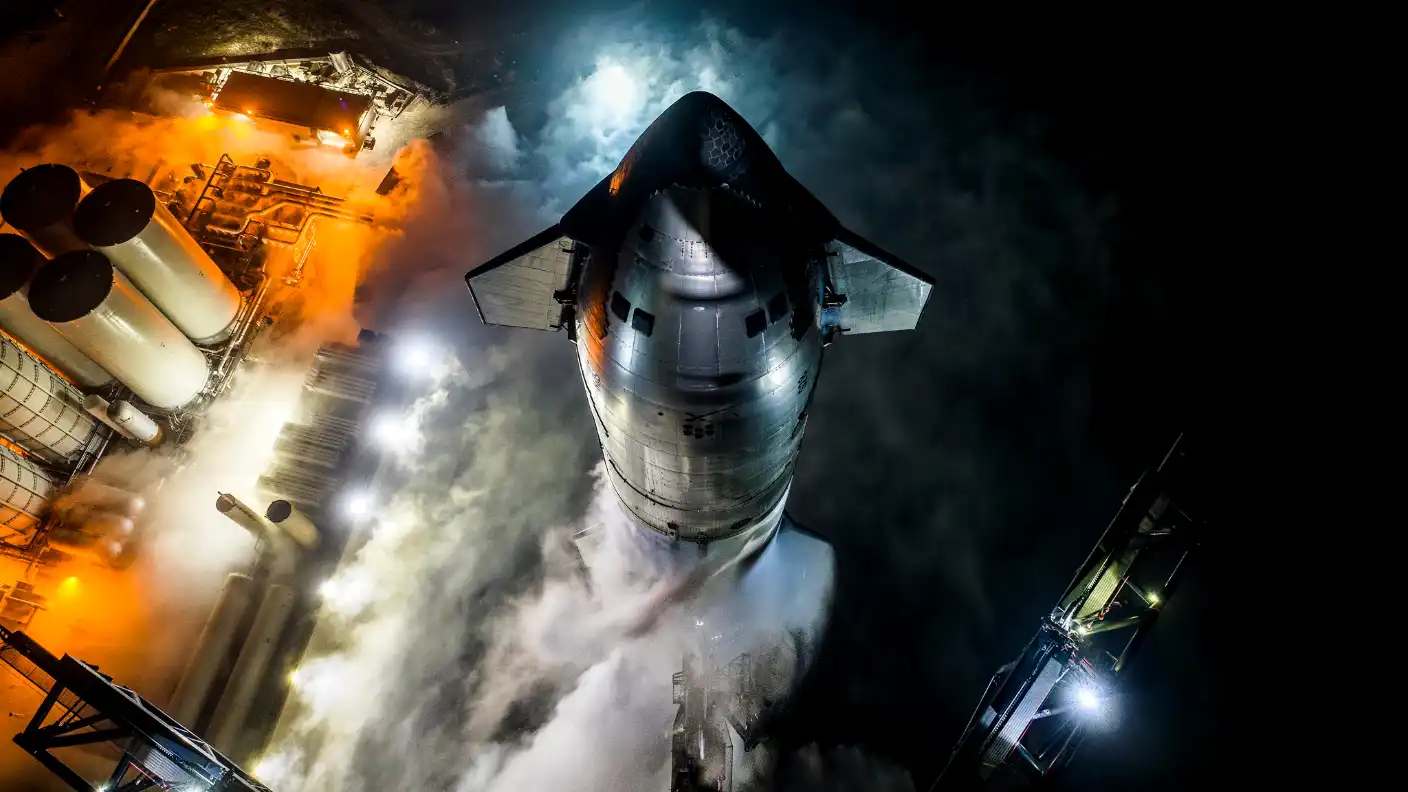
SpaceX prepared for a major leap in its space campaign with the 12th uncrewed test flight of its giant Starship rocket, scheduled for Thursday, May 21, 2026. The launch debuts the redesigned Starship V3, a crucial vehicle central to Elon Musk’s plans to reach the moon and Mars. The Starship system, consisting of SpaceX’s Super Heavy booster and Starship upper stage, offers full reusability for carrying heavy crew and cargo. This launch serves as a critical test before SpaceX’s massive public listing, where the company targets a staggering $1.75 trillion valuation.
The Starship V3 features massive improvements over older models. For this launch, engineers built a brand-new launch pad to handle the extra power. The upgraded Super Heavy booster features a total redesign of its 33 Raptor engines, which now produce significantly more thrust from a much lighter frame. This extra power will help the reusable system carry larger payloads and eventually ferry NASA astronauts.
The path to this 12th launch has been incredibly volatile, with dramatic setbacks. The first test flight on April 20, 2023, ended in a spectacular explosion less than 25 miles above the ground. While it failed to meet several mission goals, the flight proved that the massive vehicle could actually clear the launch pad. The second test in November 2023 also ended in fire when the Super Heavy booster exploded over the Gulf of Mexico shortly after separating from the upper stage.
SpaceX slowly learned from these early failures. During the third test in March 2024, the rocket disintegrated on its return to Earth but traveled farther than ever before. The fourth flight in June 2024 achieved a breakthrough. The spacecraft survived a fiery hypersonic descent and completed a controlled splashdown in the Indian Ocean. The fifth flight in October 2024 made history when the launch tower’s giant mechanical arms caught the descending Super Heavy booster right out of the air.
However, the development timeline encountered new hurdles as testing continued. During the sixth flight in November 2024, SpaceX called off a booster catch attempt, forcing the Super Heavy to splash down in the Gulf of Mexico instead. The seventh test in January 2025 ended with an explosion over the Bahamas, prompting the Federal Aviation Administration (FAA) to launch an investigation. In March 2025, the eighth test also exploded, causing the FAA to briefly halt commercial flights at airports in Miami, Orlando, and Fort Lauderdale due to falling space debris.
After finishing its mishap investigation, the FAA finally cleared Starship to resume flights on May 22, 2025. To protect civilians, the agency significantly expanded the Aircraft Hazard Area. They stretched the danger zone from 885 nautical miles to a massive 1,600 nautical miles, running from the South Texas coast all the way through the Straits of Florida and past the Bahamas.
The ninth test flight on May 27, 2025, hit new technical snags. The rocket successfully reached space, but the upper stage began spinning uncontrollably about 30 minutes into the flight. The vehicle’s satellite deployment mechanism failed, forcing SpaceX to cancel the launch of eight mock Starlink satellites. The Super Heavy booster also lost contact during descent, crashing into the sea instead of making a controlled landing.
SpaceX finally solved these satellite deployment issues during the tenth test in August 2025. The spacecraft successfully deployed its first batch of mock Starlink satellites into space and tested new heat-shield tiles. The eleventh test in October 2025 marked the end of the older rocket generation. The upper stage landed safely in the Indian Ocean, while the booster made a soft splashdown in the Gulf of Mexico, clearing the way for the V3 model.
With the debut of the Starship V3 on a brand-new launch pad, SpaceX enters a completely new era of space exploration. The company continues to push the boundaries of rocket design to make life multiplanetary. As the $1.75 trillion IPO approaches, the success of this 12th flight will show investors whether Musk can actually deliver on his bold promises.