Key Points:
- Florida Governor Ron DeSantis announced a massive $600 million expansion of Blue Origin’s Cape Canaveral campus.
- The project includes an 830,000-square-foot facility to manufacture upper stages for the New Glenn rocket.
- The expansion will create 500 high-paying aerospace jobs with an average annual salary exceeding $98,000.
- The Federal Aviation Administration cleared Blue Origin’s heavy-lift rocket to resume flights after a recent malfunction.
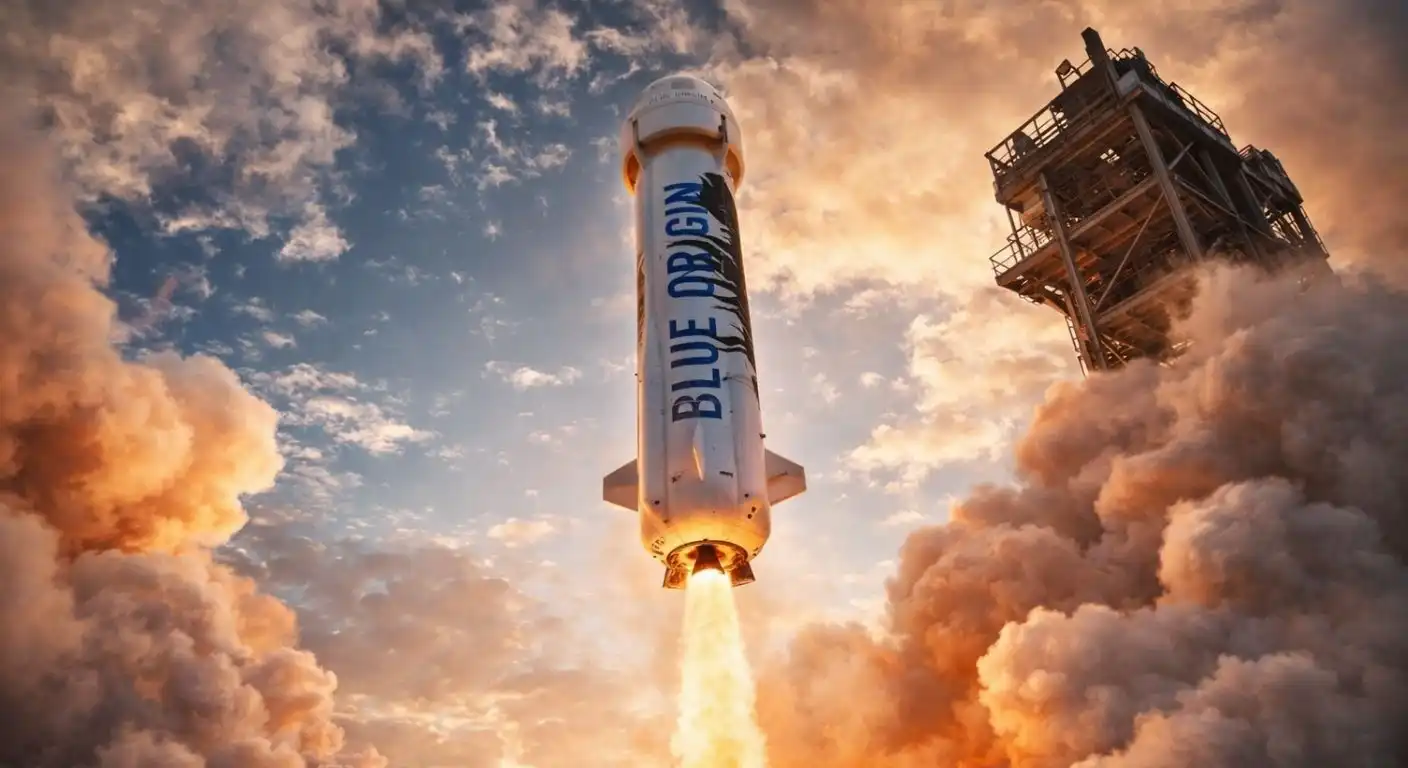
Jeff Bezos’ private space firm, Blue Origin, is pumping an extra $600 million into its Florida operations to scale up its rocket manufacturing capabilities. Florida Governor Ron DeSantis officially announced the massive expansion on Friday, May 22, 2026. The investment will build out the company’s Rocket Park campus in Cape Canaveral, turning the Space Coast into a critical battleground for launch capacity.
The multi-million-dollar expansion project, internally named Project Horizon, focuses on boosting the manufacturing rate of the company’s heavy-lift orbital launch vehicle, New Glenn. The centerpiece of the project is a massive, 830,000-square-foot upper-stage manufacturing facility. Blue Origin designed the giant plant to construct and assemble the critical upper stages needed to deliver heavier payloads and satellites into orbit.
The state expects the $600 million project to deliver a significant boost to the local economy. The expansion will create at least 500 high-paying aerospace jobs in Brevard County. These new roles will offer an average annual salary of more than $98,000, injecting millions of dollars in payroll directly into Florida’s growing technical workforce.
To help fund the infrastructure, Blue Origin secured support through the state’s Spaceport Improvement Program. This program operates as a collaborative partnership between the state’s aerospace economic development agency, Space Florida, and the Florida Department of Transportation. The partnership previously helped fund Blue Origin’s launch pad rebuilding project at the historic Launch Complex 36, proving how state-backed transport infrastructure can attract massive private capital.
Blue Origin has quietly built an enormous footprint in Florida over the past decade. Blue Origin CEO Dave Limp noted that Project Horizon represents the latest and most ambitious chapter in the company’s commitment to the state. Since 2015, Blue Origin’s local workforce has grown to nearly 4,000 employees across 11 sites. The space firm has also invested more than $2.3 billion across 500 local Florida suppliers, transforming the region into a premier aerospace manufacturing hub.
This massive capital investment comes at a highly competitive moment for the global space sector. Blue Origin’s primary rival, Elon Musk’s SpaceX, is preparing for a historic initial public offering that targets a valuation of $1.75 trillion. While SpaceX dominates the market with its established Falcon 9 and Starship systems, Blue Origin is trying to catch up by becoming the only company to both manufacture and launch its rockets directly from Florida.
The expansion also coincides with Blue Origin’s efforts to move past recent technical setbacks. In April, federal aviation regulators ordered the company to launch a mishap investigation after an upper-stage malfunction occurred on its New Glenn rocket during a failed satellite launch from Florida. The malfunction prevented the rocket from delivering an AST SpaceMobile satellite to its correct orbit, raising concerns about the vehicle’s reliability.
However, the company received some excellent news on Friday. The Federal Aviation Administration officially cleared the New Glenn rocket to resume flights. This regulatory green light puts the company back on the clock to prove its reusable heavy-lift launch capabilities. The new 830,000-square-foot facility will help Blue Origin increase its launch cadence to deliver on its massive commercial backlogs and support NASA’s Artemis lunar program.
Aerospace experts point out that the next phase of the space race is entirely about launch cadence, not just building rockets. To run a high-frequency launch business, a company needs a robust supply chain, plenty of technicians, and a workflow that can absorb minor failures without freezing the whole operation. By investing $600 million in physical factories and localized assembly, Blue Origin is betting that manufacturing capacity will ultimately decide who wins the commercial space race.